“Why did you start this business?” can be harder to answer than a question about pricing. You know what you sell, but explaining why it matters can leave you reaching for words like “quality” and “passion.”
Those words give a customer little to remember. And if your beginning was ordinary, you might think you have nothing worth telling.
That can leave you rewriting the same vague paragraph. The framework, template, and complete example below help you turn that paragraph into a clear explanation of why your business exists and whom it serves.
What Makes a Brand Story Compelling?
A brand story explains whom your business serves, why it exists, and how that purpose shapes what you do.
A mission statement might say that you help people learn a skill. Your story connects that purpose to a recognizable problem and shows the choices you make to address it.
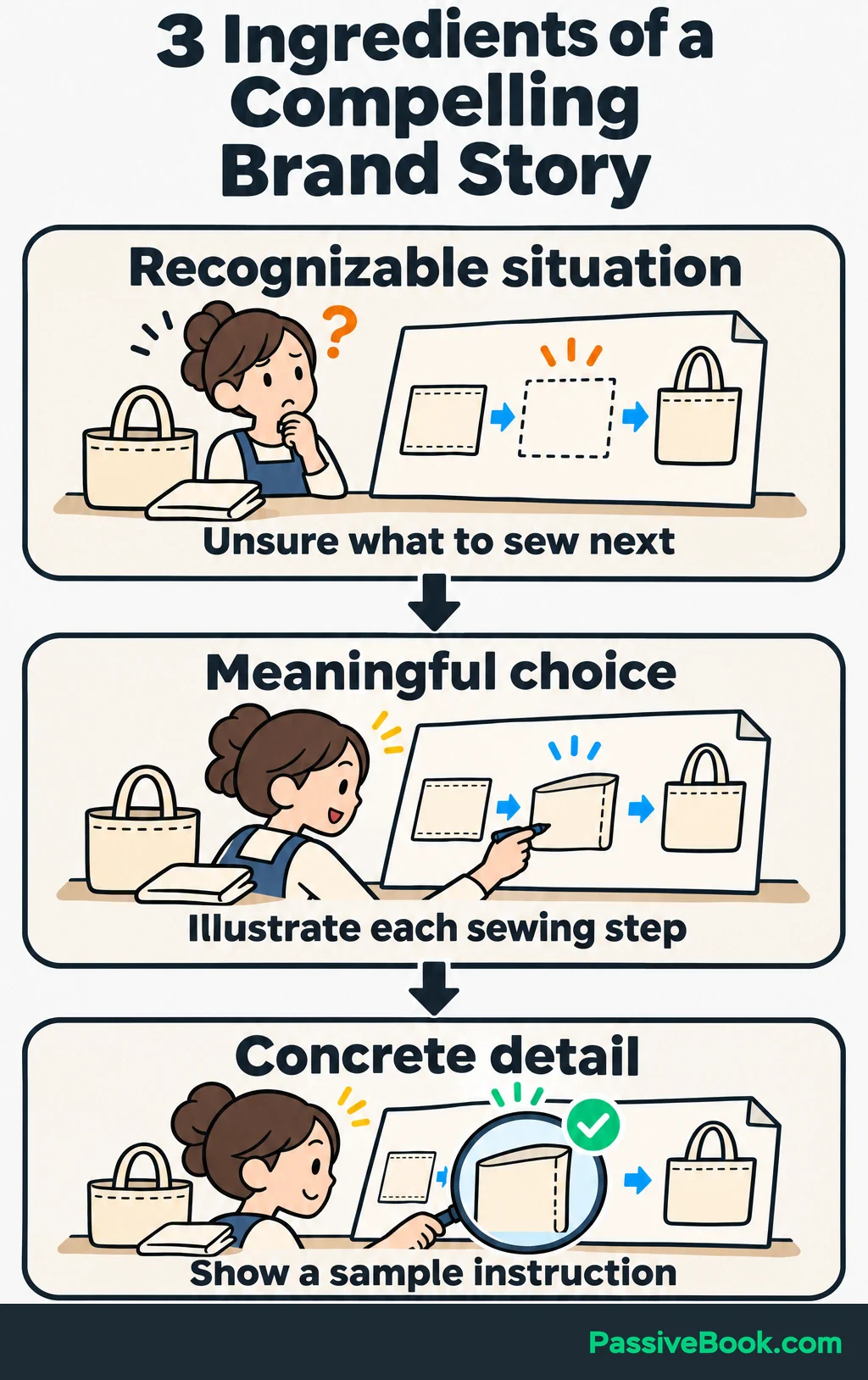
I look for three things in a useful story:
- A recognizable situation: The customer can picture the problem you describe.
- A meaningful choice: Your reason for helping explains something about your offer.
- A concrete detail: People can see how you put that choice into practice.
You don’t need a dramatic founding moment. Noticing that existing instructions skip the difficult parts can give you a reason to make better instructions. That is enough material to start.
The useful question is whether your story helps someone understand your business. A fascinating childhood memory earns its place only if it explains something customers care about now.
1. Identify the Customer Problem Your Story Will Address
Start with what someone wants to do and where they get stuck. Choose a situation you can describe without words like “empowerment” or “transformation.”
Look through customer inquiries, product reviews, support messages, and sales conversations. Keep the phrases people use to explain their difficulty, especially when they describe what they tried before asking for help.
If you don’t have customers yet, speak with people who face the problem you want to address. Ask about actual experiences rather than inviting approval for your idea.
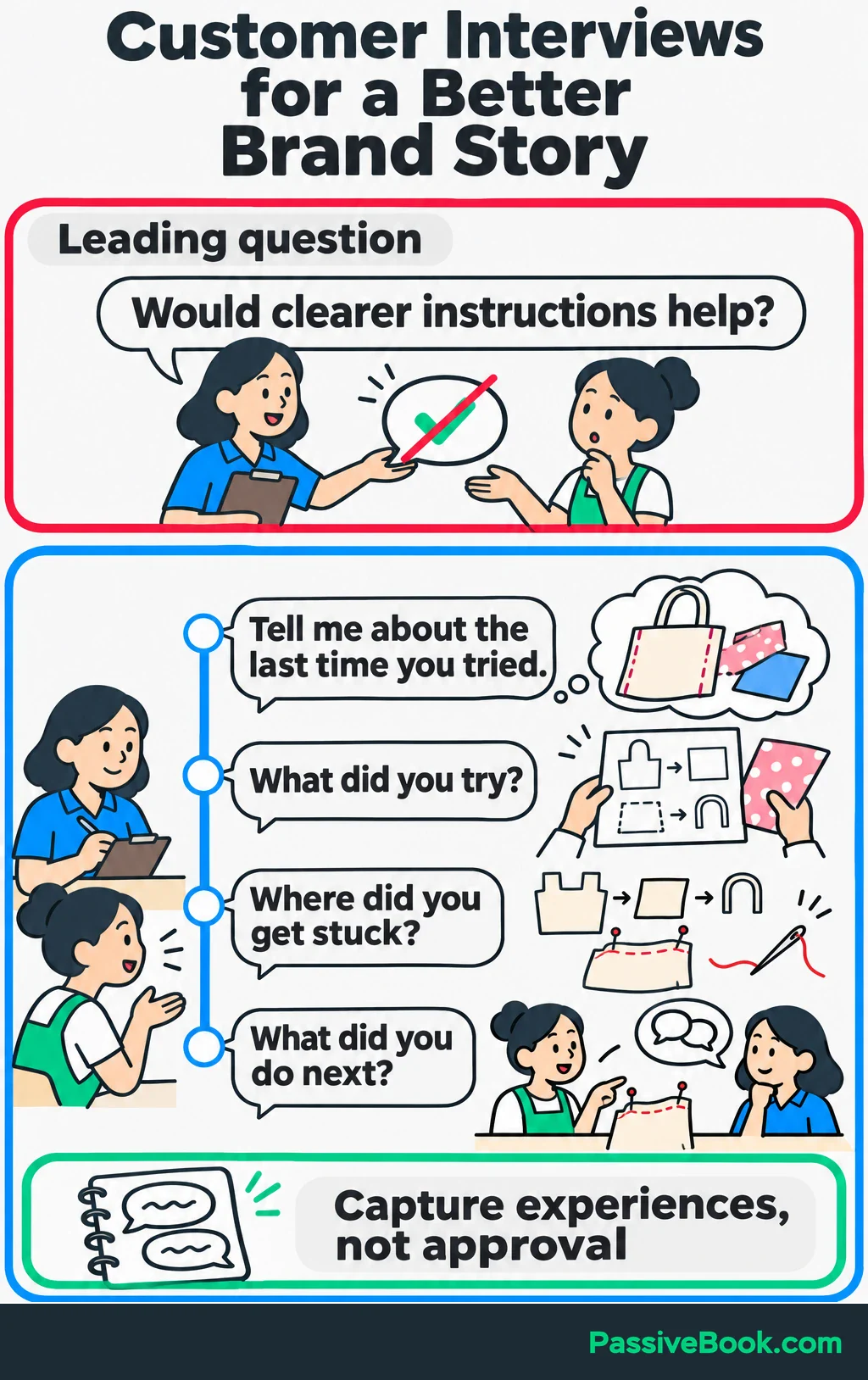
GOV.UK’s interview guidance recommends open, neutral questions and a focus on real examples. For this task, I would use a short set:
- “Tell me about the last time you tried to do this.”
- “What did you try?”
- “Where did you get stuck?”
- “What did you do next?”
“Would clearer instructions help?” puts your preferred answer in their mouth. Hearing what happened gives you more useful material.
Then summarize the main problem:
[Customer] wants [outcome], but [specific obstacle] makes it difficult.
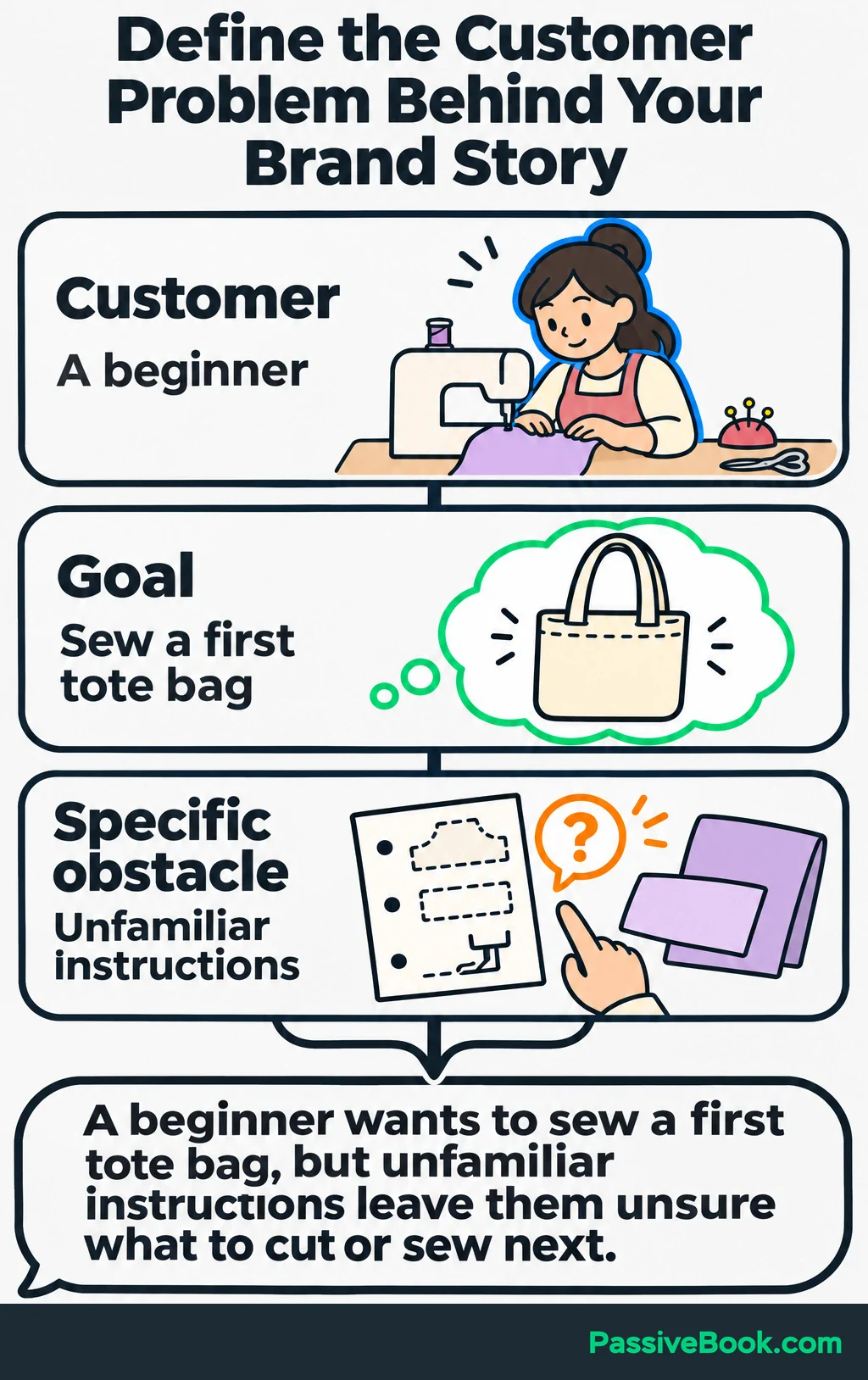
To make each step concrete, imagine you run First Seam, an online shop selling downloadable beginner sewing patterns.
Your problem statement could be:
A beginner wants to sew a first tote bag, but unfamiliar instructions leave them unsure what to cut or sew next.
That gives the story a focus. “Beginners need confidence” is harder to work with because it leaves the source of that uncertainty unexplained.
Choose one central problem for the draft. You can serve several needs without squeezing all of them into the same paragraph.
2. Connect Your Purpose to Concrete Business Choices
Now explain why you address that problem and what you do because of it.
Your material might come from a personal frustration, a repeated customer question, or a deliberate choice about how your business should work. Pick the detail that explains your approach today.
Separate your reason for starting a business from your reason for making this particular offer. Wanting more independence may explain why you became self-employed, but it doesn’t explain why a customer should choose your sewing pattern.
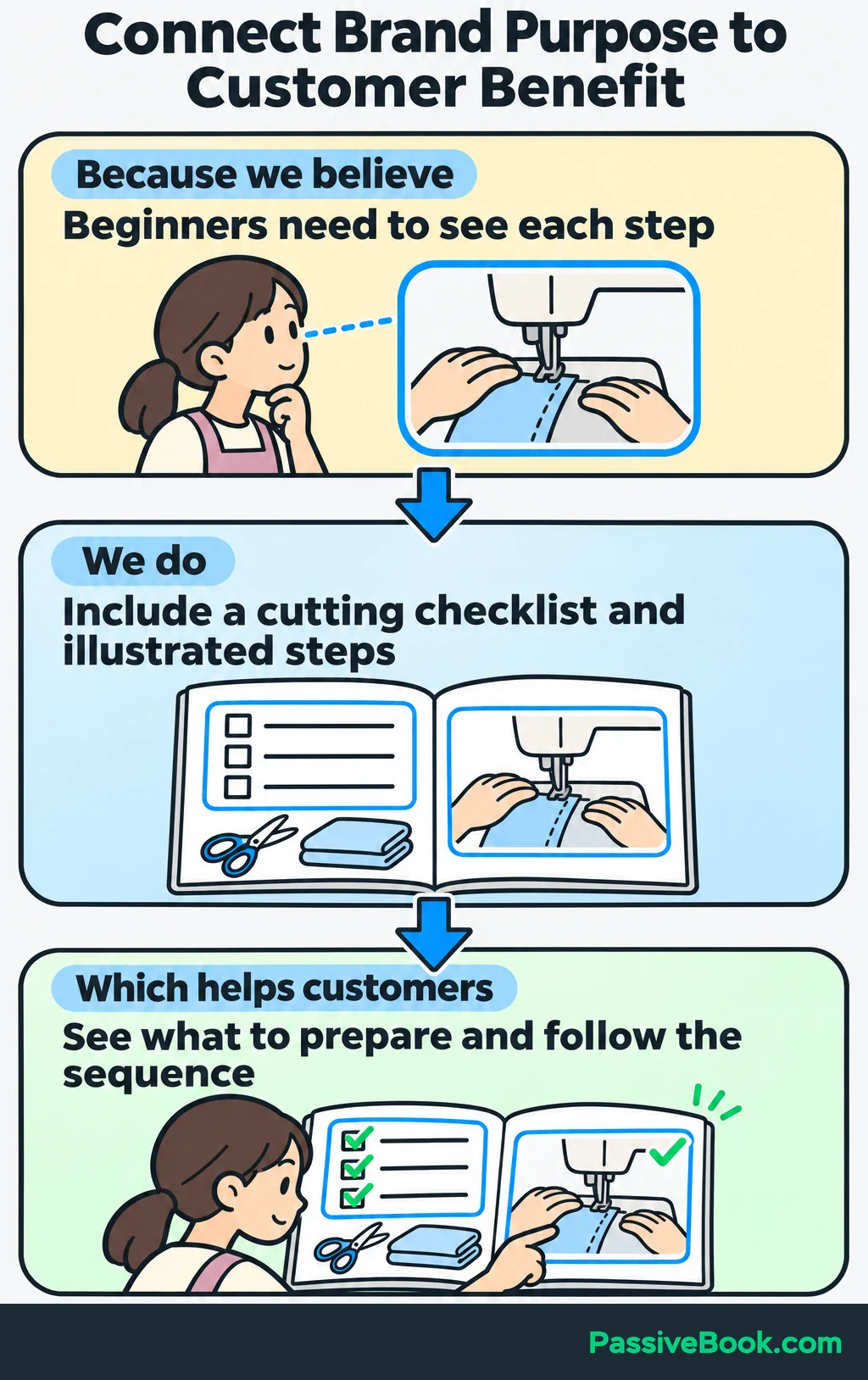
Use this sentence to connect purpose with action:
Because we believe [principle], we do [specific action], which helps customers [practical benefit].
For First Seam, that could become:
Because beginners need to see what each step involves, our tote-bag pattern starts with a cutting checklist and pairs each sewing step with an illustration.
The belief has consequences. It changes what goes into the product.
I ran into a version of this in affiliate marketing. I started by chasing products to promote, then moved toward reviewing tools I actually used. Looking back, the useful story is the change in how I chose and reviewed products. “I wanted affiliate income” explains my motivation, but it tells a reader little about the reviews.
Use the same distinction in your own notes: which experience explains a choice that matters to your customer?
If there was no meaningful founding incident, use your present purpose. First Seam can explain why it includes illustrations without inventing a founder who nearly abandoned sewing after a tragic encounter with a tote bag.
Then find something that makes your approach visible:
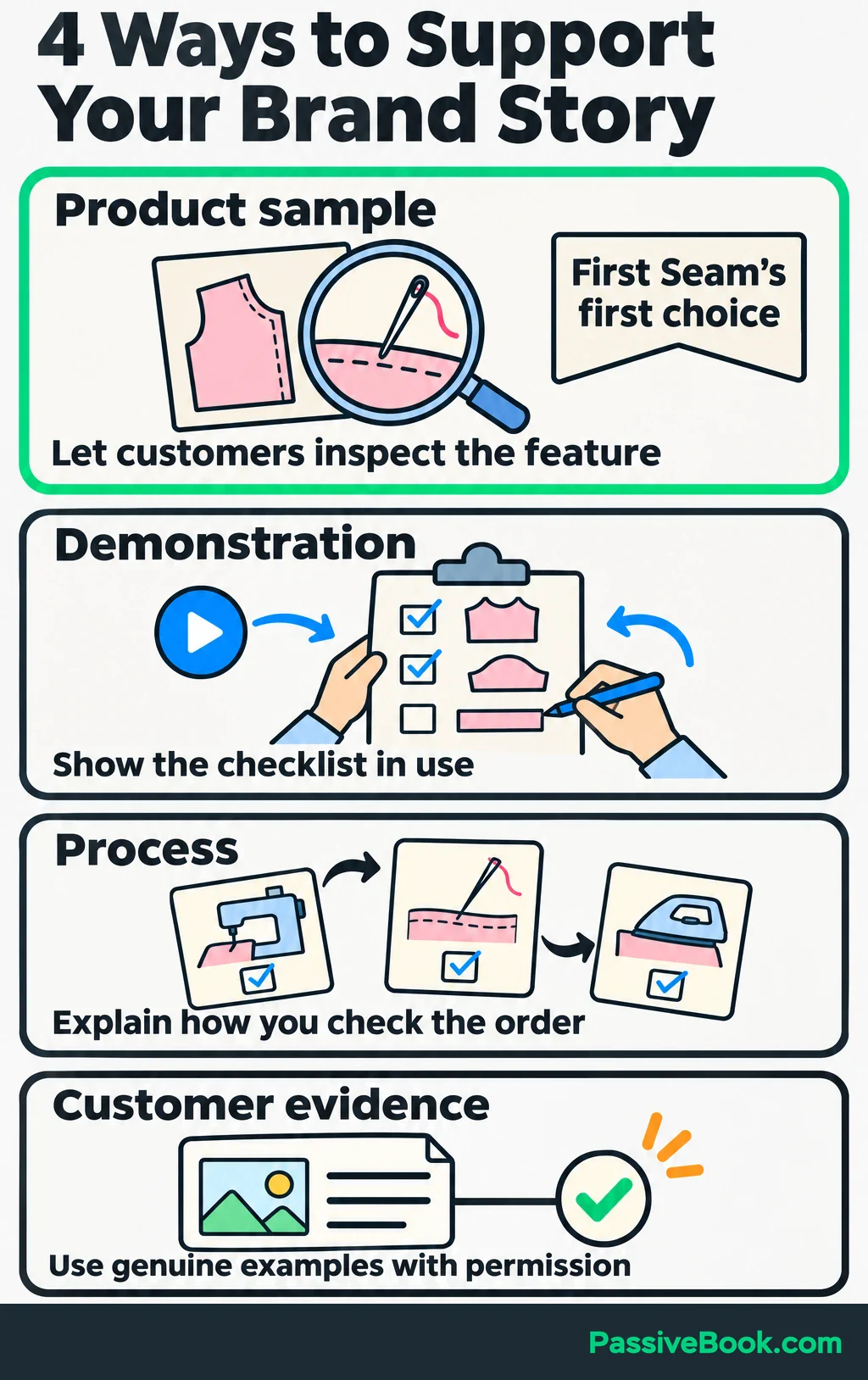
- Product sample: Show an illustrated instruction from the pattern.
- Demonstration: Walk through how the cutting checklist works.
- Process: Explain how you check that instructions follow the order a beginner needs.
- Customer evidence: Use a genuine customer example when you have one and permission to share it.
I would choose the product sample first for First Seam. Someone can inspect the feature the story describes, even if the shop has no testimonials yet.
3. Turn Your Notes Into a Connected Narrative
Arrange your material in this order:
- The customer wants to accomplish something.
- A specific obstacle makes that difficult.
- Your experience or purpose gives you a reason to help.
- Your business responds through concrete choices.
- Those choices support a practical benefit.
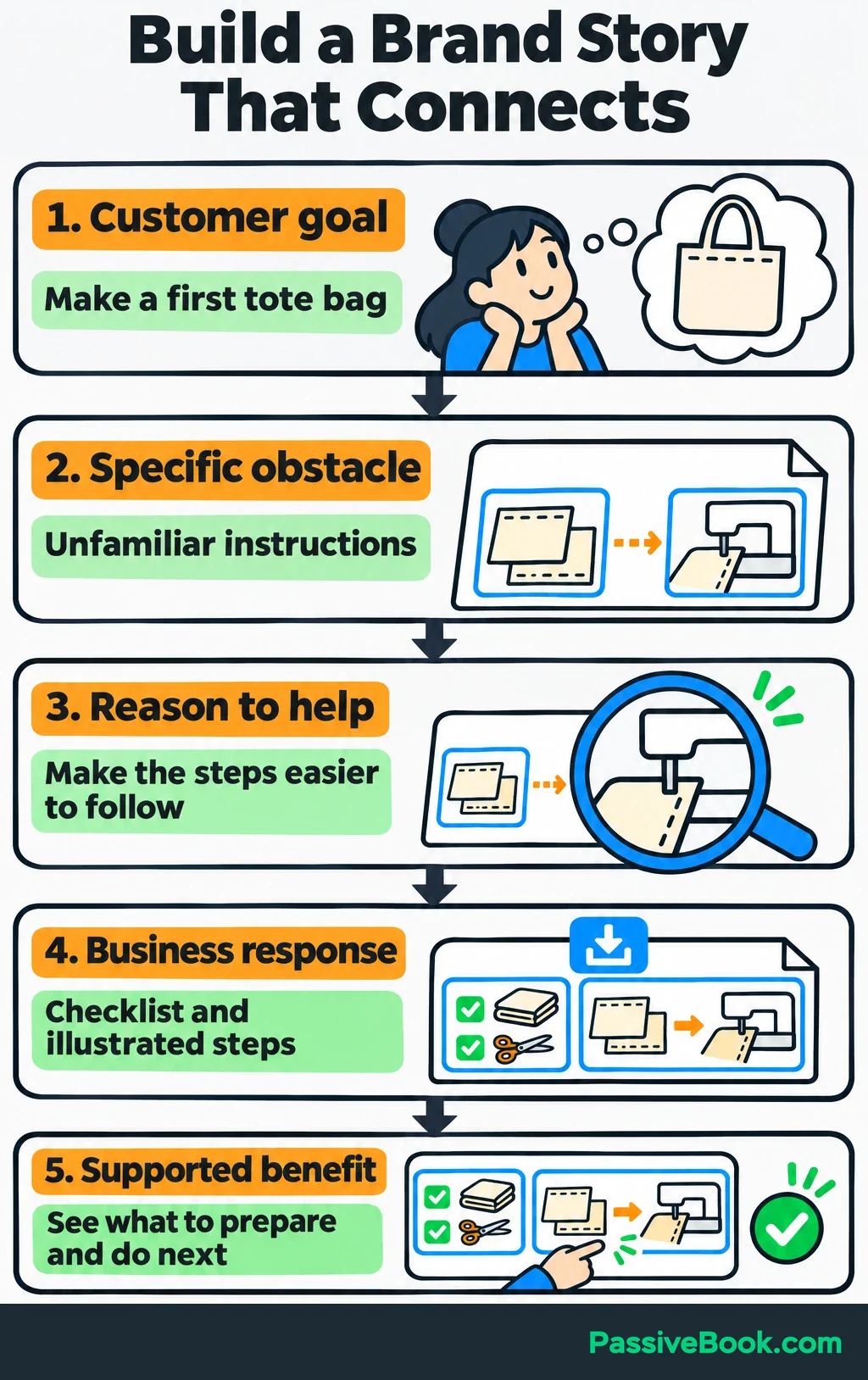
The connections matter more than the number of sentences. Readers should understand why the problem led you to make the offer this way.
Write one concise paragraph first. Explain it as you would to a customer who has asked what makes your business different. Leave slogans until later, if you need one at all.
A Brand Story Template
Use this draft to organize your notes:
[Customer] wants [goal], but [specific obstacle] makes it difficult. [Relevant experience, observation, or current purpose] led us to [decision about helping]. We created [business or offer] with [concrete approach] to help customers [supported benefit]. You can see that approach in [specific product detail, sample, or other evidence].

Replace the prompts, then rewrite anything that sounds stiff. You can combine sentences or remove a slot when the information is already clear.
If you work alone, “I” may feel more natural than “we.” Choose the voice you actually use with customers, and keep it consistent.
Example: First Seam
Here is a complete version:
You want to sew your first tote bag, but unfamiliar instructions can leave you unsure what to cut or sew next. First Seam exists to make those steps easier to follow. That purpose shapes our downloadable tote-bag pattern: a cutting checklist before you begin and an illustration beside each sewing step. You can see what to prepare and follow the sequence as you make your bag.
The opening gives the customer a goal and names the obstacle. The next sentence explains the business’s purpose, and the checklist and illustrations show how that purpose shapes the product.
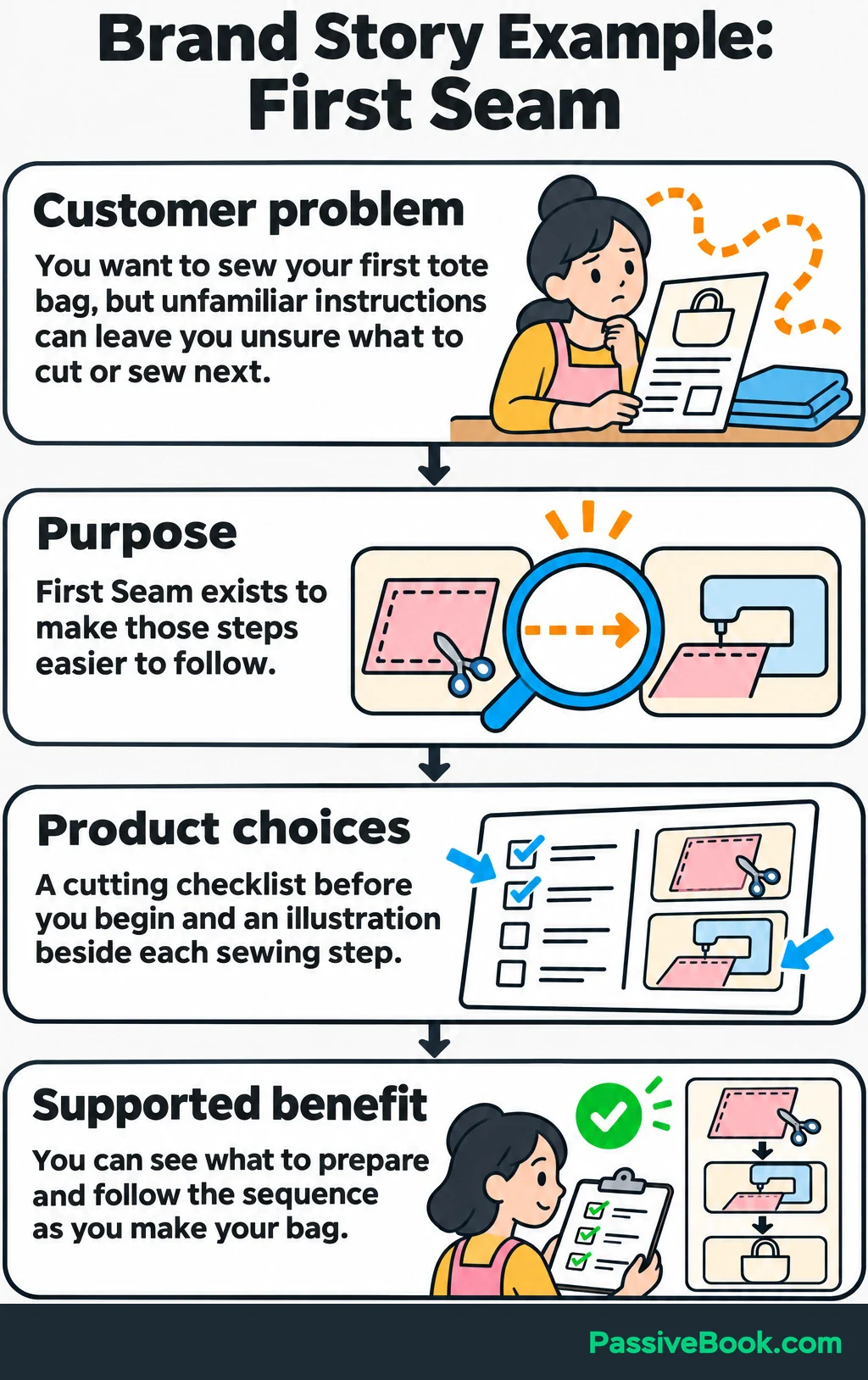
The final benefit stays close to those features. A checklist helps you see what to prepare, and illustrations show the steps. Neither supports a promise that every beginner will make a flawless bag.
Notice that the story works without a founder biography. Relevant personal history could add context, but the customer already has a clear reason for the offer to exist.
If you can name your customer’s problem and one choice you make to help, you have material for a first draft. This AI Skill helps connect those details without forcing them into a founder biography.

Free AI Copywriting Studio




4. Edit for Specificity and a Natural Voice
Once the ideas connect, look for phrases that could belong to almost any business.
Try replacing your business name with a competitor’s. If the paragraph still fits perfectly, find the missing detail.
For example:
“We’re passionate about helping beginners unlock their creativity.”
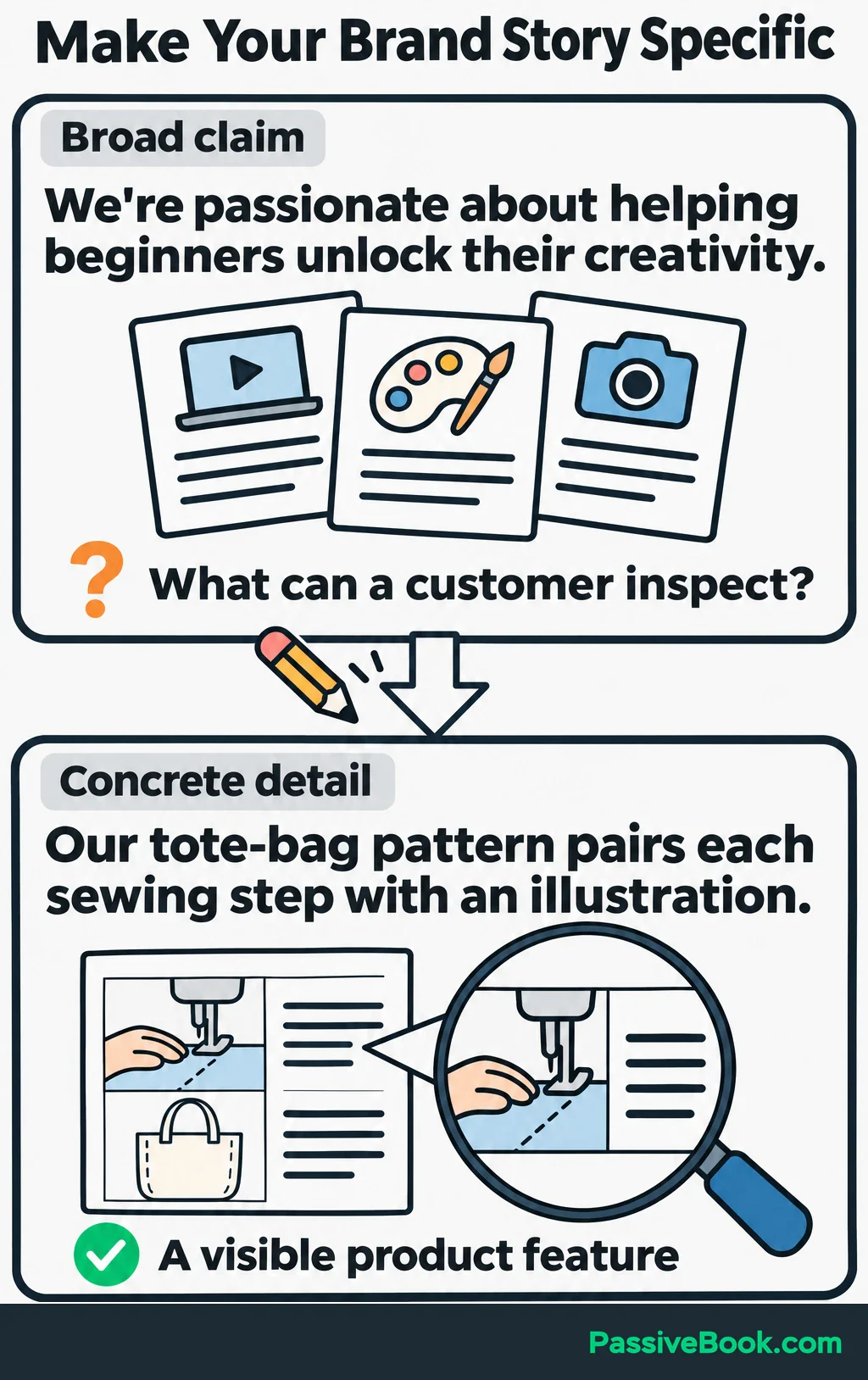
could become:
“Our tote-bag pattern pairs each sewing step with an illustration.”
The second version gives someone something to inspect. You can still express warmth and enthusiasm, but they don’t have to carry the explanation.
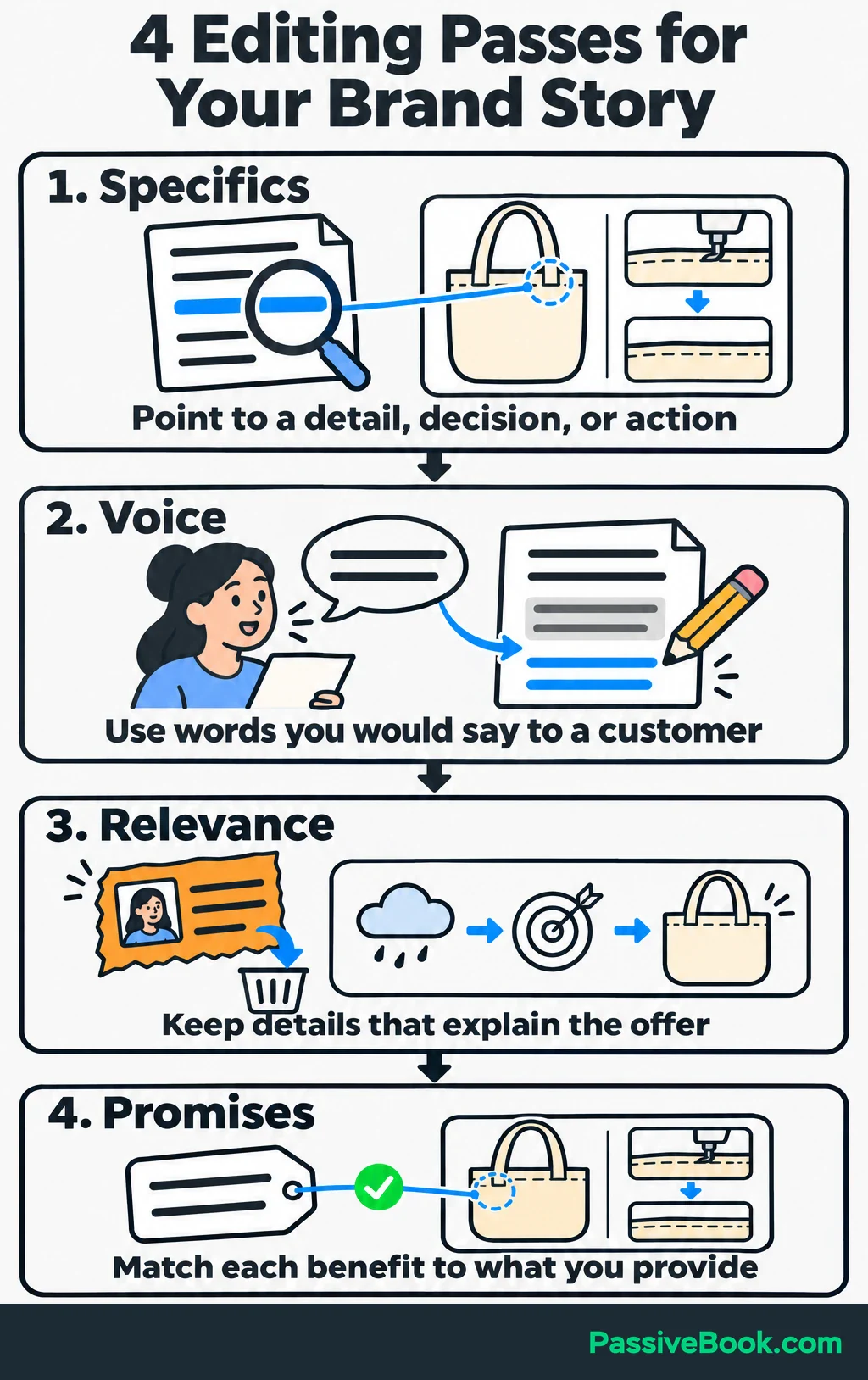
I would make four editing passes:
- Specifics: Replace broad claims with a product detail, decision, or action.
- Voice: Read the paragraph aloud and rewrite phrases you would never say to a customer.
- Relevance: Cut biography and milestones that don’t explain the purpose, approach, or benefit.
- Promises: Check that each claimed benefit follows from something you actually provide.
Keep emotion close to the situation. Being stuck halfway through a project is frustrating enough. You don’t need to describe it as a battle against self-doubt.
Also check for repetition. If three sentences say you care about beginners, keep the strongest one and use the space to explain what you do for them.
A useful final test is: “What would a customer point to as evidence of this sentence?” If the answer is unclear, make the sentence more concrete or remove it.
5. Test Whether Readers Understand the Story
Share the draft with people who resemble your intended customers, and let them read it before you explain anything.
Ask them to answer in their own words:
- “What would you expect to buy from this business?”
- “Who do you think it helps?”
- “Why do you think the business exists?”
- “What stands out about its approach?”
- “Which detail do you remember?”
- “What feels unclear?”
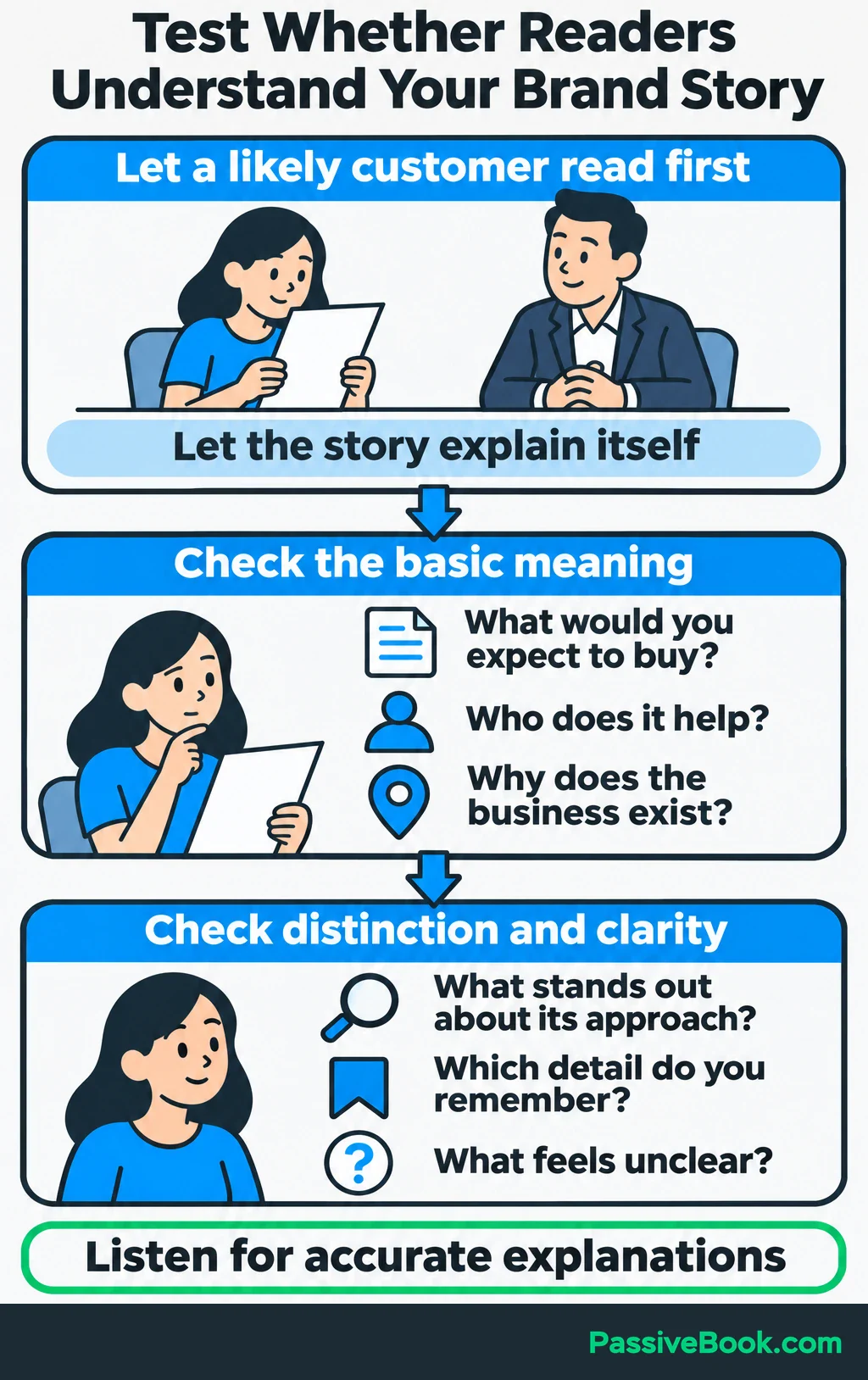
You’re checking what the paragraph communicates. “Sounds inspiring” is pleasant, but an accurate explanation gives you more useful direction.
For First Seam, “It sells finished tote bags” would reveal a problem with how the offer is described. Move “downloadable sewing pattern” earlier or make it clearer.
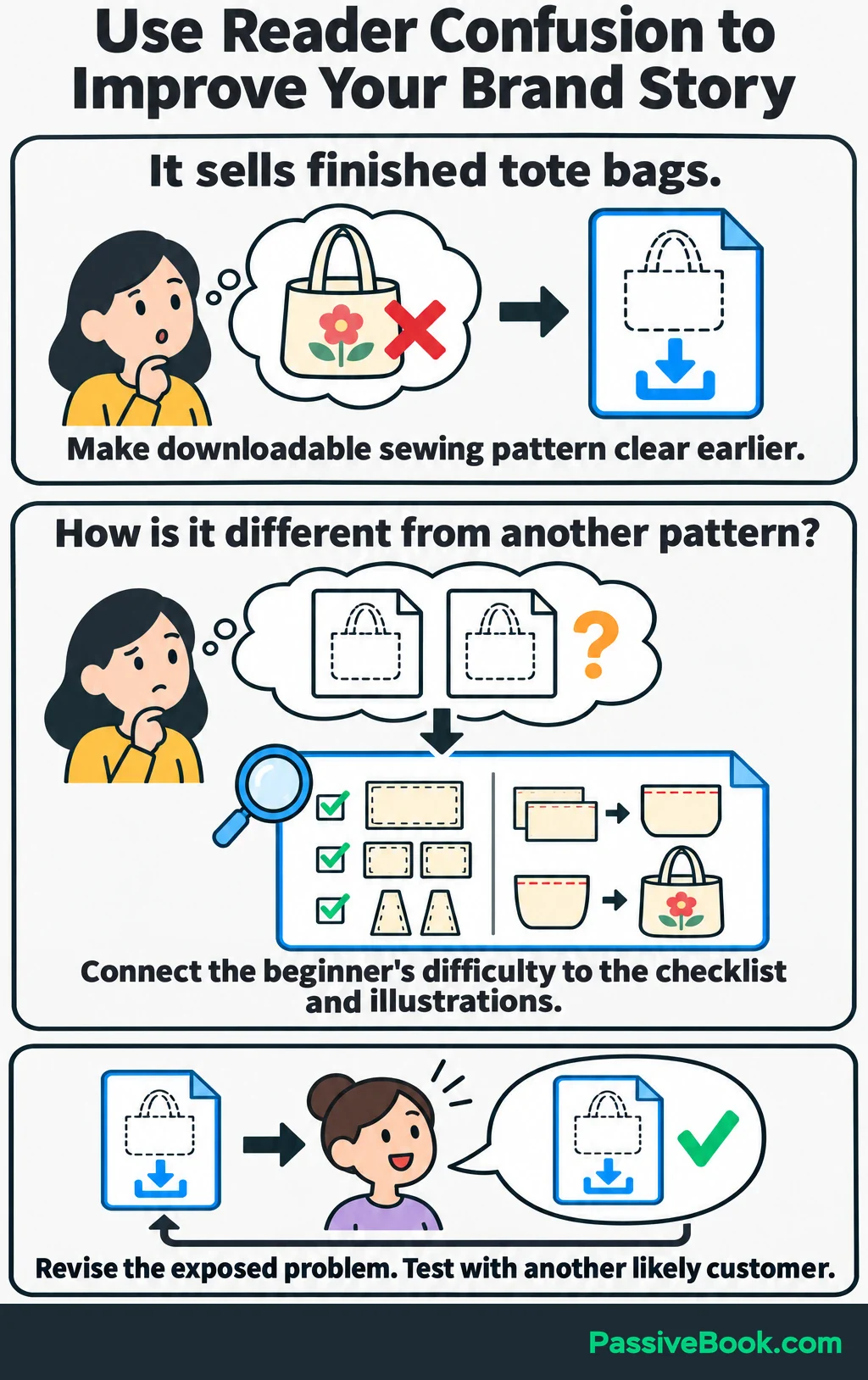
If someone understands the product but says, “I don’t know how this differs from any other pattern,” strengthen the connection between the beginner’s difficulty and the checklist and illustrations.
Revise the part their answer exposes, then try the new draft with another likely customer. I would do this before polishing every word. There is little value in perfecting a sentence people misunderstand.
6. Adapt the Story for Where Customers Encounter It
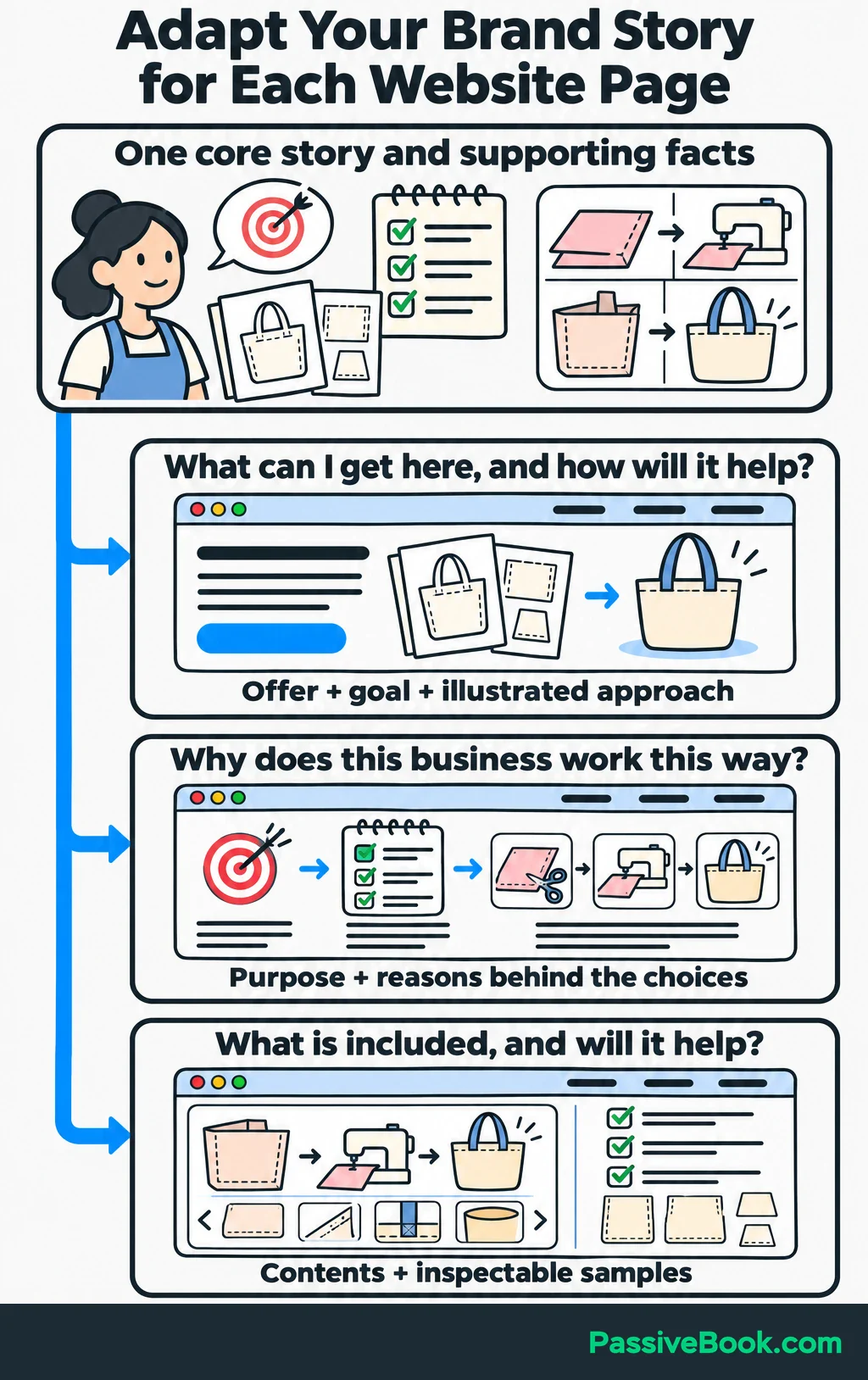
Save your core story in one document with the facts that support it. Use that as the source when you write shorter versions.
Each page needs a different emphasis because people arrive with different questions.
| Placement | Reader’s question | Story elements to use |
|---|---|---|
| Homepage | “What can I get here, and how will it help?” | Name the downloadable patterns, the beginner’s goal, and the illustrated approach. |
| About page | “Why does this business exist, and why does it work this way?” | Explain the purpose and the choices behind the checklist and step-by-step illustrations. Add relevant founder experience if available. |
| Product page | “What is included, and will it help with the part I find difficult?” | Describe the tote-bag pattern’s contents and show a sample illustrated step and cutting checklist. |
For a homepage, you might shorten First Seam’s story to:
Sew your first tote bag with illustrated instructions and a cutting checklist.
That line gives the page a clear starting point. The fuller explanation and a product sample can follow.
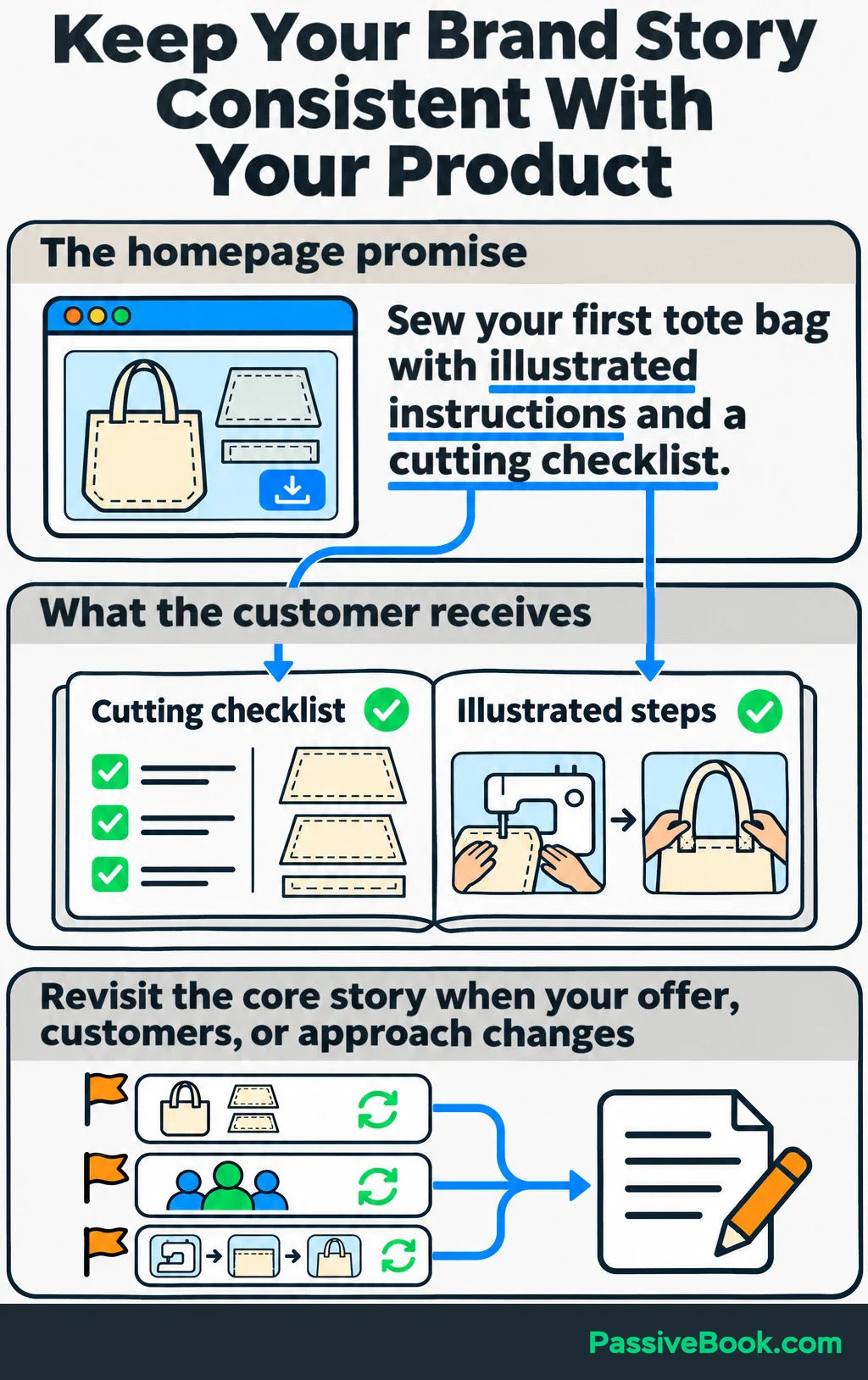
An About page has room to explain why those details matter. A product page should let the buyer inspect them. Repeating the same paragraph everywhere wastes the opportunity to answer the question at hand.
Keep the underlying meaning consistent. If the story promises illustrated guidance, customers should find it in the product. Revisit the core version when your offer, customers, or approach changes.
What Next?
Write three rough sentences: the problem your customer faces, why you address it, and the business choice that follows. Use them to draft one paragraph before changing anything on your website.
If this helped you turn a vague mission into something concrete, use the social buttons to share the template and example.
Which choice in your business best shows why it exists? Tell me in the comments, and bring any questions about your draft too.
Share this post with your friends & followers:

