Your posts can look polished and still leave people unsure what your business does. One shares a useful tip, another follows a trend, and the next promotes an offer that seems to belong to a different account.
That takes time to maintain, but it gives people little reason to remember you or explore what you sell. This guide shows how to turn those scattered posts into a recognizable presence that gives interested people a clear route to your products, with a posting routine that fits around running your business.
Define What You Want to Be Known For
Before choosing colors or planning posts, decide what you want people to remember about your business.
Start with three questions:
- Who needs what you sell?
- What are they trying to do or solve?
- What does your approach help them do differently?
Look through customer emails, reviews, and inquiries for concrete answers. If you haven’t made sales yet, talk to prospective customers about what they’ve tried and where they get stuck. “Would you follow my account?” tells you less than “What made you abandon your last project?”
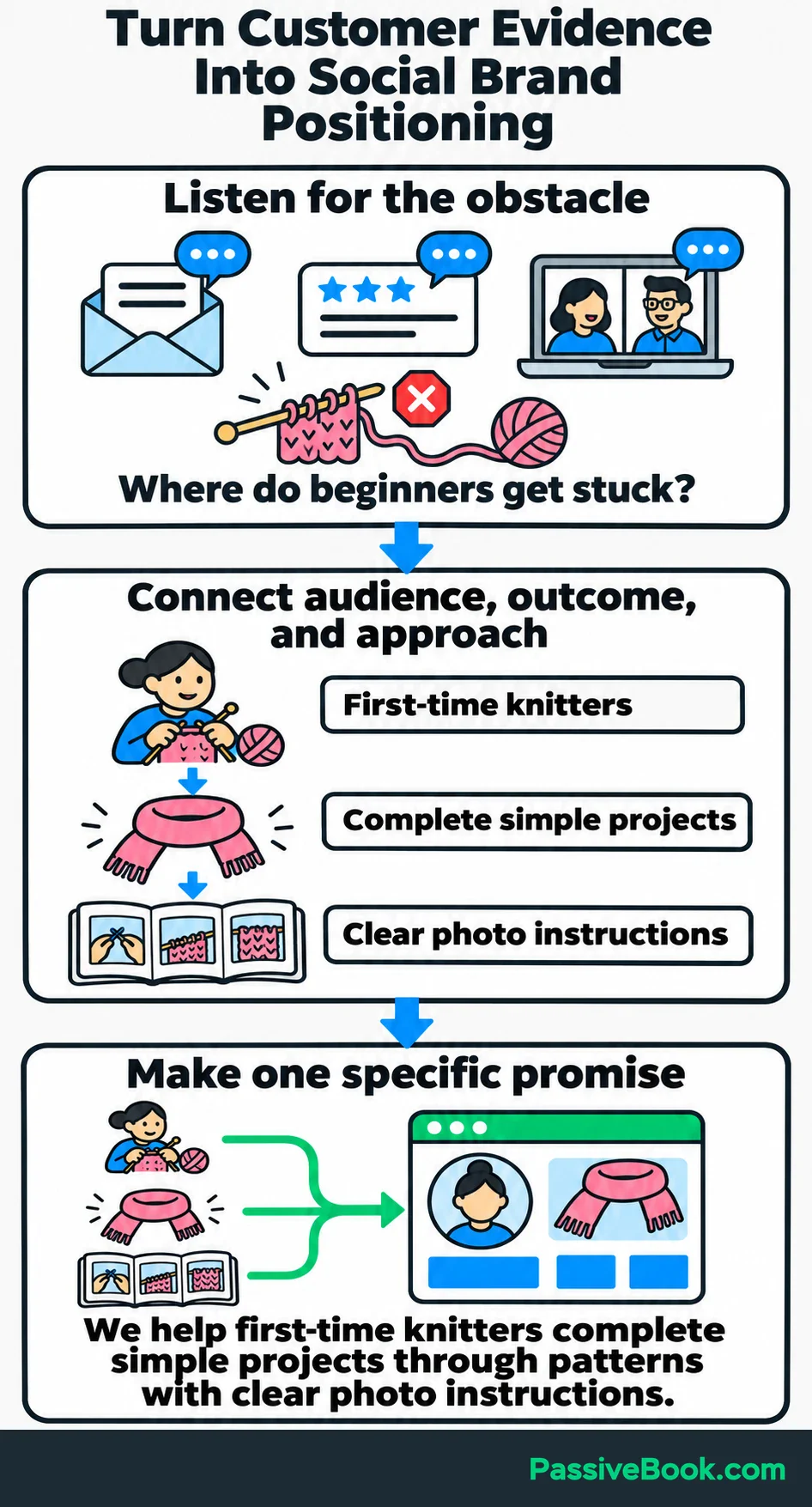
Throughout this guide, imagine you run First Stitch Patterns, an online shop selling beginner knitting patterns with photo instructions. Its positioning, content, and customer journey are illustrations.
Your positioning sentence could be:
We help first-time knitters complete simple projects through patterns with clear photo instructions.
That gives you something specific to demonstrate. “Quality patterns made with passion” gives you adjectives.
Next, review comparable businesses. Look for questions their posts leave unanswered, instructions people find confusing, or products that need a clearer demonstration. Choose a gap you can serve consistently.
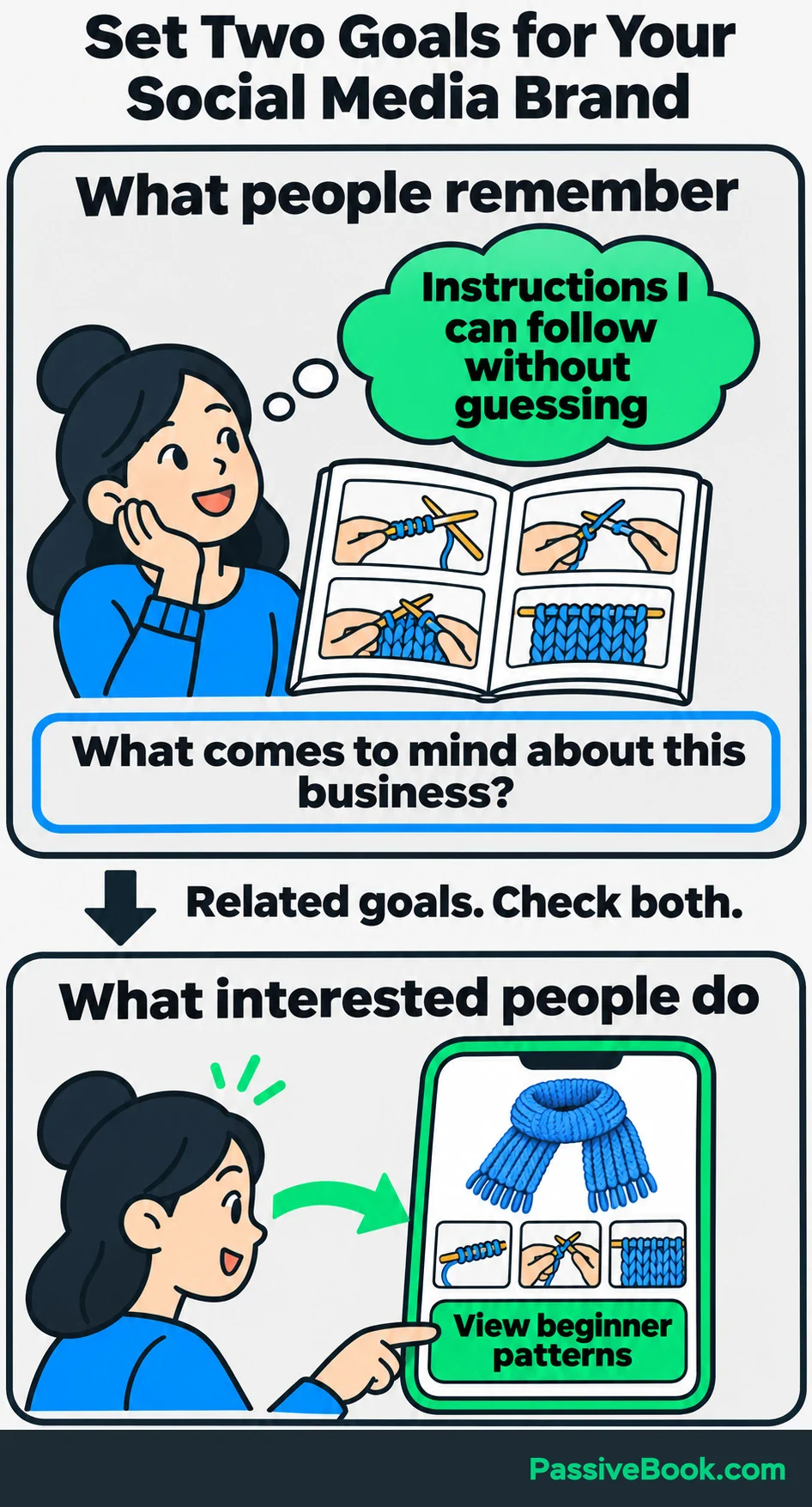
For First Stitch Patterns, the association you want to build might be “instructions I can follow without guessing.” The business action could be visits to suitable beginner patterns.
Write down both. A memorable account and a useful sales channel are related goals, but you need to check each one.
If you’re building a personal brand, use the same process and connect the promise to your name, perspective, and work. Decide whether your name or business name will anchor the presence before creating profiles. I would choose the identity you want customers to remember when they recommend you.
Choose One Primary Social Platform
Choose your first platform by the work it needs to do.
Look for places where people already ask questions your business can answer. Read the discussions and inspect relevant posts. A competitor’s large following tells you little about whether you can reach suitable customers with content you can afford to make.
Compare your options using four questions:
- Are relevant people actively discussing or exploring this subject?
- Can you show your value clearly in the available formats?
- Can you produce that content within your weekly time allowance?
- Is there a practical route from the content to your business?
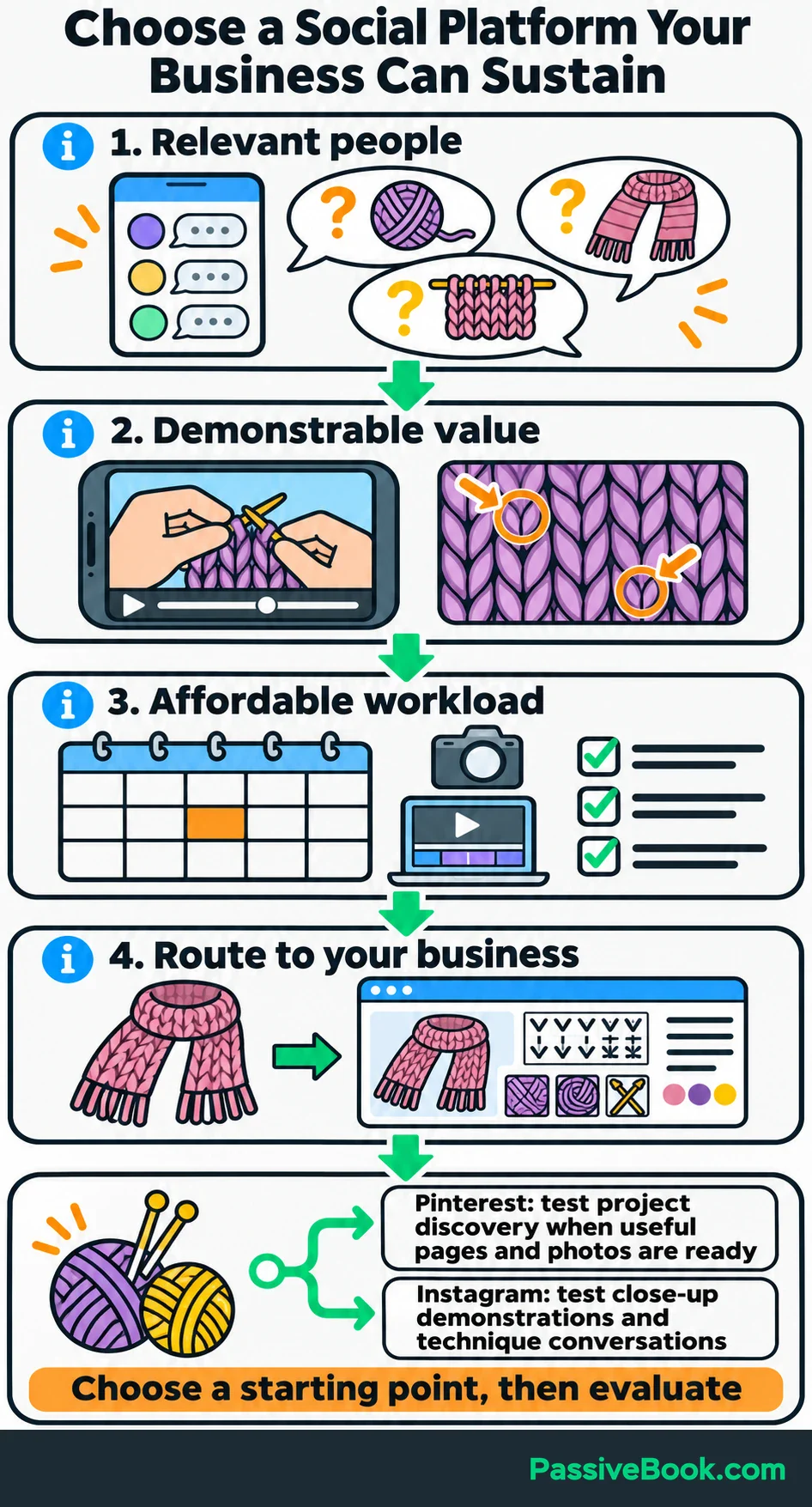
For First Stitch Patterns, Instagram could suit close-up demonstrations and conversations about mistakes. Pinterest could suit people searching for their next project and saving instructions. Pinterest describes its service as a visual discovery engine, with search, saved ideas, and links to websites. That makes project discovery a reasonable role to test. Pinterest’s platform overview
For this example, I would start with Pinterest if you already have useful project pages and clear photographs. I would choose Instagram first if answering technique questions through short demonstrations is the strongest part of your offer.
You don’t need to commit forever. You need a focused starting point.
Concentrate your original content on that channel. Add another when it serves a clear need and fits your routine. “We should probably be there too” is an expensive reason to create another weekly obligation.
Make Your Brand Easy to Recognize
Create a short brand guide you can use while making posts. One page is enough.
Include:
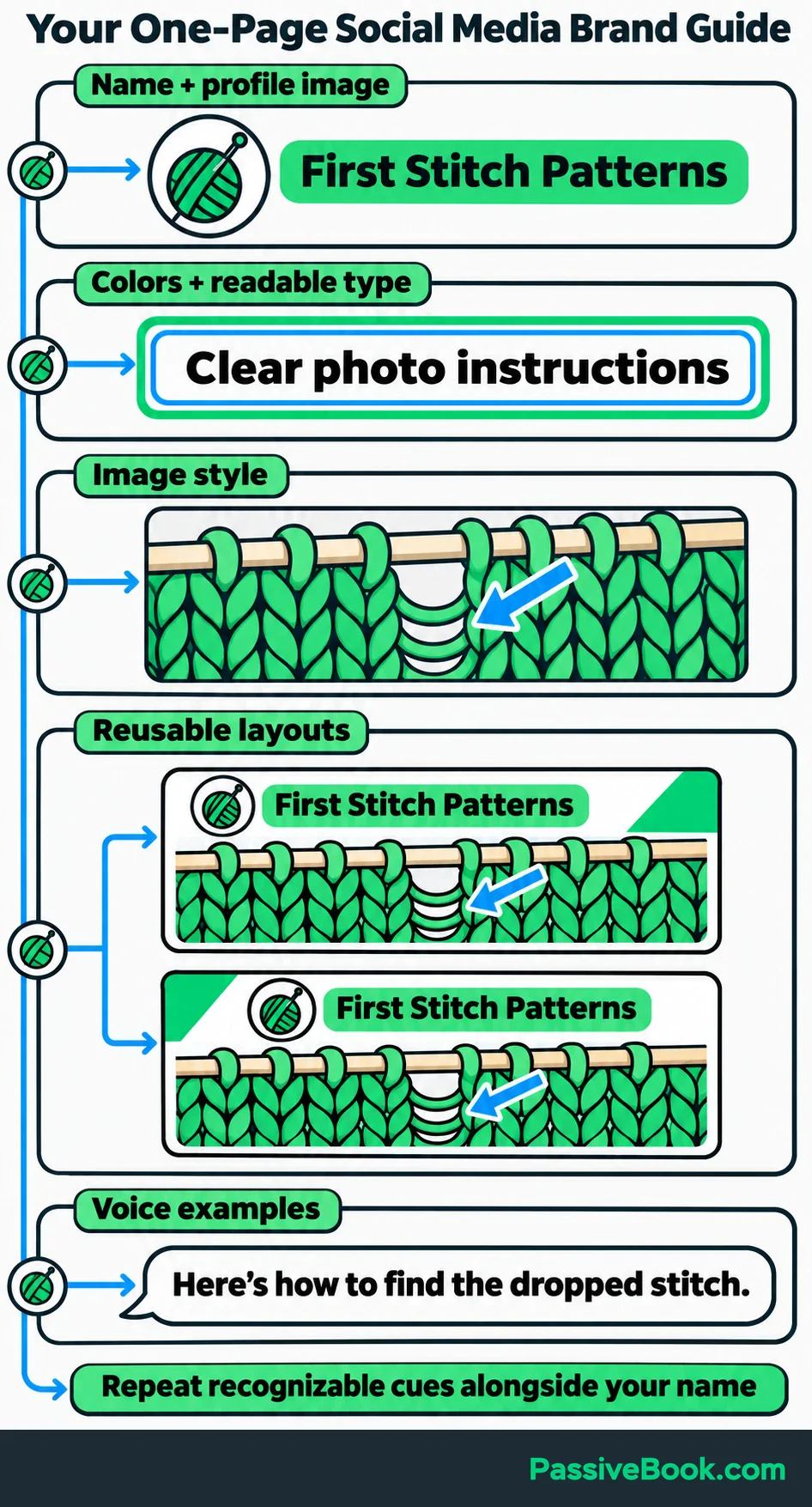
- Name and Profile Image: The name customers will see and an image that remains clear at a small size.
- Colors and Type: A small set of colors and readable fonts.
- Image Style: How you photograph products, frame demonstrations, and add annotations.
- Post Layouts: Reusable designs for explanations, product previews, and announcements.
- Voice: A few examples of wording you would use and wording you would avoid.
For First Stitch Patterns, that might mean cream backgrounds, dark green headings, close-up stitch photographs, and simple arrows. Keep the shop name visible while people learn those cues.
Choosing a color doesn’t make it recognizable as yours. The Ehrenberg-Bass Institute describes distinctive brand assets as cues, such as colors or logos, that people associate with one brand rather than its competitors. Brands of Distinction
I’d apply that here by using the same colors, fonts, and layouts alongside your name while people learn to recognize them.
Keep established elements customers already recognize. I wouldn’t redesign a working identity because I got bored with the templates.
Voice needs the same practical treatment. For First Stitch Patterns, “patient and specific” could sound like:
Here’s how to find the dropped stitch.
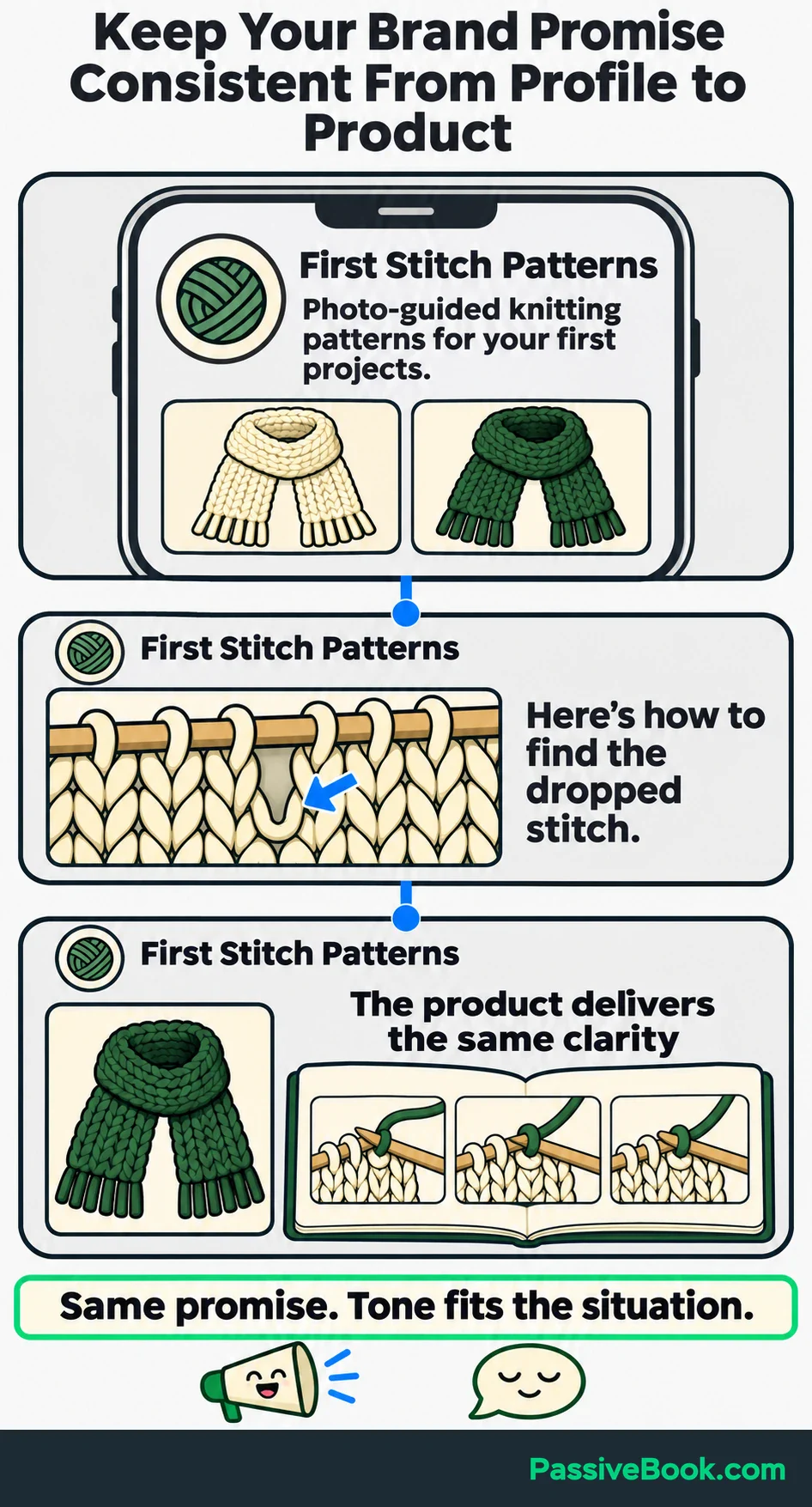
It probably wouldn’t sound like:
Unlock your limitless knitting potential.
Keep that underlying voice consistent, but adjust your tone. A product announcement can be cheerful. A frustrated customer needs a direct answer.
Your profile should explain what you offer and why someone should follow. For example:
Photo-guided knitting patterns for your first projects. Follow for clear instructions and help with common mistakes.
Carry the same promise into your website and products. The account should feel like the front door to the business visitors find after clicking.
Give Interested Visitors a Clear Next Step
Choose the destination before writing the invitation.
Someone watching a beginner demonstration may want more guidance. Someone examining the finished product may be ready to buy. Give each person a route that fits their interest.
For First Stitch Patterns, one path could be:
Scarf demonstration → free first-scarf checklist → matching scarf pattern.
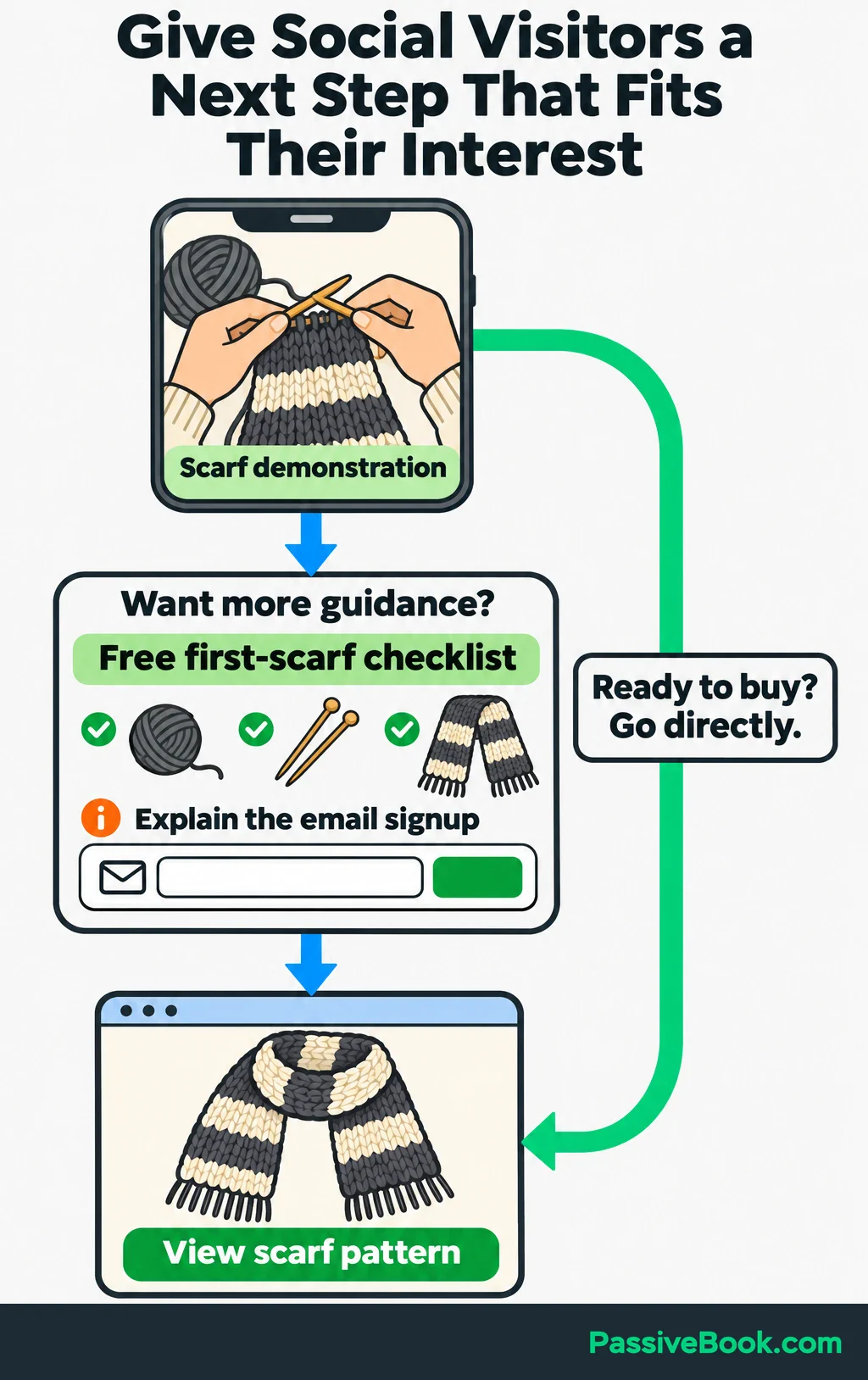
The checklist should help people prepare for the project, and the pattern should continue the same approach. Explain any email signup clearly, including what subscribers will receive.
Keep a direct route to the pattern for visitors who already want it. Don’t make ready buyers complete an obstacle course disguised as a funnel.
I spent six months chasing Instagram and Twitter/X followers in a separate niche while my bank balance stayed around $47. I remember checking follower totals more readily than the route from a post to an offer. That habit is why I now decide where useful attention should lead before planning more content.
Your profile invitation could be:
Start your first scarf with the free preparation checklist.
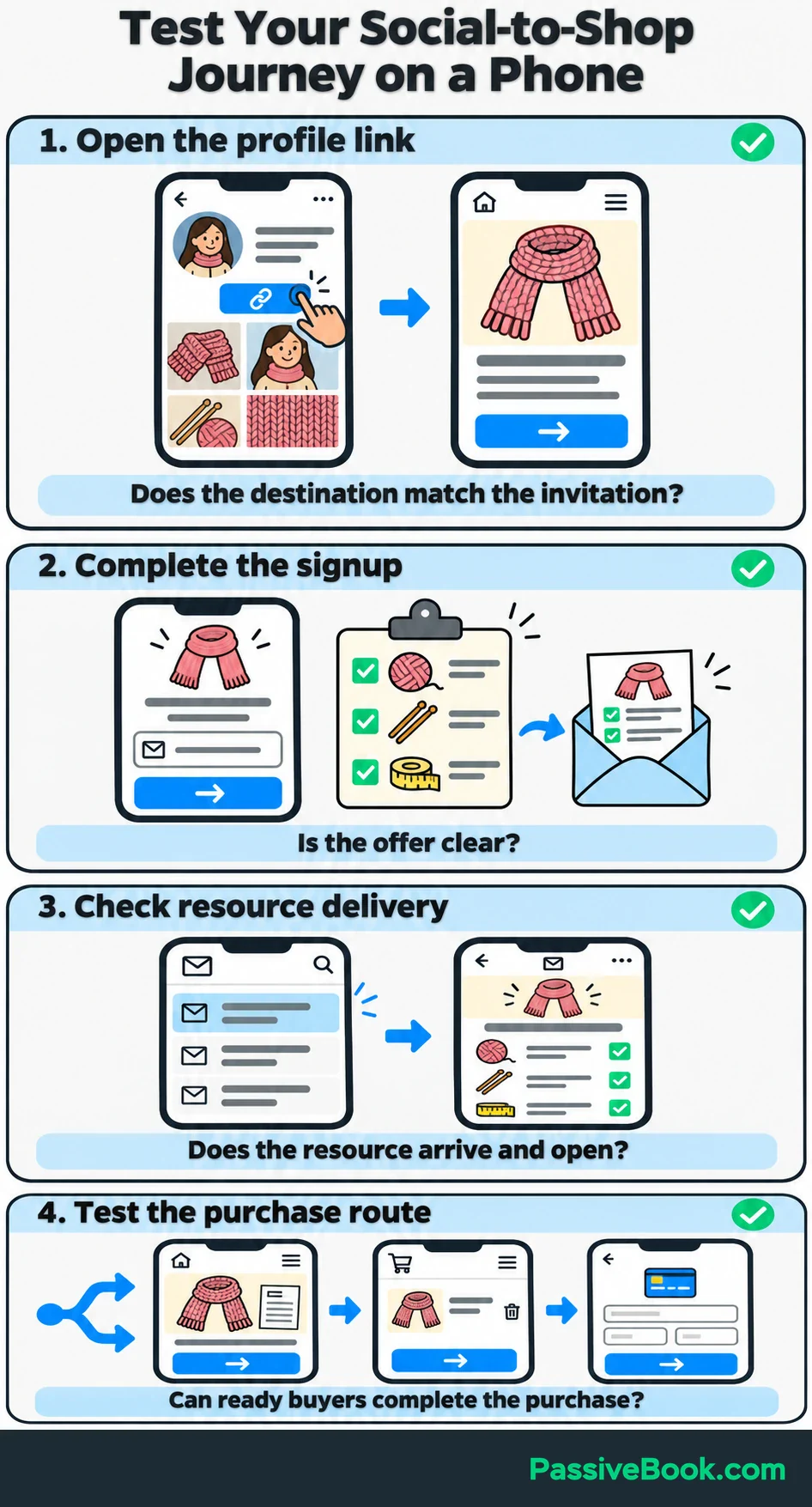
Then test the whole journey on your phone. Open the link, read the page, complete the form, and check that the resource arrives. Test the purchase route too.
A clear invitation can’t rescue a broken destination.
Create Content That Demonstrates Your Brand Promise
Build Recurring Themes Around Customer Questions
Choose a few recurring themes where customer needs, your knowledge, and your offer overlap.
For First Stitch Patterns, three useful themes would be:
| Theme | Specific Question | What the Post Could Show |
|---|---|---|
| Choosing a first project | “Can I make this scarf with the stitches I know?” | The finished scarf beside the skills the pattern requires |
| Understanding instructions | “What should this step look like?” | A pattern instruction beside its annotated photograph |
| Correcting mistakes | “Where did this dropped stitch start?” | A close-up sequence showing how to locate it |
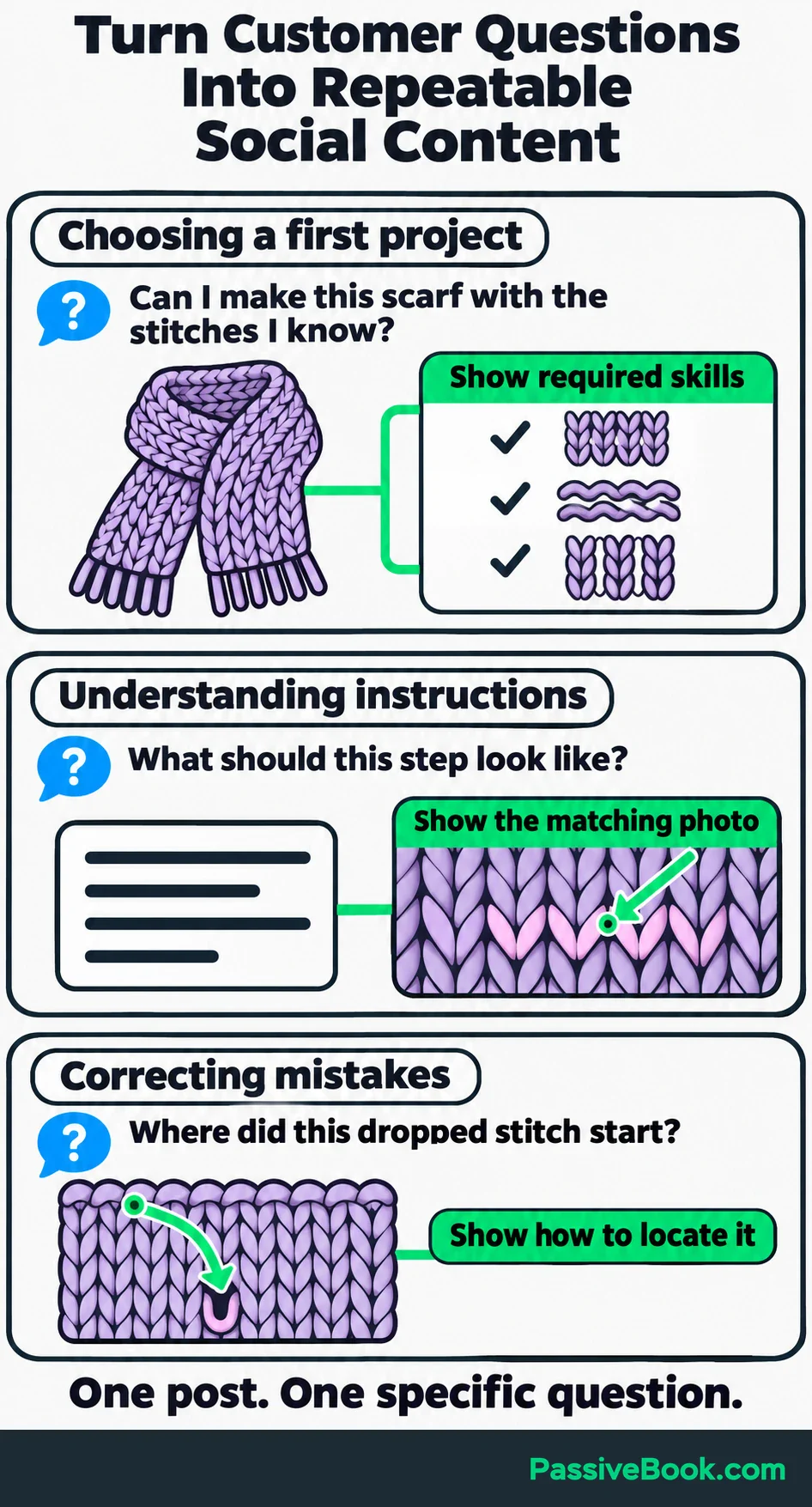
Each post should answer one question well. “Knitting tips” is a folder name, not a useful brief.
Show the approach that makes your business worth considering. If you promise clear photo instructions, let people inspect an instruction, its matching photograph, and the resulting stitches. They can judge the clarity themselves.
Stories can help when they explain a decision. You might show a confusing instruction, explain why you added another photograph, and display the revised sequence.
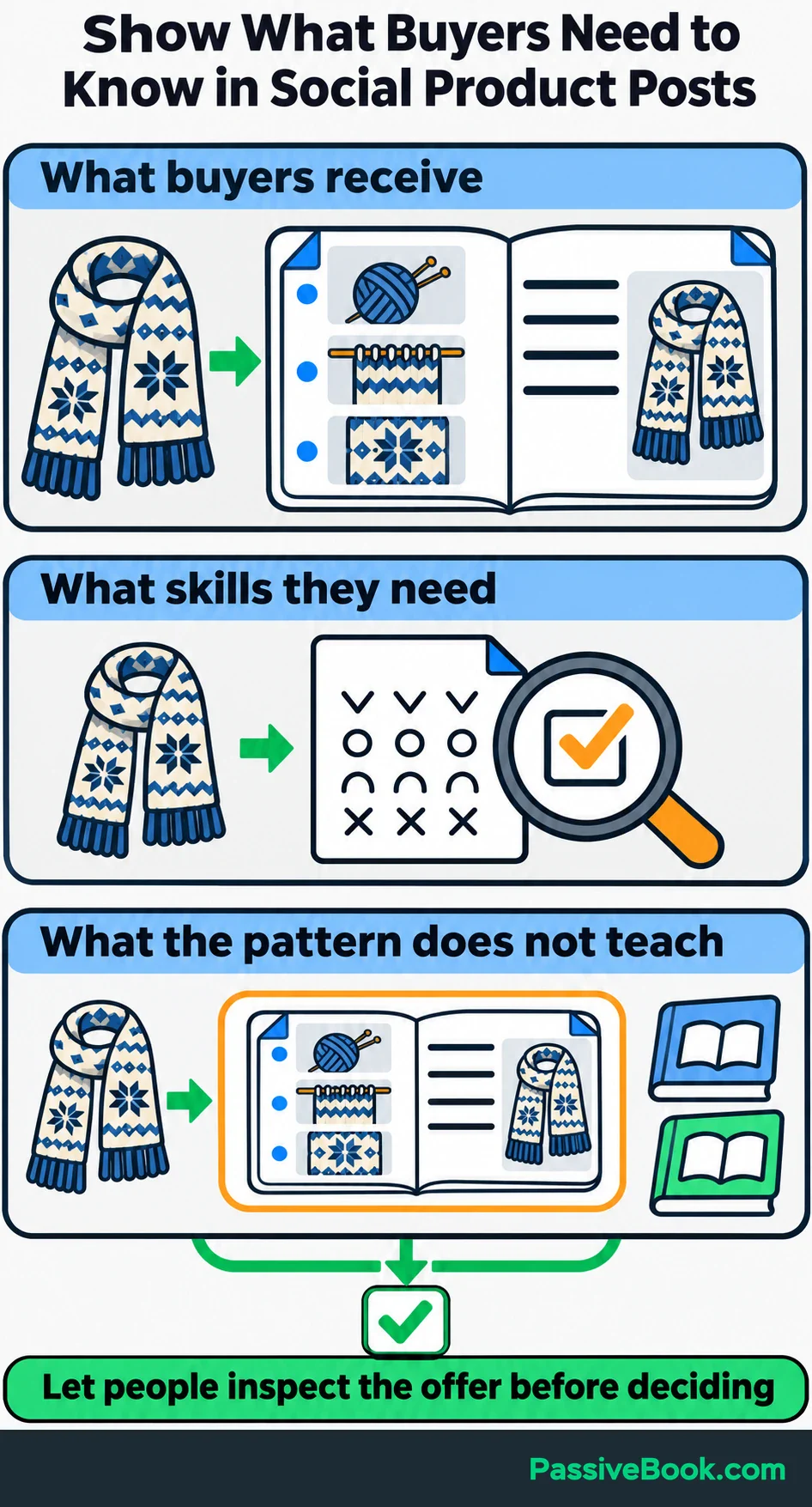
Include posts about the offer itself. Show what buyers receive, what skills they need, and what the pattern doesn’t teach. A helpful account that never explains its products leaves interested people guessing.
I would keep useful demonstrations and offer explanations in the same calendar. There’s no virtue in being so helpful that nobody realizes you sell anything.
Match the Format to the Explanation
Let the question determine the format.
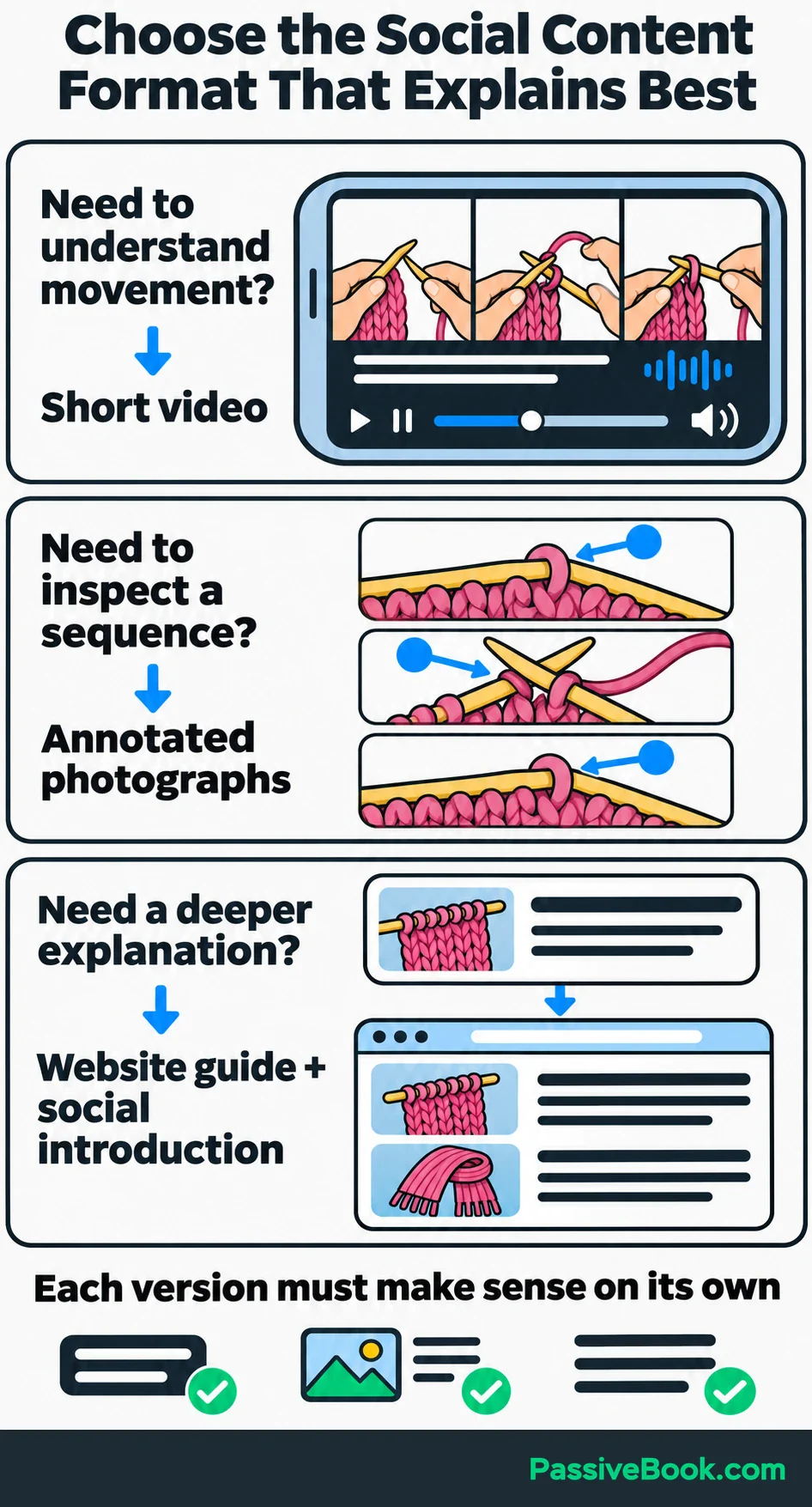
Movement may need a short video. A sequence that readers need to inspect may work better as annotated photographs. A more involved question may deserve a full website guide with a short social post introducing it.
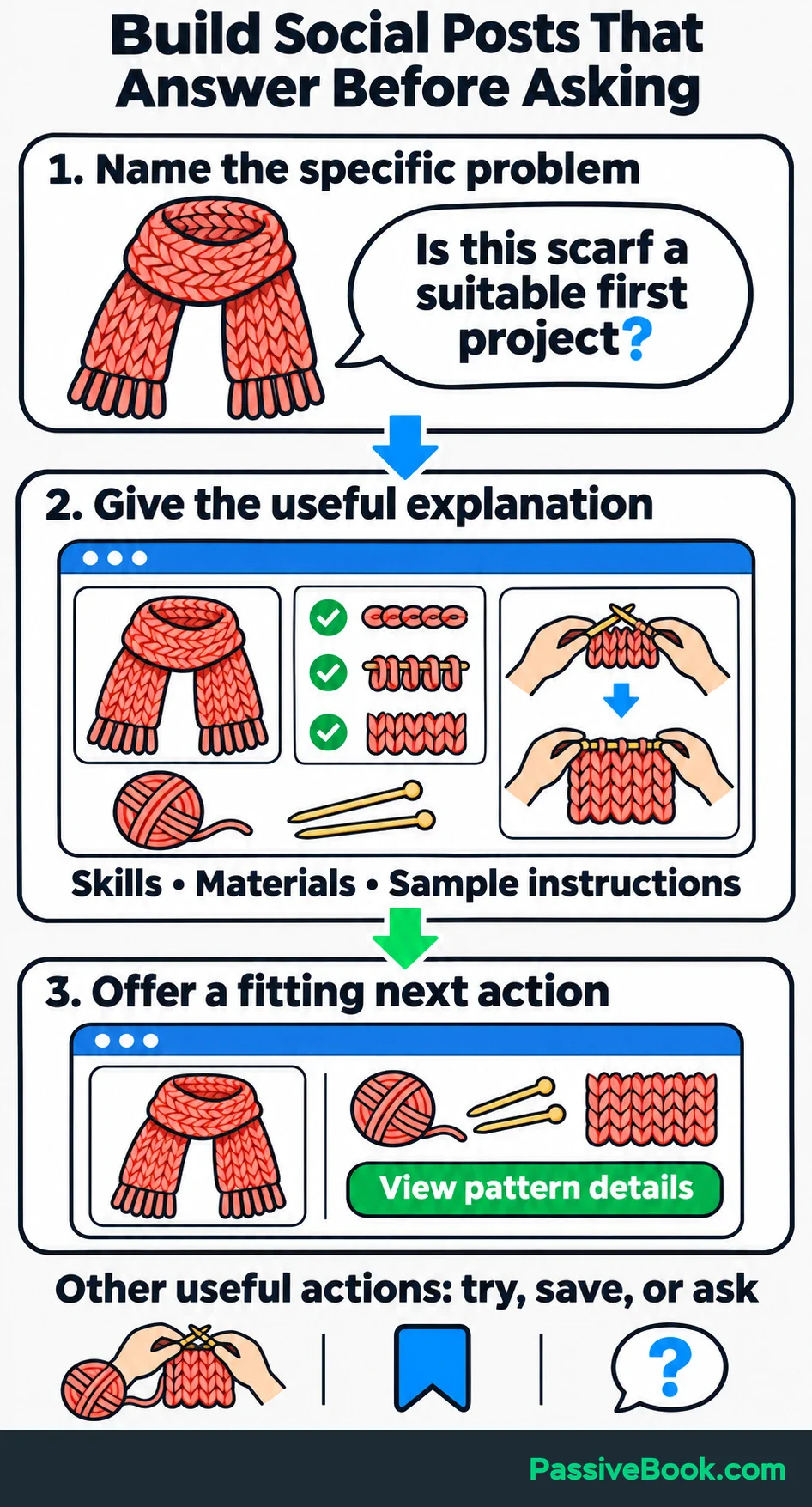
Give each post three connected parts:
- A specific opening that identifies the problem.
- An explanation or demonstration that answers it.
- A next action that fits what the person just learned.
For example, “Not sure whether this scarf is a suitable first project?” should lead into the required skills, materials, and sample instructions. The invitation can then point to the pattern details.
If turning your promise into actual posts is where you get stuck, AI Social Copy Studio gives you a profile draft and three matching posts. Start with your business details and one customer question you can answer.

Free AI Social Copy Studio




You don’t need to appear on camera to make that explanation useful. Hands-only footage, photographs, screen recordings, and text can all do the job. Use your face when your presence helps, rather than treating it as an entry fee.
When repurposing, adapt the explanation to its new setting. A demonstration video might become a sequence of annotated images, but each version should make sense without the other.
Also make the content usable. Include meaningful image descriptions, check video captions, and use readable text with clear contrast. If a movement carries the lesson, explain it through narration or descriptive text too. These practices follow W3C’s accessibility principles for images, media, and presentation. W3C accessibility principles
Not every post needs a sales invitation. Sometimes the right next action is to try the technique, save the instructions, or ask a follow-up question. Deliver the answer before asking for more attention.
Build a Publishing Routine You Can Maintain
Set your time allowance before choosing your posting frequency.
Count the whole job: finding questions, creating posts, checking links, publishing, answering people, and reviewing what happened.
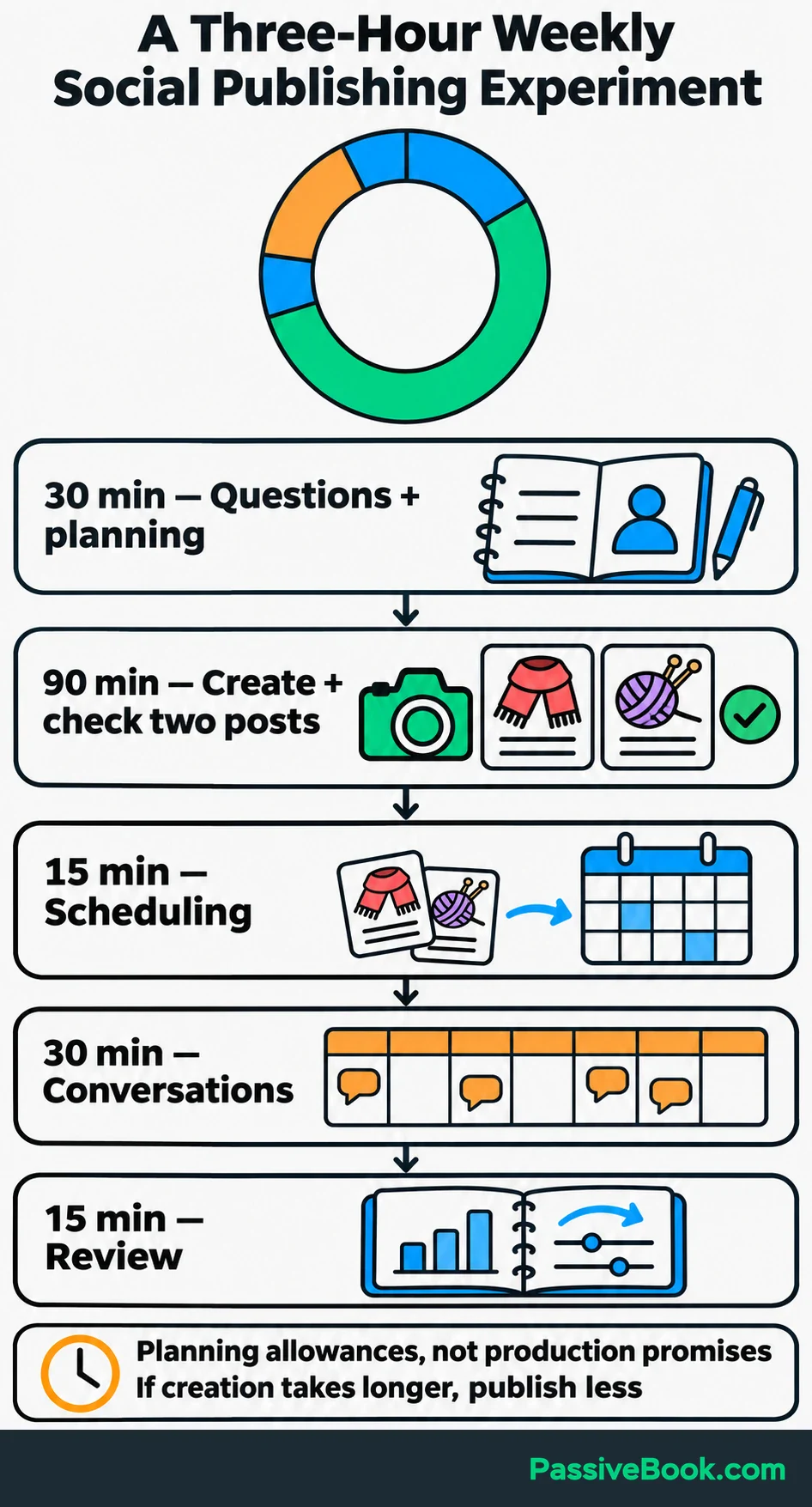
As a starting experiment, a three-hour weekly allowance could look like this:
- Questions and Planning: 30 minutes to choose topics and gather supporting material.
- Content Creation: 90 minutes to make and check two posts.
- Scheduling: 15 minutes to prepare finished posts for publication.
- Conversations: 30 minutes spread across the week.
- Review: 15 minutes to record results and choose the next adjustment.
Those are planning allowances, not production promises. If a demonstration takes longer, publish less while you improve the process.
Use a simple calendar in Notion or a spreadsheet. Record the customer question, format, supporting example, next action, publication date, and status.
Batch similar tasks. Photograph several stages while your equipment is set up, then write the explanations together. One complete scarf demonstration could support separate posts about reading an instruction, spotting an error, and checking the finished work.
Create reusable post layouts in Canva, a design tool. Start with your platform’s built-in scheduler where it meets your needs; Pinterest has a native scheduling option for business accounts. I would skip a paid scheduler until I could name the repetitive task it would remove.
AI can help group questions, suggest openings, or identify useful excerpts from a longer guide. Give it your positioning and voice examples, then review the output against the actual product.
Don’t let it invent technique instructions or customer experiences. Faster production is useful only when the published answer still deserves your name.
Build Relationships Through Useful Conversations
Useful conversations give your brand promise somewhere to prove itself.
When someone asks a substantive question, answer the question. If they’re stuck, ask what they tried and where the result changed.
For First Stitch Patterns, a useful follow-up might be:
Which instruction were you following when the stitch count changed?
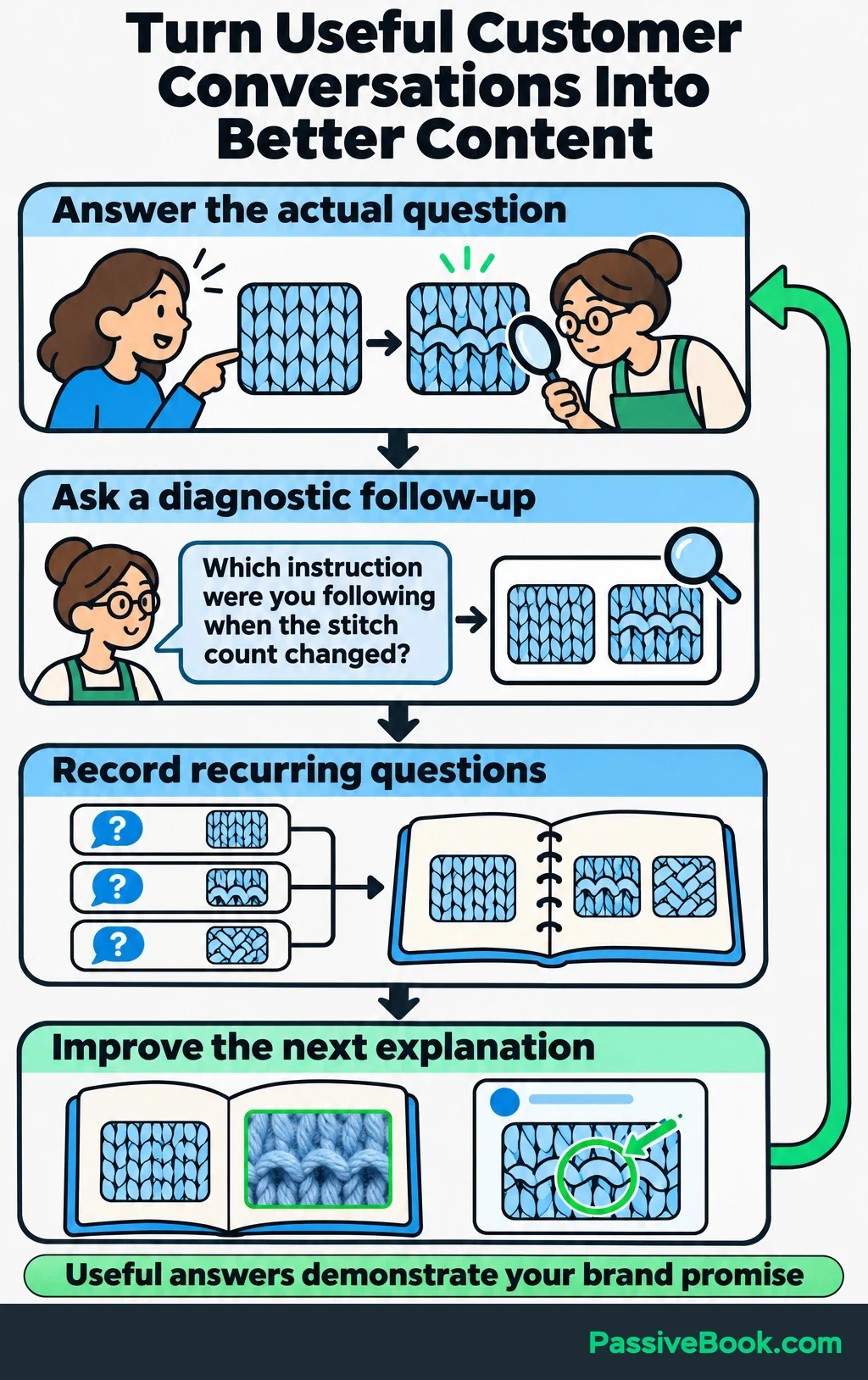
That gives you something to work with. “Thanks for engaging!” does not.
Keep a record of recurring questions and use them to improve future posts, product instructions, or support material. Answer people in relevant communities too, but give a complete response before introducing your resource. Share links when they directly help and the community allows them.
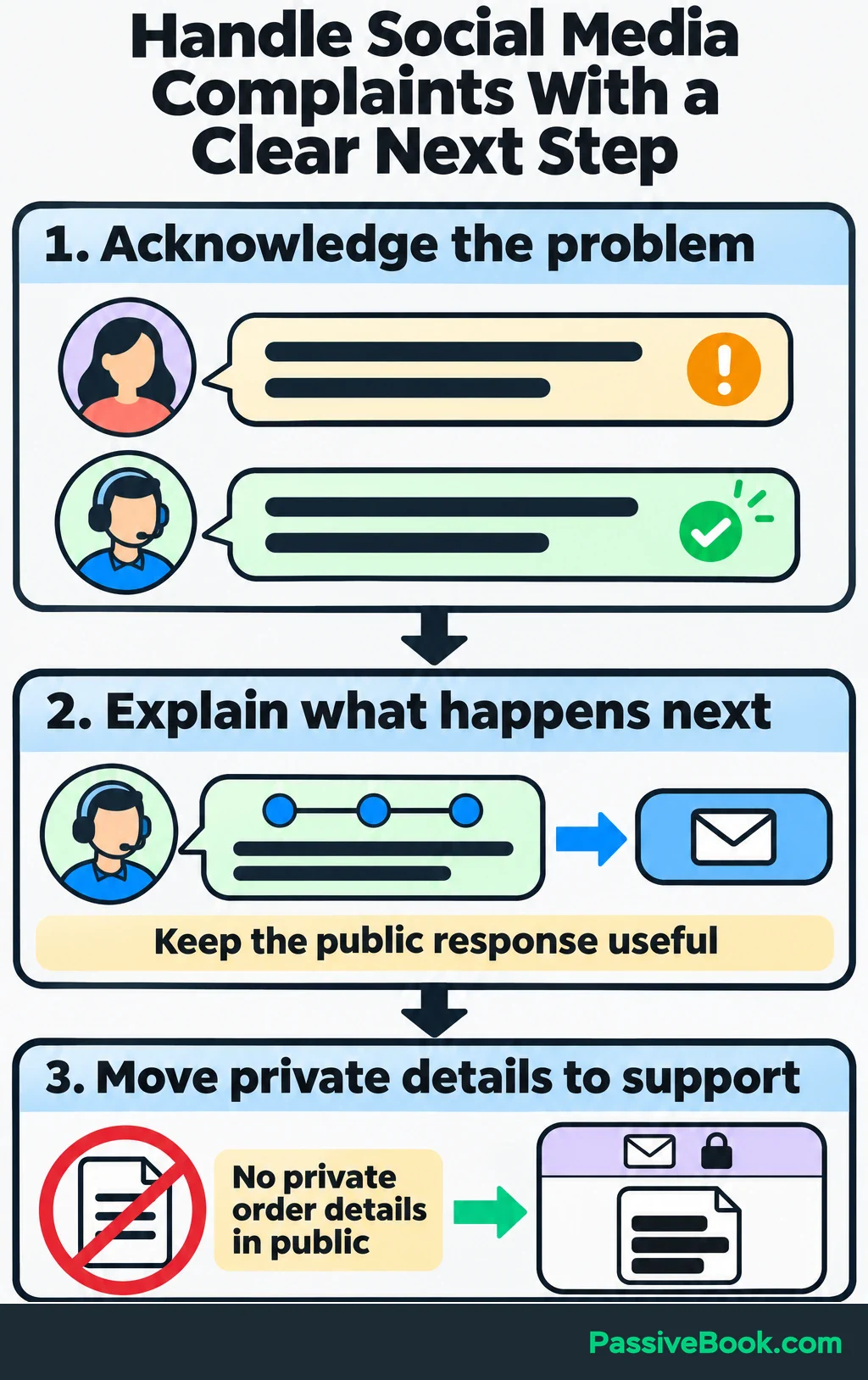
Complaints need the same clear voice. Acknowledge the problem, explain the next action, and move order details or other private information into your support channel. Keep the public response useful rather than defensive.
Invite customers to share finished projects and describe what helped. Ask permission before republishing their photos or words, and preserve the meaning of what they said.
For collaborations, look for a useful connection between the audiences. First Stitch Patterns could work with a yarn shop on choosing materials for a first scarf. Agree on what each participant contributes and where interested viewers can go afterward. Audience relevance matters more to that decision than the biggest follower count.
If an endorsement could foreseeably affect U.S. consumers, clearly disclose material connections such as payment or free products alongside the endorsement. A free yarn sample can create that connection even when no money changes hands. FTC social media disclosure guidance
Measure Whether Your Brand Is Becoming Recognizable
Record your starting point, including how much time the channel takes. Then review progress at an interval that fits your publishing rhythm.
I would check for broken links and unanswered questions weekly, and review the broader pattern monthly. With little activity, you may need a longer observation window before changing direction.
Keep the review compact:
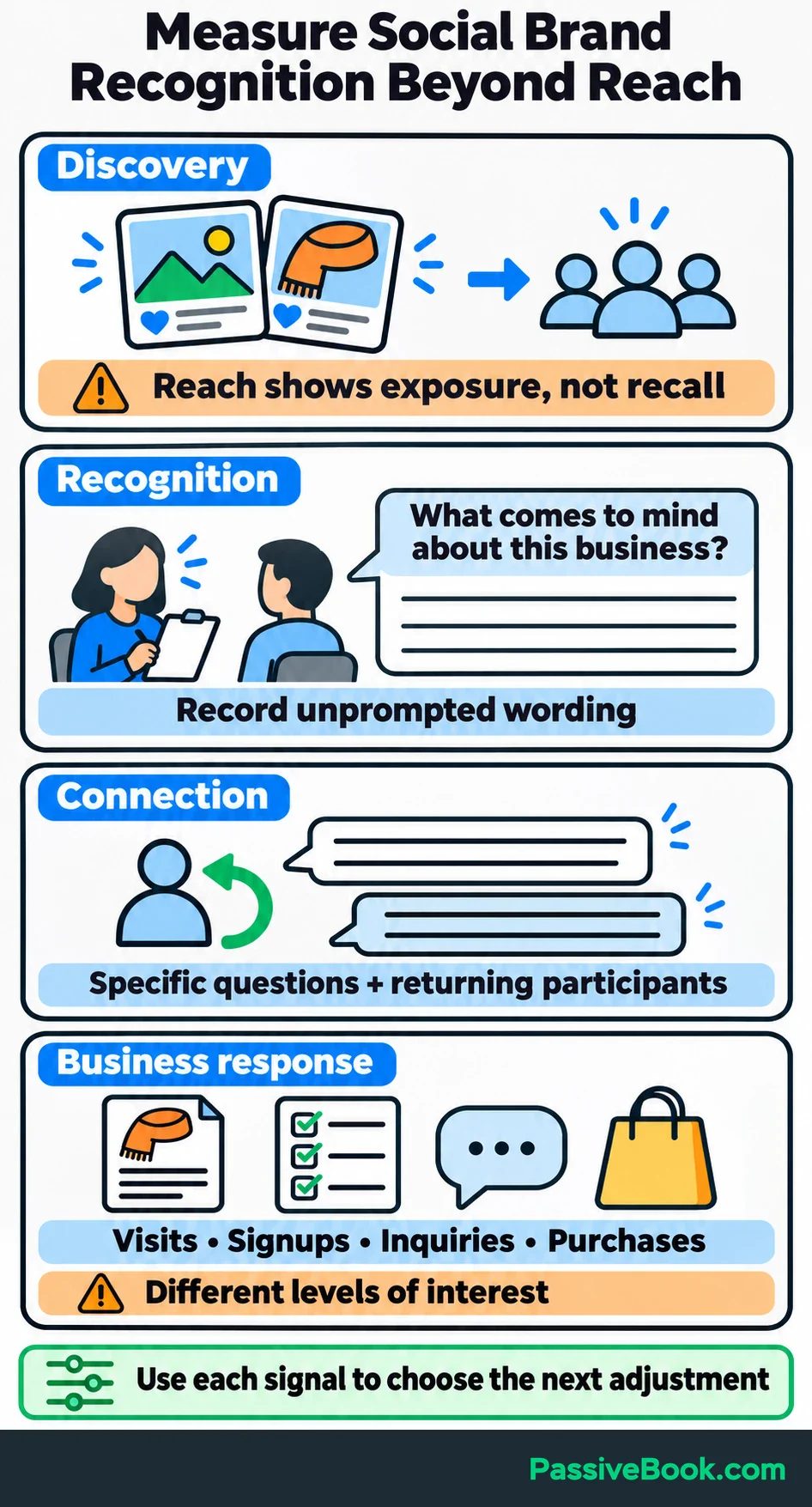
| Objective | Signal | Interpretation | Next Action |
|---|---|---|---|
| Discovery | Reach of posts about first-project questions | More exposure means more chances to be noticed; it doesn’t show recall | Compare topics and openings that reached relevant people |
| Recognition | Customers’ answers to “What comes to mind when you think of First Stitch Patterns?” | Unprompted mentions of clear photo instructions would match the intended association | Record exact answers, including descriptions that differ from the intended association |
| Connection | Specific questions, replies, and returning participants | People are using the content to discuss their needs | Answer them and develop posts around recurring problems |
| Business Response | Relevant pattern-page visits, checklist signups, inquiries, and purchases | Attention is reaching the business; each action shows a different level of interest | Inspect where people continue or stop |
The table describes what to look for, not results First Stitch Patterns has achieved.
Reach and engagement show exposure and response. They don’t establish that people remember or trust your business.
Ask customers two separate questions:
What made you visit the shop?
What comes to mind when you think of First Stitch Patterns?
Let them answer before supplying your preferred description. Their wording is more useful than agreement with yours.
If you use Google Analytics to track website visits, add consistent campaign tags—labels at the end of a link—to distinguish traffic from different social posts. For the scarf campaign, you could use:
utm_source=pinterestfor the platform.utm_medium=socialfor the channel.utm_campaign=first_scarffor the campaign.utm_content=pattern_previewfor the particular linked post.
Keep spelling and capitalization consistent. These tags help identify referred traffic; they don’t reveal every earlier exposure that influenced a purchase. Google Analytics campaign URL guidance
Use the evidence to choose the next change:
- Limited Discovery: Review whether the topic and opening match a question people care about.
- Relevant Engagement but Few Visits: Check the invitation and whether the destination offers a useful continuation.
- Visits but Little Action: Review the page, offer, form, or checkout before increasing posting volume.
- Useful Results but Too Much Work: Keep the strongest themes and simplify production.
Change one meaningful element at a time where practical, and preserve the cues people are learning to recognize. I would improve a promising routine before doubling its workload.
What Next?
Write one sentence describing whom you help, what they can achieve, and how your approach helps. Then check whether your profile and latest three posts support that sentence.
Use the social buttons to share this guide when your next content-planning conversation needs a clearer purpose than “post more.”
What would you like customers to remember about your business after seeing three of your posts? Leave your answer in the comments, and bring any other questions too.
Share this post with your friends & followers:

