A name can look good on your shortlist and become awkward the first time you say it aloud. You have to explain the spelling, clarify what you sell, or tell people which extra word belongs in the website address.
Those small problems deserve attention before the name appears on your products, emails, and checkout page. But finding a suitable name shouldn’t become a second business.
You need a name that fits, passes practical checks, and gives you room to launch. These six steps will help you reach that decision without spending weeks waiting for a stroke of naming genius.
1. Define What Your Name Needs to Communicate
Before collecting names, write a short brief. It gives you something firmer than “I like the sound of it” when you compare ideas.
Answer four questions:
- Offer: What do you sell?
- Customer: Who buys it, and what are they trying to do?
- Impression: Which two or three qualities should the name suggest?
- Expansion: What related offers do you realistically plan to add?
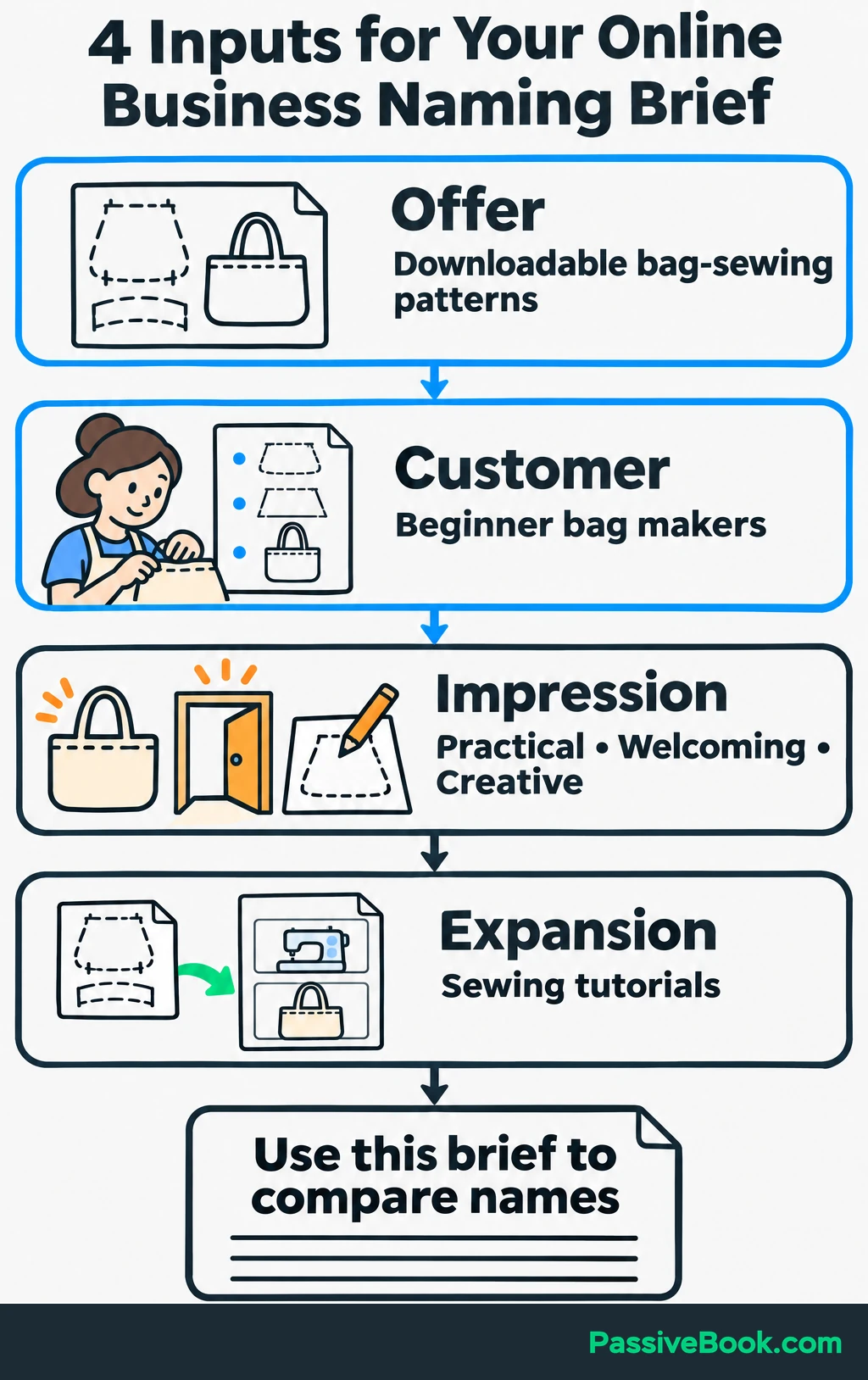
Imagine you’re opening an online shop selling downloadable sewing patterns for beginner bag makers. You also plan to publish sewing tutorials.
Your brief might read:
I sell bag-sewing patterns for beginners who want clear instructions and useful projects. The name should feel practical, welcoming, and creative, with room for sewing tutorials later.
That is enough direction to start. You don’t need to accommodate every business you might run over the next twenty years.
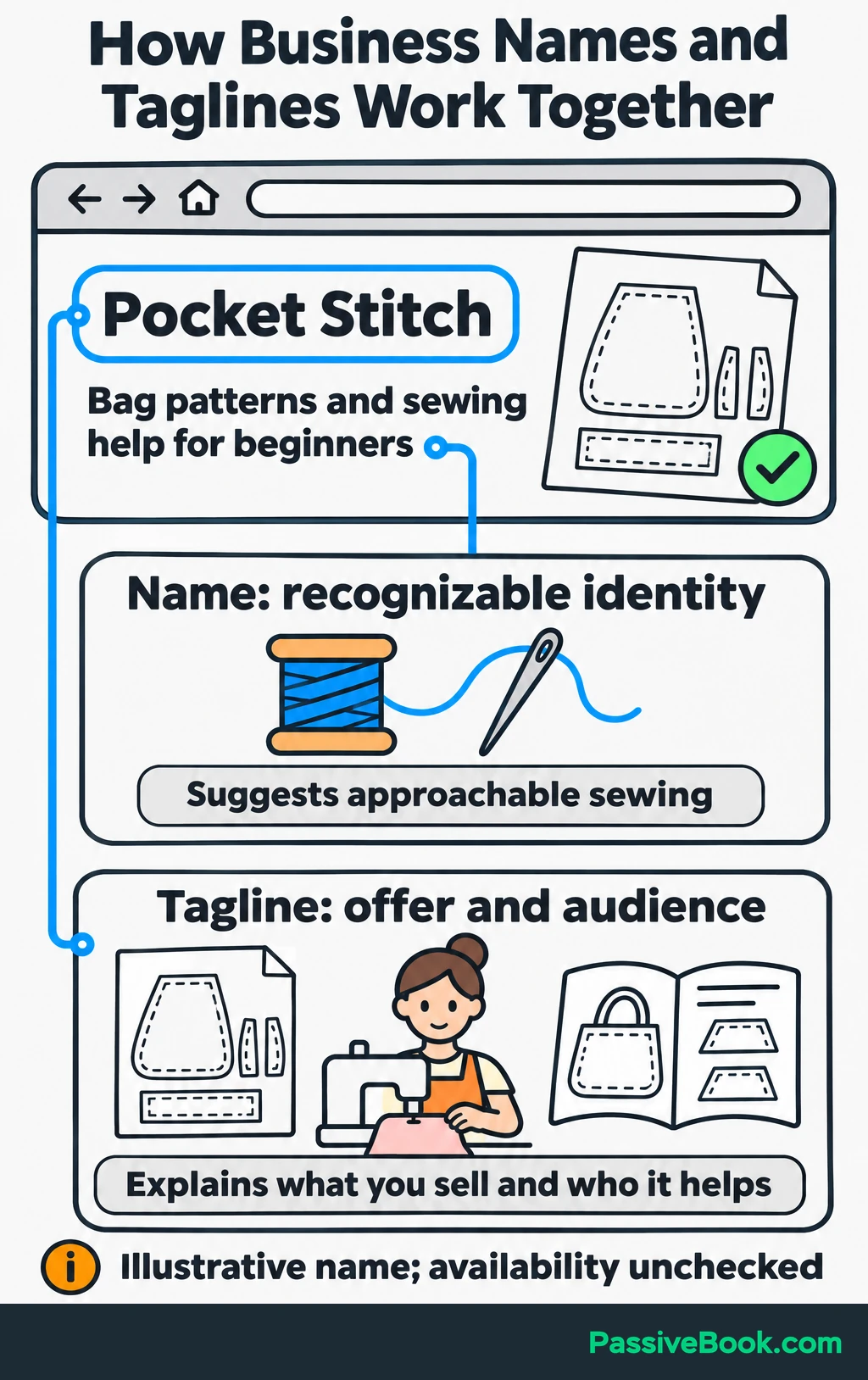
The sewing-shop names and addresses below are illustrations. Their availability, originality, and legal suitability have not been checked.
Next, scan businesses serving the same customers. Note repeated words and names that sound alike. If your list looks almost identical to theirs, change direction before getting attached.
Let a tagline carry details the name cannot. A name can suggest approachable sewing, while a line underneath explains “Bag patterns and sewing help for beginners.” One name does not need to do the work of an entire homepage.
2. Generate Names From Several Directions
Choose Between Your Own Name and a Separate Brand
Use your own name when your expertise, taste, or perspective is central to what people buy. It can suit a teaching business where customers specifically want your instruction.
Choose a separate brand when you want the shop, publication, or service to have an identity beyond you. Consider whether future contributors and products would feel comfortable under the name.
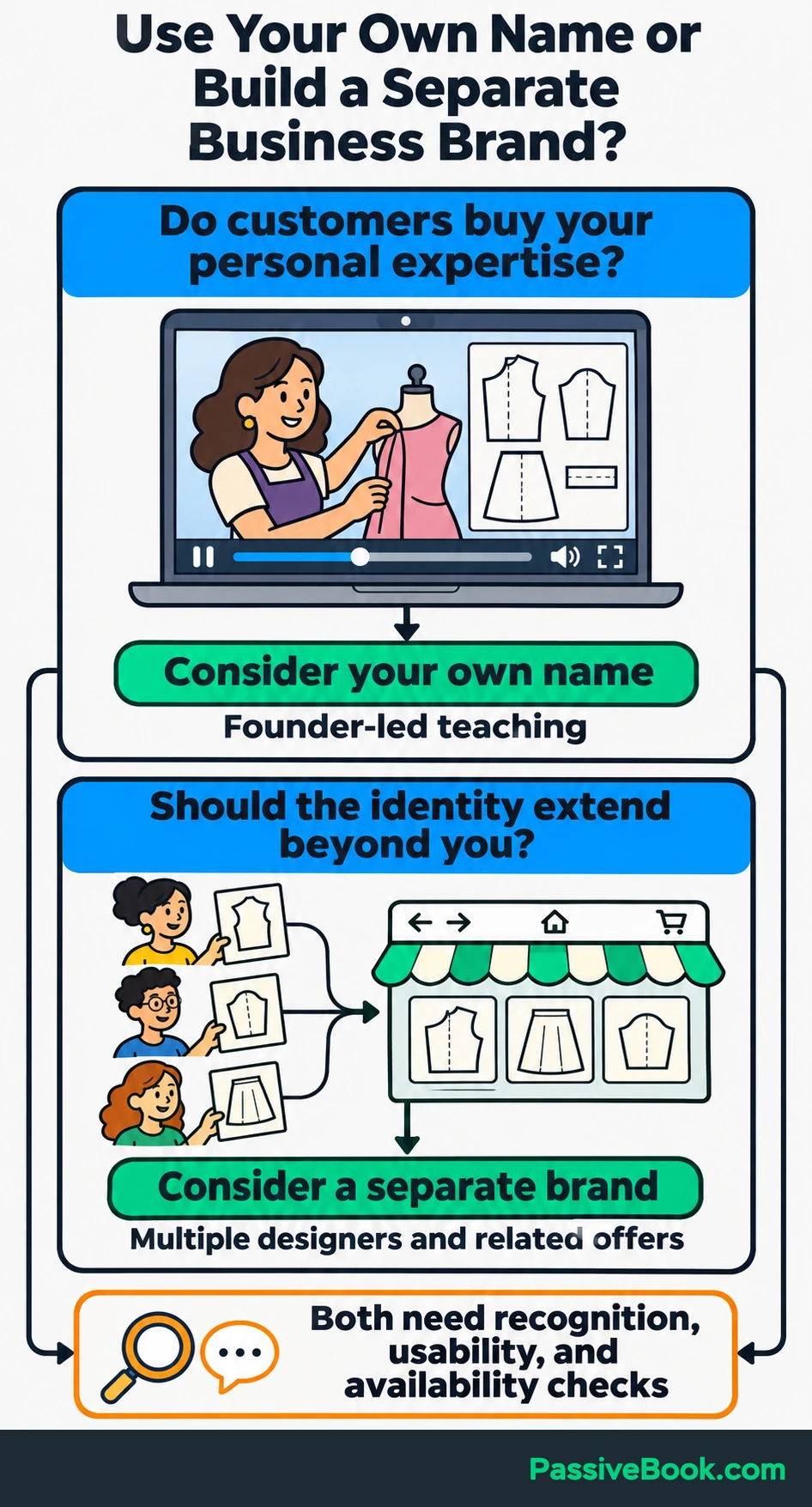
For the sewing shop, I would choose a separate brand if the plan includes patterns from several designers. I would consider a personal name if the main attraction will be the founder’s teaching.
Neither choice removes the need for checks. Your own name still needs to be easy for your intended customers to recognize, find, and distinguish from other businesses.
Turn Your Brief Into Name Ideas
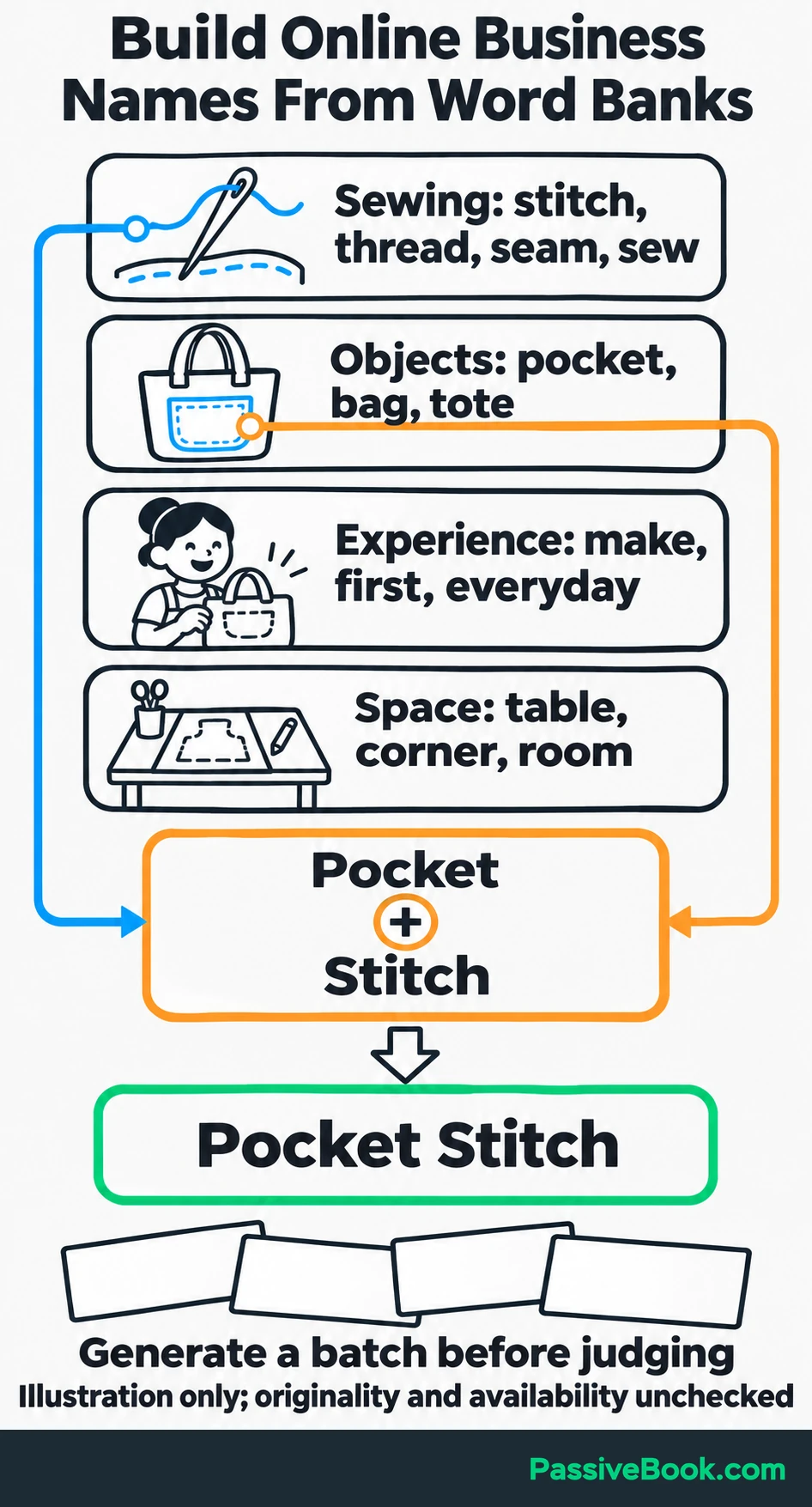
Build a few small word banks, then combine words across them. Start with the subject, the customer’s desired result, and images that fit the tone.
For the sewing shop:
| Direction | Words to Explore |
|---|---|
| Sewing and construction | Stitch, thread, seam, sew |
| Useful objects | Pocket, bag, tote |
| Customer experience | Make, first, everyday |
| Creative space | Table, corner, room |
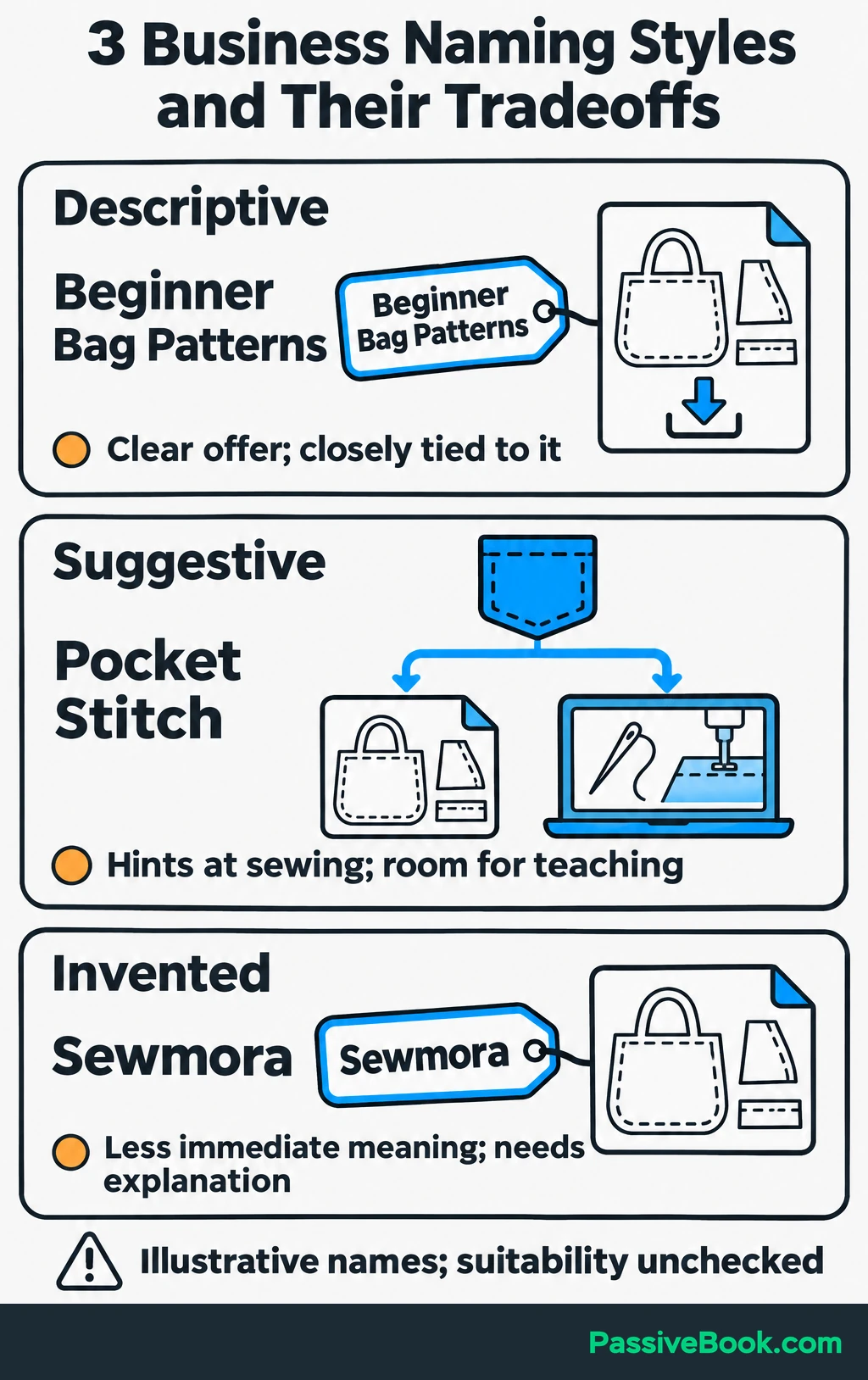
Try more than one naming style:
| Style | Sewing-Shop Illustration | Tradeoff |
|---|---|---|
| Descriptive | Beginner Bag Patterns | Explains the starting offer, but ties the name closely to it |
| Suggestive | Pocket Stitch | Hints at sewing and leaves room for related teaching |
| Invented | Sewmora | Offers less immediate meaning, so the description must explain more |
Generate a batch before judging individual names. Otherwise, you can spend an evening debating the first tolerable idea.
A thesaurus or brainstorming tool can help you find more combinations. Give it your brief, ask for several styles, and reject awkward spellings. Treat its suggestions as raw material; it has not established that you can use them.
For this shop, I would explore familiar-word combinations first. They leave room for personality without making beginners decode a new word. I would skip a clever pun if explaining it takes longer than explaining the products.
If your word bank still isn’t producing names you want to try, AI Brand Naming Studio can turn your brief into a fresh batch. You’ll also get a description and spoken introduction for each, so you can judge more than how the name looks on a list.
Free AI Brand Naming Studio




3. Shortlist Names That Work in Everyday Use
Keep three to five candidates that meet the brief. Judge them on fit, distinction, spoken and written use, and room for planned offers.
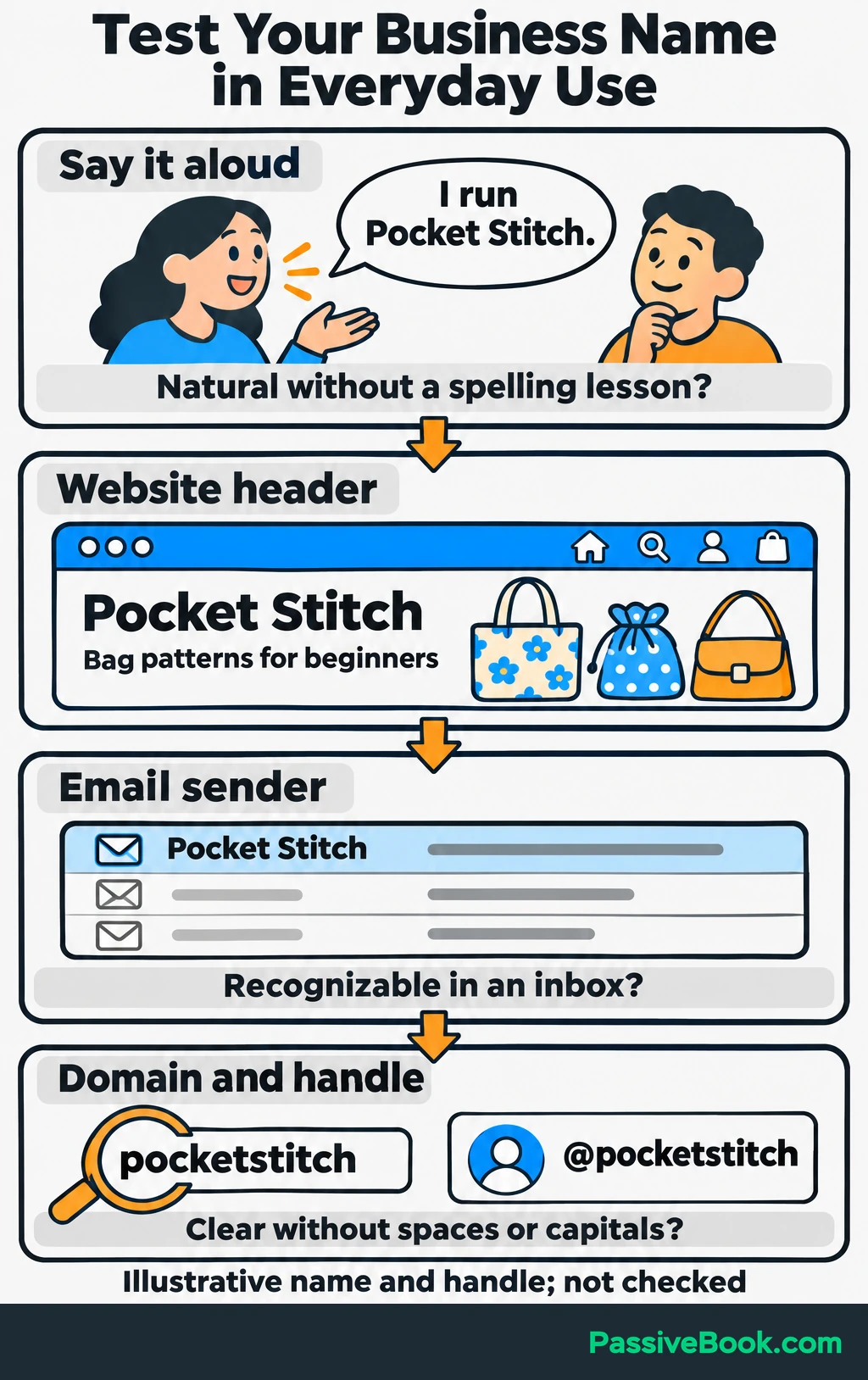
Start by saying each name in a normal introduction:
“I run Pocket Stitch, an online shop with sewing patterns for beginner bag makers.”
Does it feel natural? Can you say it without adding a spelling lesson or explaining the joke?
On one of my digital-product projects, I tried a playful working name in a draft customer email. When I read it aloud to a friend, I had to explain where one word ended and the next began. I still liked how it looked, but the conversation exposed a problem my notes hadn’t.
I now check names in ordinary sentences before spending time on a logo. A name should survive being spoken without its favorite font.
Write each candidate in several places:
- Website header: Pair the name with a short description of the offer.
- Email sender: Check whether it looks recognizable in an inbox.
- Domain: Remove spaces and capitalization, then inspect the result.
- Social handle: Look for awkward abbreviations or punctuation.
Shorter is useful when it makes the name easier to use. I wouldn’t cut a clear word just to meet an arbitrary character limit.
If you intend to market in another language, ask fluent speakers to check the meaning and pronunciation. A translation tool alone would not be my final check.
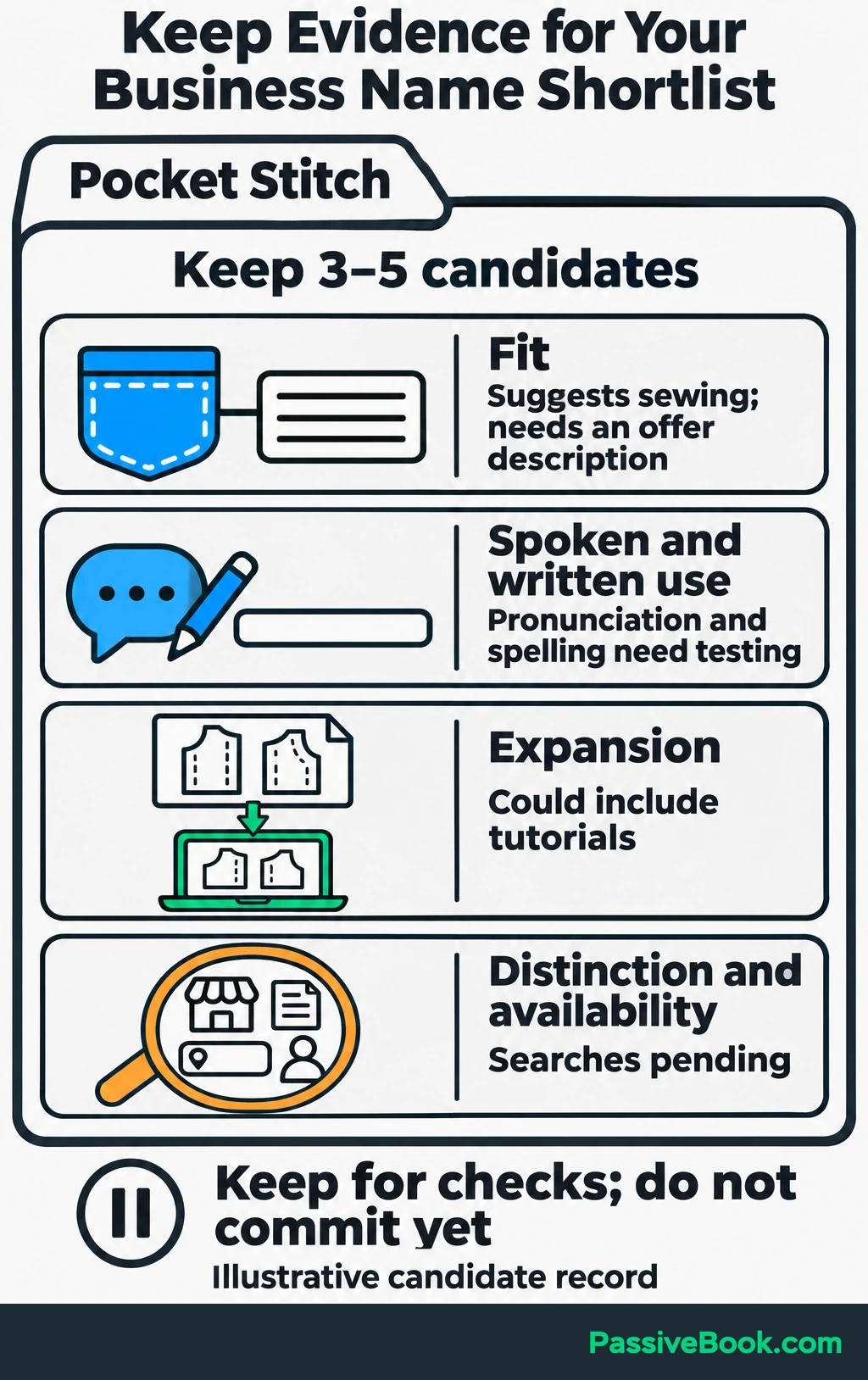
Keep your notes together. A spreadsheet works, and each candidate can have a record like this:
| Check | Pocket Stitch Illustration |
|---|---|
| Fit with the brief | Suggests sewing, but needs a description to identify beginner bag patterns |
| Spoken and written use | Familiar words; pronunciation and spelling still need testing |
| Distinction from competitors | Not checked; search sewing shops and teaching businesses |
| Expansion fit | Could accommodate tutorials alongside patterns |
| Availability | Business, trademark, domain, and handle searches pending |
| Decision | Keep for checks; do not commit yet |
Clarity and legal strength are separate questions. A trademark identifies whose goods or services customers are buying. In the United States, the USPTO’s guidance on trademark strength explains that names that merely describe an offer are generally weaker than names that hint at it or use unrelated or invented words. Generic terms such as “sewing patterns” cannot function as trademarks for those goods.
My preference is a simple name with some character, supported by a clear description. Simple does not have to mean indistinguishable from everyone else.
4. Check Whether Your Shortlisted Names Are Available
Search for Existing Businesses and Similar Trademarks
For each candidate, search:
- Exact wording: Put the complete name in quotation marks.
- Variations: Try the main words, joined words, alternate spellings, and similar pronunciations.
- Related offers: Combine the name with terms describing what you sell and plan to add.
For Pocket Stitch, look for sewing shops, teachers, and related products across search results, marketplaces, business listings, and social profiles. Record similar names and what each business sells.
Search official trademark registers in your intended markets, including the USPTO’s system in the United States. Look for similar names covering related goods or services. The USPTO recommends a broader clearance search because earlier unregistered use can also matter in the United States.
WIPO’s Global Brand Database covers multiple markets, but WIPO recommends checking national or regional registers too.
If a similar business leaves you unsure about a conflict, I would consult a qualified trademark professional before committing to the name.
Find a Workable Domain and Social Handles
Check availability through a domain registrar, which registers website addresses. An address with no website may already be registered. As the USPTO explains, registration gives you no trademark rights.
Aim for an address people can read, repeat, and type easily. If the exact match is taken, compare three options:
- Short modifier: Add a relevant word, such as
sewpocketstitch.com. - Different extension: Consider a suitable ending after checking the complete address.
- Another finalist: Revisit a name that needs fewer compromises.
Say the complete address aloud, including its ending. I would choose another finalist over an address that needs several hyphens, numbers, or explanations.
Record the purchase and renewal prices together. ICANN’s renewal guidance explains why renewal can cost more than the introductory offer.
Check handles directly on the channels you plan to use and record them beside the domain. I’d accept a recognizable variation rather than reject an otherwise workable name.
5. Test Your Finalists With Potential Customers
Once the availability checks leave you with workable options, ask a handful of potential customers to try them.
Choose people who could buy the offer. For the sewing shop, include people interested in learning to sew bags. Friends can help with spelling, but their taste may not match your customers’ expectations.
Present each name in the same plain style. A polished logo can distract from problems in the words.
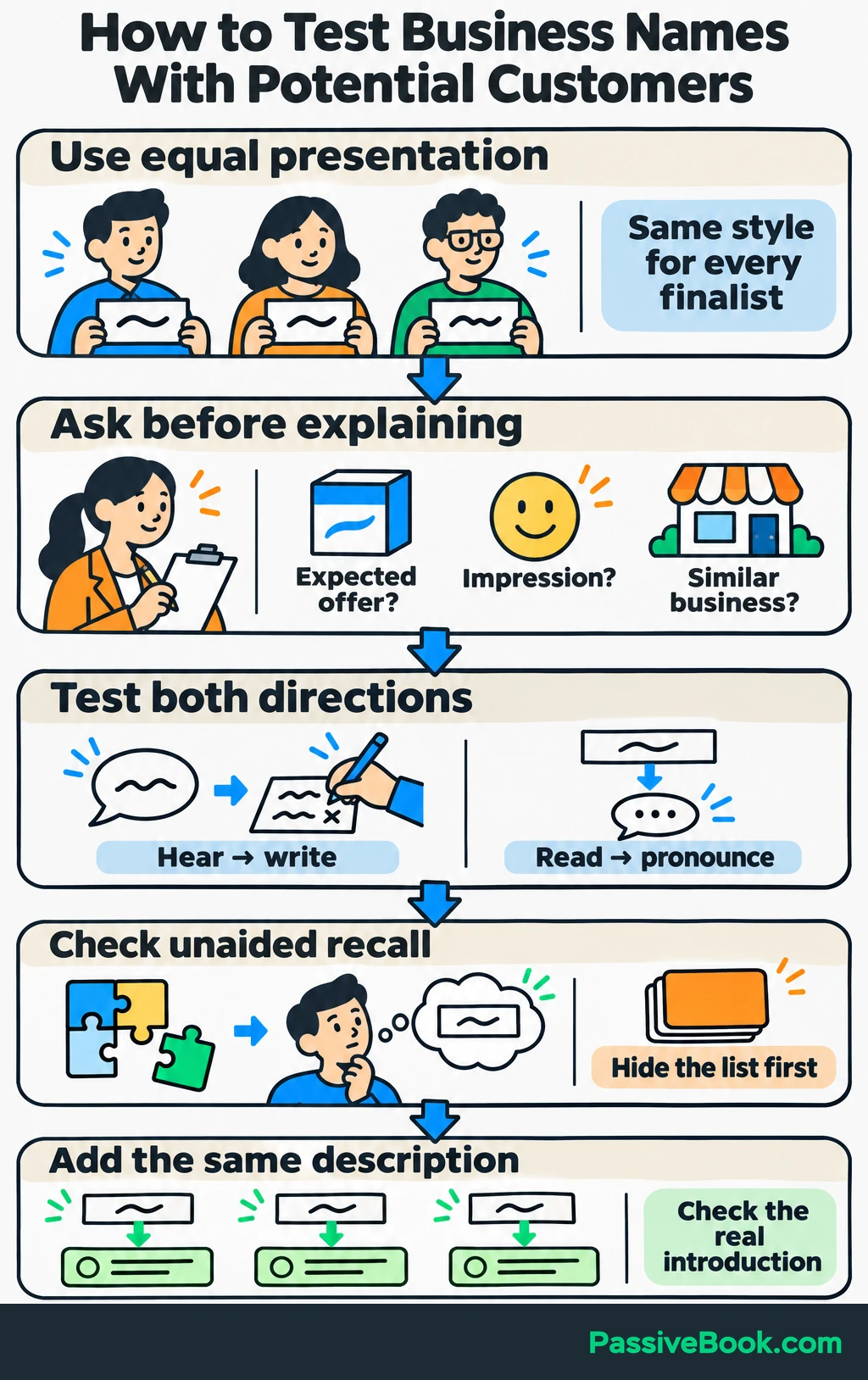
Use the same questions for every finalist:
- What would you expect a business with this name to sell?
- What impression does the name give you?
- Does it remind you of another business? If so, which one?
Ask these before explaining what you intended. Otherwise, you are testing your explanation.
Next, test spoken and written use. Say the name and ask the person to write it down. Show it in writing and ask them to pronounce it. Record errors before correcting them.
After an unrelated task or a later follow-up, ask which names they remember without showing the list again. Then pair each finalist with the same business description:
“Sewing patterns and tutorials for beginner bag makers.”
This lets you check both the name alone and the introduction customers would actually encounter.
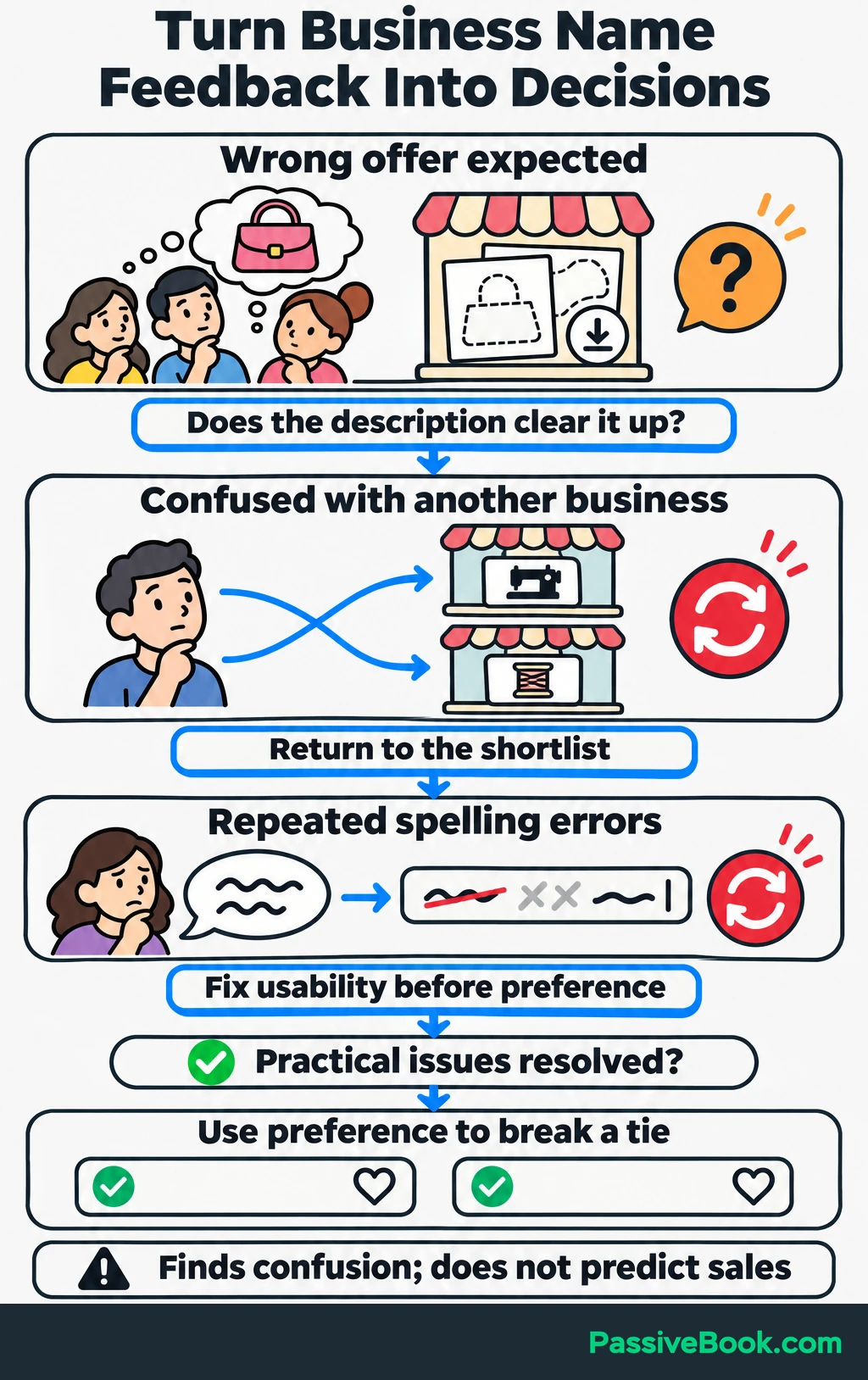
Look for repeated problems. If several people expect finished bags rather than patterns, decide whether the description clears that up. If people repeatedly confuse the name with an existing sewing business, return to your shortlist.
Use preference votes to break ties after those practical issues are resolved. “I like this one” should not outweigh “I keep typing it incorrectly.”
This is a small usability check. It can expose confusion, but it cannot tell you which name will produce more sales.
6. Choose Your Name and Secure It
Before committing, check local rules for your business’s legal name and any separate name you’ll trade under. Use an official business registry or local government guidance to identify required searches and registrations.
Requirements depend on your location and business structure. In the United States, the SBA’s business-name guidance explains how these names differ from trademarks and domains.
Choose the finalist that meets the brief, works in everyday use, and has a workable online identity. When two names pass those checks equally well, your preference is a reasonable deciding factor.
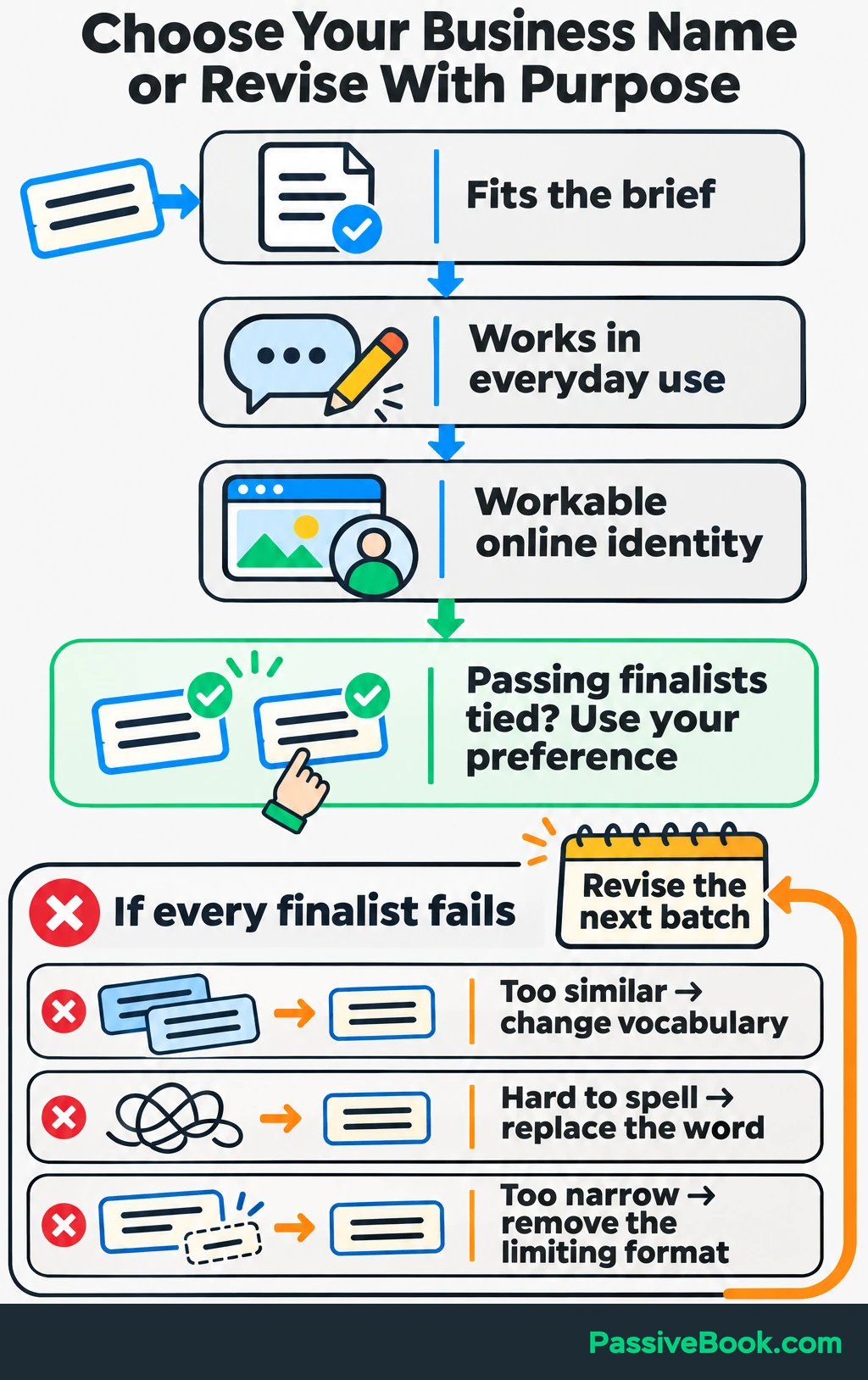
For the sewing shop, Pocket Stitch could remain a candidate if the searches and customer checks support it. Its broader wording leaves room for tutorials, while the description explains the starting offer. That is a reason to consider it, not a reason to overlook a conflict.
If every finalist fails, return to the word bank with the specific problem:
- Too similar: Move away from the words competitors share.
- Hard to spell: Replace the troublesome word with a familiar one.
- Too narrow: Remove the product format that limits planned offers.
A failed check gives the next round direction. You do not have to restart with a blank page.
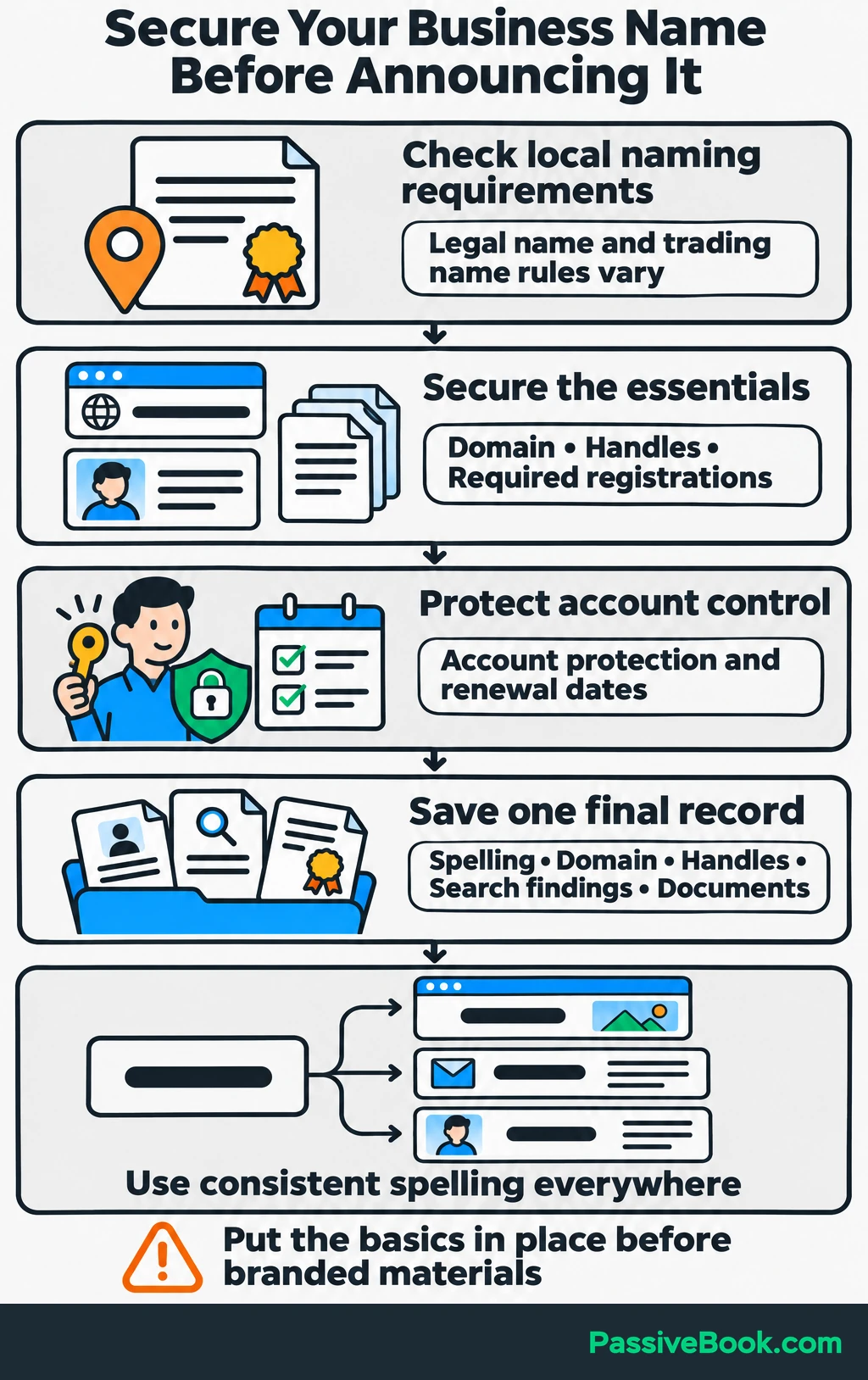
Once you decide, register the domain, claim the relevant handles, and complete required business-name registrations before announcing the name. Keep the accounts under your control, enable account protection, and record renewal dates.
Save one final record containing the spelling, capitalization, domain, handles, search findings, and registration documents. Use that spelling consistently across your website, customer emails, and profiles.
I would get those basics in place before ordering branded materials. A logo can wait until the name has somewhere dependable to live.
What Next?
Write your four-part naming brief and use it to generate your first batch of candidates. Leave the logo until you have a shortlist worth checking.
Use the social buttons to share this guide when a naming discussion needs a practical way forward.
Which tradeoff is hardest for you: clarity, personality, or room to grow? Share your thoughts in the comments, and bring any other naming questions too.
Share this post with your friends & followers:

