A convincing answer about your dog can still leave the main question unanswered: did the source actually test what the AI recommends?
That gap matters when you’re choosing an activity, buying a product or publishing advice. A confident summary can leave you with more tabs to read and no clearer idea of which advice applies.
If you’re going to spend that time checking, it should help you make a decision. This guide walks through using Perplexity’s Search and Deep Research to turn a question about a dog activity into a sourced brief, with a clear record of what the evidence leaves unanswered.
1. Define Your Research Question and Evidence Needs
Start with the decision you need to make. “Research dog enrichment” gives Perplexity plenty to discuss, but it gives you no clear way to judge the answer.
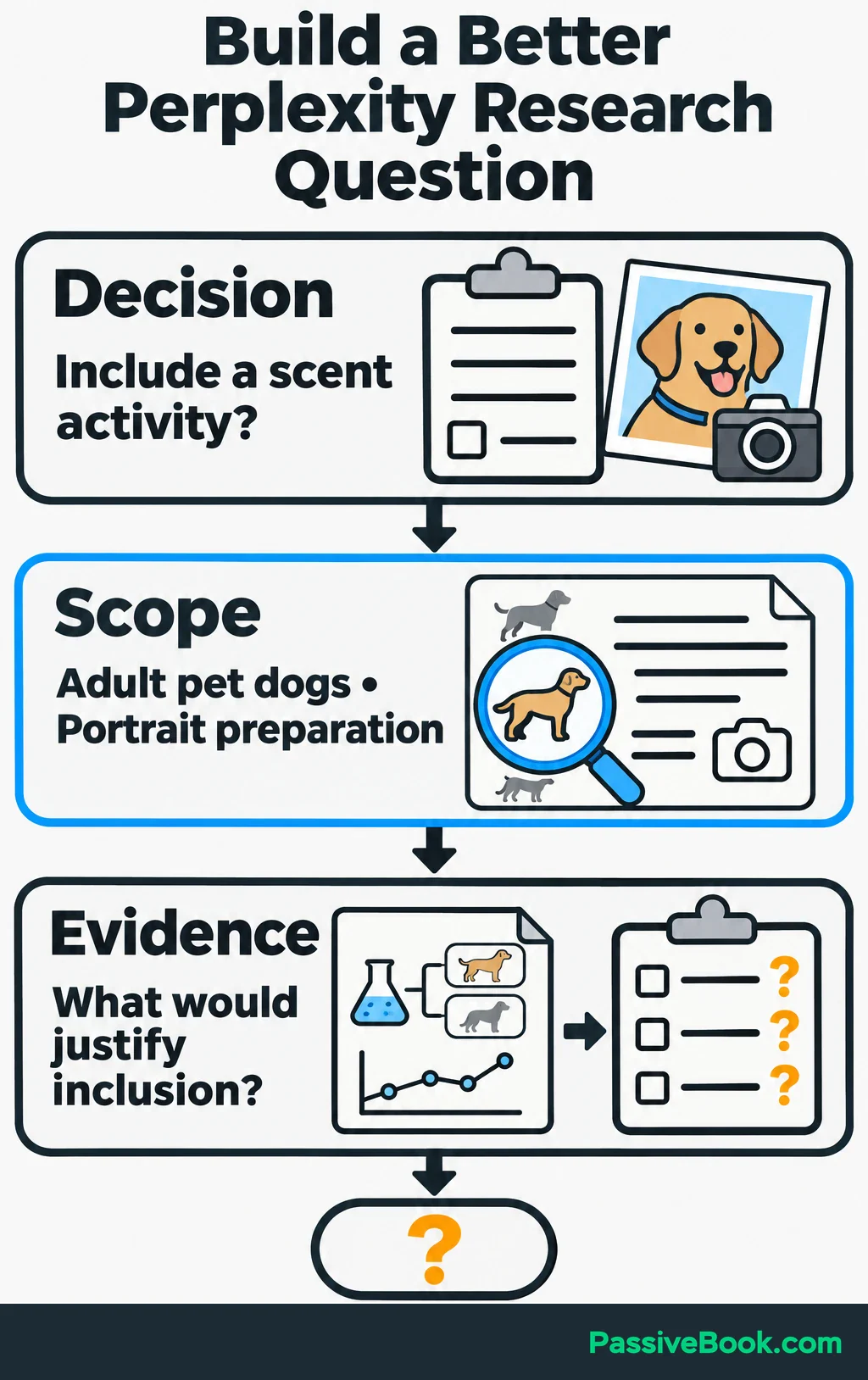
Write down three things first:
- Decision: What will you choose, change or publish?
- Scope: Which people, animals, activities or settings matter?
- Evidence: What would justify the choice, and what would leave it unresolved?
For our running example, imagine you run a pet-photography business. You’re considering scent-based activities for a preparation guide for adult dog portrait sessions. The business and prompts below are illustrative, rather than results from a live Perplexity test.
Your question becomes:
What evidence would justify including scent-based activities in a preparation guide for adult dog portrait sessions?
That wording leaves room for an inconvenient answer. “Find evidence that scent games improve portrait sessions” already points the tool toward the conclusion you want.
I skipped proper market research before buying inventory for my jewellery store, and unsold stock was part of the result. I had spent more effort choosing products than checking whether people wanted them. Now I want a research question to expose a weak assumption before I build around it.
For this guide, the important boundaries are adult pet dogs, scent-search activities and preparation for a portrait session. Puppy development or professional detection-dog performance might be interesting, but they don’t directly answer your question.
Next, match each claim to a useful source:
| What You Need to Establish | Source to Prioritize |
|---|---|
| What happened in an experiment | The original paper, including its methods and results |
| Whether an activity is suitable for a particular dog | Relevant veterinary or qualified behavior guidance |
| What a product contains or supports | Manufacturer specifications and instructions |
| What owners find awkward or confusing | Owner discussions, used to discover practical questions |
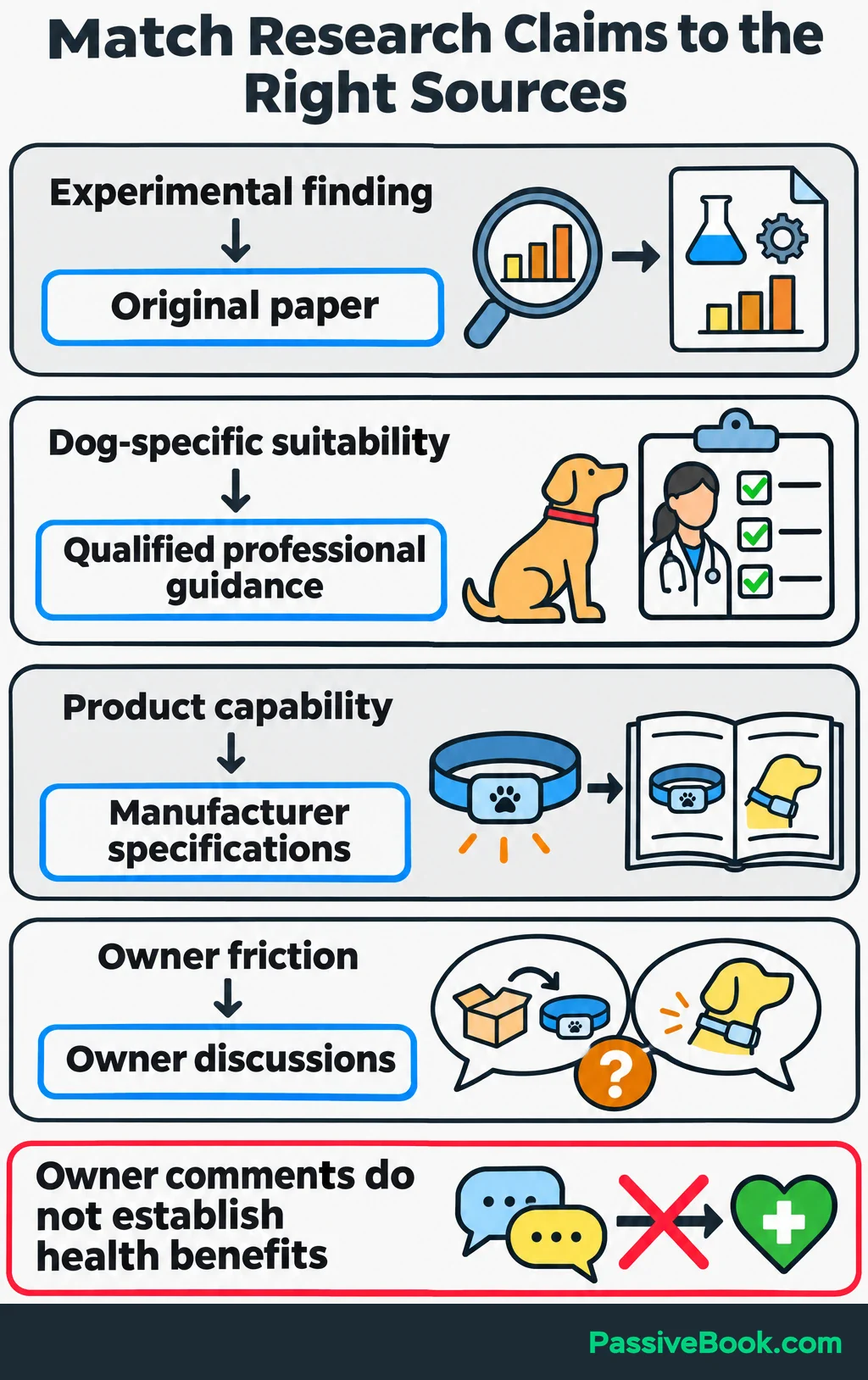
Owner comments can reveal a problem worth investigating. They don’t establish a health benefit.
Build your prompt from the question, context, boundaries, source preferences and requested output. Here is a complete prompt you can adapt:
Research whether scent-search activities belong in a preparation guide for adult pet-dog portrait sessions. Help me decide what evidence is needed before including an activity.
Limit the main analysis to adult pet dogs. Distinguish repeated training from a single activity before or during a session.
Prioritize original studies for experimental findings and veterinary or qualified behavior guidance for practical suitability. Include older research when it directly answers the question.
Return a table showing the source, dogs studied, activity, comparison, measured outcome and relevance to the guide. Put citations beside factual claims. Separate research findings, your recommendations and unanswered questions. If direct evidence about photography sessions is missing, say so.
Use date cutoffs when information changes, such as product features or subscription plans. I wouldn’t discard a relevant study simply because it is older.
If adapting the dog example to your business is the sticking point, AI Market Research Studio can draft your prompt from a few details. It includes source requirements for different research tasks, so you have more than a blank question box to work with.

Free AI Market Research Studio




2. Run Your Prompt in Search or Deep Research
Open Perplexity in your browser or mobile app and sign in if you want to keep your research history. Start with the free plan.
Before submitting anything, remove names, contact details and confidential information from prompts or files. For the photography example, describe the research question without uploading customer records.
You can also opt out of having future submissions used for AI training by switching off “AI data retention” in your account preferences. This affects data collected after you opt out, and Perplexity still processes information to provide its service. Its data collection policy explains the distinction.
Then choose how to investigate:
| Your Task | Where I Would Start |
|---|---|
| Find one paper or check one claim | Search |
| Understand a term or narrow a broad topic | Search |
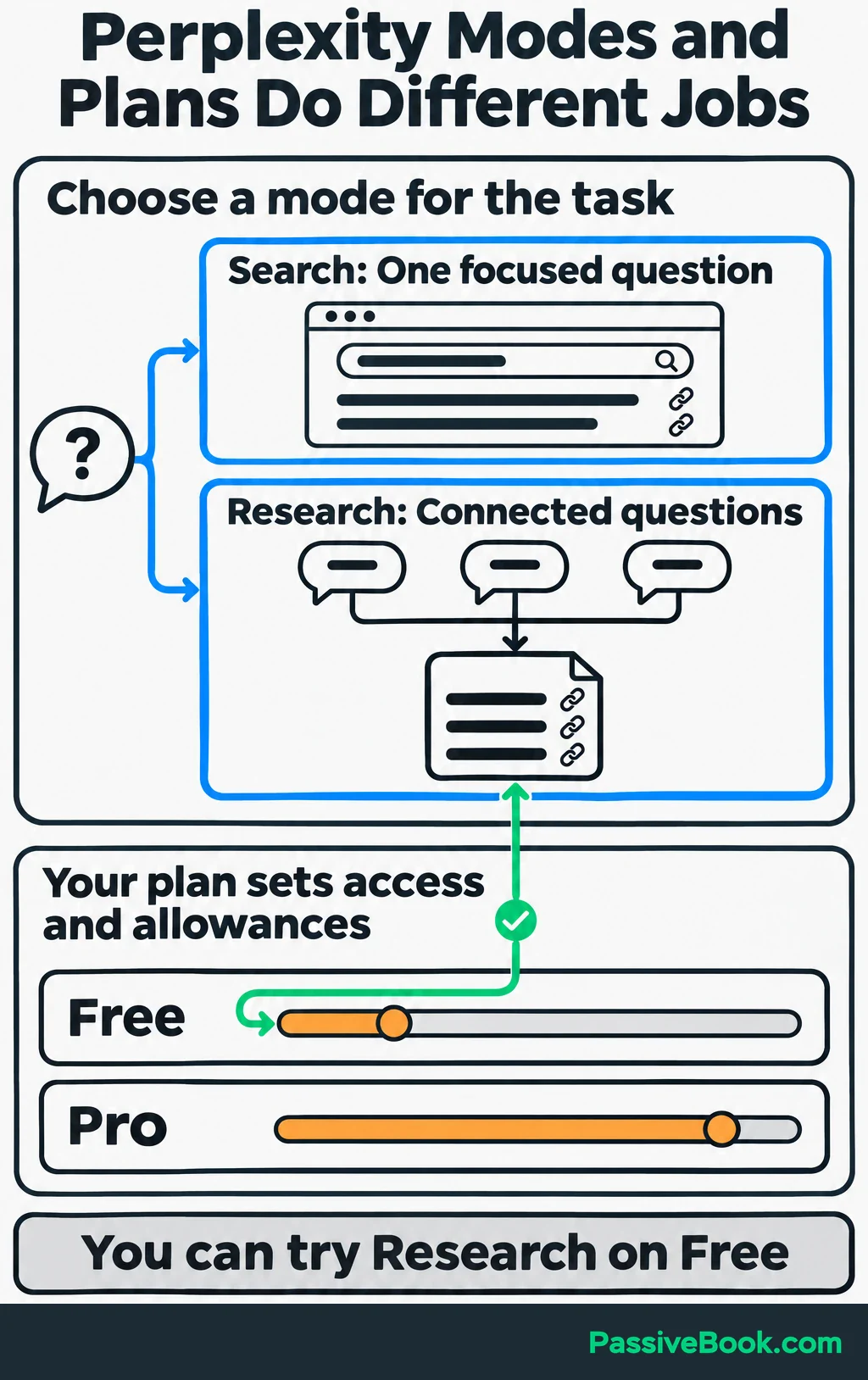
| Connect evidence across several questions | Research or Deep Research |
| Inspect a gap in a longer report | A focused Search follow-up |
Search and Research are modes. Free and Pro are subscriptions that determine your access and allowances. You don’t need a paid subscription to try Research.
Use Search for a Focused Question
Use Search when you can describe the task in one clear question. Select “Search” in the question box, enter your prompt and submit it. It is a good starting point for finding original sources before requesting a broader report.
For the photography guide, try:
Find original studies on scent-search activities in adult pet dogs. For each study, list its title, publication year, dogs studied, activity tested, comparison, measured outcome and original source link. Flag studies that do not match this scope.
Leave model selection on “Best” while learning. Pro Search is Perplexity’s more detailed search feature. Search uses it automatically when your plan includes it, up to your allowance.
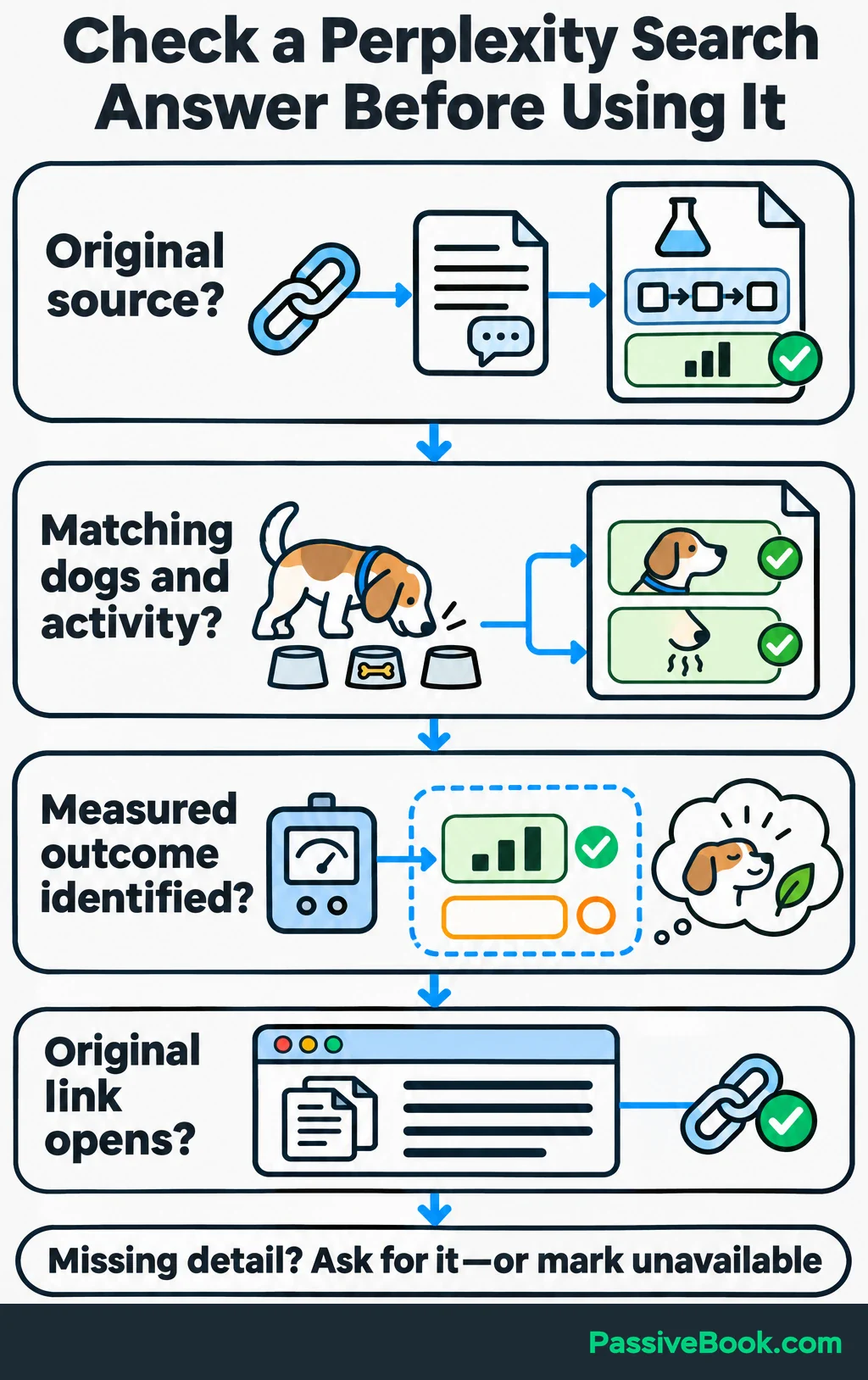
Scan the answer against your request before continuing:
- Are these original studies or articles describing studies?
- Does the answer identify the dogs and activities involved?
- Are measured outcomes separate from general claims about benefits?
- Can you open the original sources?
If a detail is missing, ask for it directly:
Your table does not show how long each activity was practiced. Add that information from the original methods sections, or mark it unavailable.
A polished answer with missing information is still incomplete. Formatting doesn’t get a vote.
Use Deep Research for Connected Questions
For a report that connects several questions, open the mode menu in the question box and choose “Research” or “Deep Research,” depending on your app. This mode runs several searches, reviews material and combines the findings into a report. Free accounts have limited access, while Pro provides more capacity. See the Research mode overview.
For our example, the connected questions include:
- What effects have scent-based activities been studied for?
- Which activities and dogs were involved?
- How closely does that evidence match session preparation?
- What practical guidance is still needed?
Use the full prompt from the previous section, then review the report before asking for a recommendation.
Check whether it answered those questions and whether it separated direct evidence from an application it proposed. If the report offers a confident recommendation without that distinction, investigate the underlying claim with Search.
I would use Deep Research to organize a complicated topic, then use focused questions to inspect the parts that could change my decision.
3. Verify the Claims That Could Change Your Decision
Begin with the claims carrying the most weight. If removing a sentence would change what you buy, publish or recommend, check it first.
Open the citation beside that sentence and find the supporting passage. Compare four things:
- Meaning: Does the source actually make this claim?
- Conditions: Who or what was studied, and under which circumstances?
- Outcome: What did the researchers measure?
- Application: Does the source support your intended use?
Don’t stop at recognizing a respected website. You need the relevant evidence inside it.
On a digital-product project, I collected several articles that seemed to support the same feature benefit. When I traced their links, they led back to one vendor announcement. I had several summaries of one claim, rather than independent support. I changed my notes to track the original source behind each statement.
That is the check I would apply here. Three articles repeating one paper remain one evidence trail.
Check a Cited Study in Practice
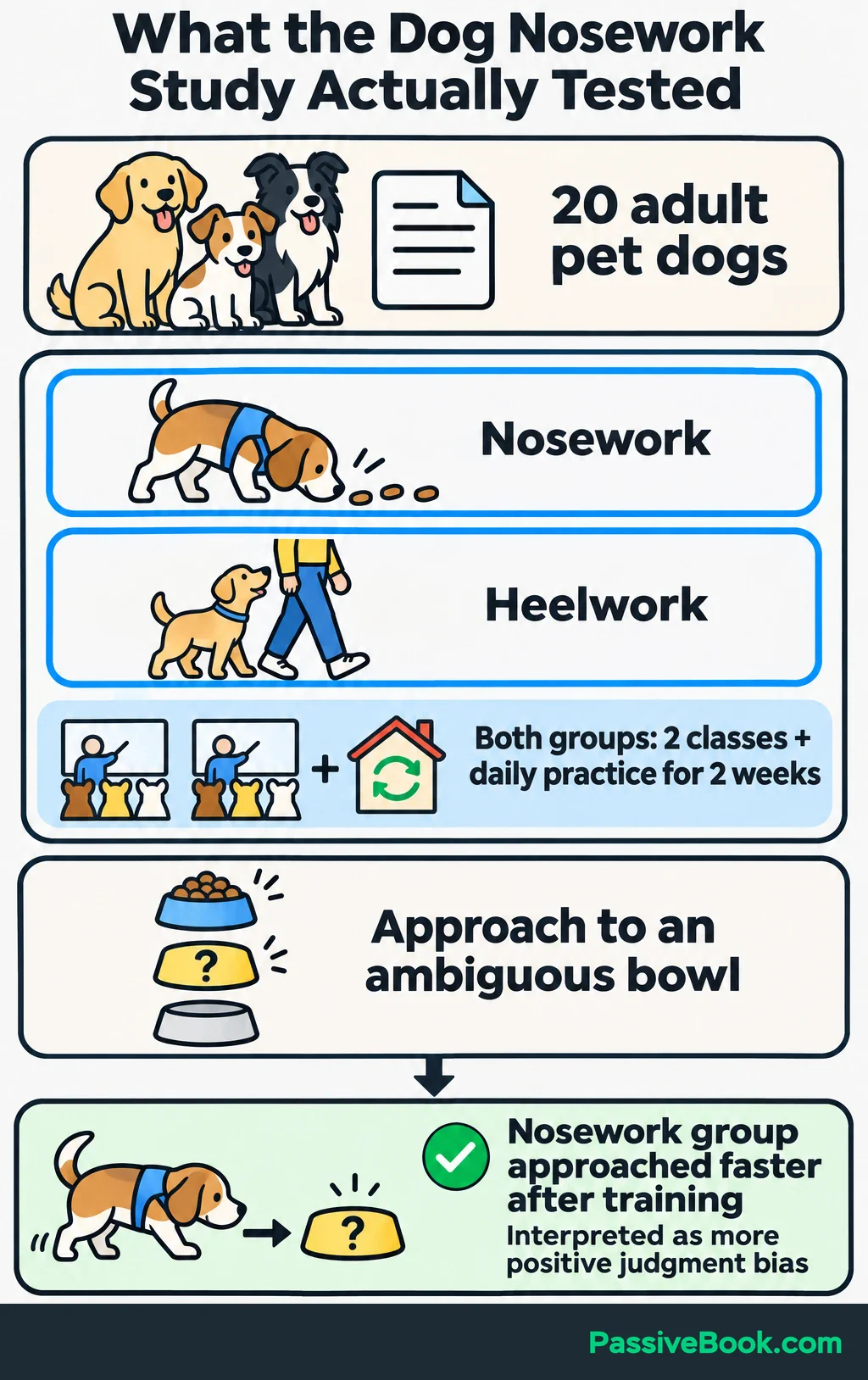
Consider Duranton and Horowitz’s 2019 study, Let me sniff! Twenty adult pet dogs practiced either nosework (searching for hidden treats) or heelwork (walking beside the owner). Both groups had two classes and daily home practice over two weeks.
For the test, dogs learned that one bowl location held food and another did not. After training, the nosework group approached a bowl between those locations faster than before. The authors interpreted this as a more positive judgment bias—roughly, a more optimistic response to uncertainty. See the methods and Results section 3.2.1 in the original paper.
Now compare that with a proposed claim:
A short scent-search break makes dogs more comfortable during portrait sessions.
The study did not test that claim. It tested a repeated training program and a different outcome.
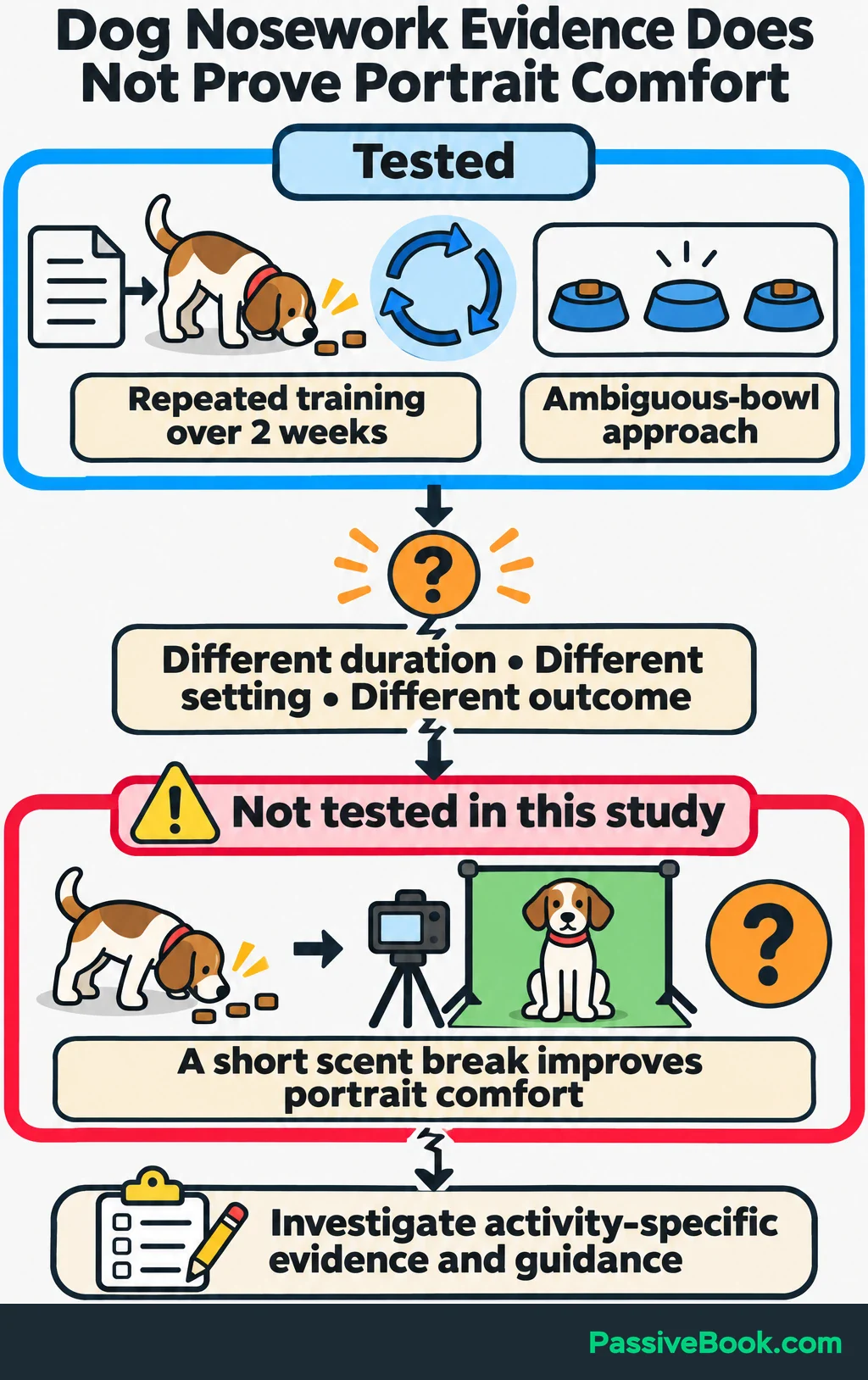
For the photography guide, I would treat it as a reason to investigate further. The next question is whether suitable evidence or professional guidance supports the specific activity and setting you’re considering.
This is where source checking earns its place: it keeps an interesting finding from becoming a promise the research never tested.
Examine a Paper or PDF More Closely
Attach a paper when you want help navigating its contents. Ask the tool to stay inside that document first:
Using only this document, identify the research question, participants, activity, comparison, measured outcomes and main findings. Give page or section references. Separate the authors’ conclusions from your interpretation, and mark information you cannot locate.
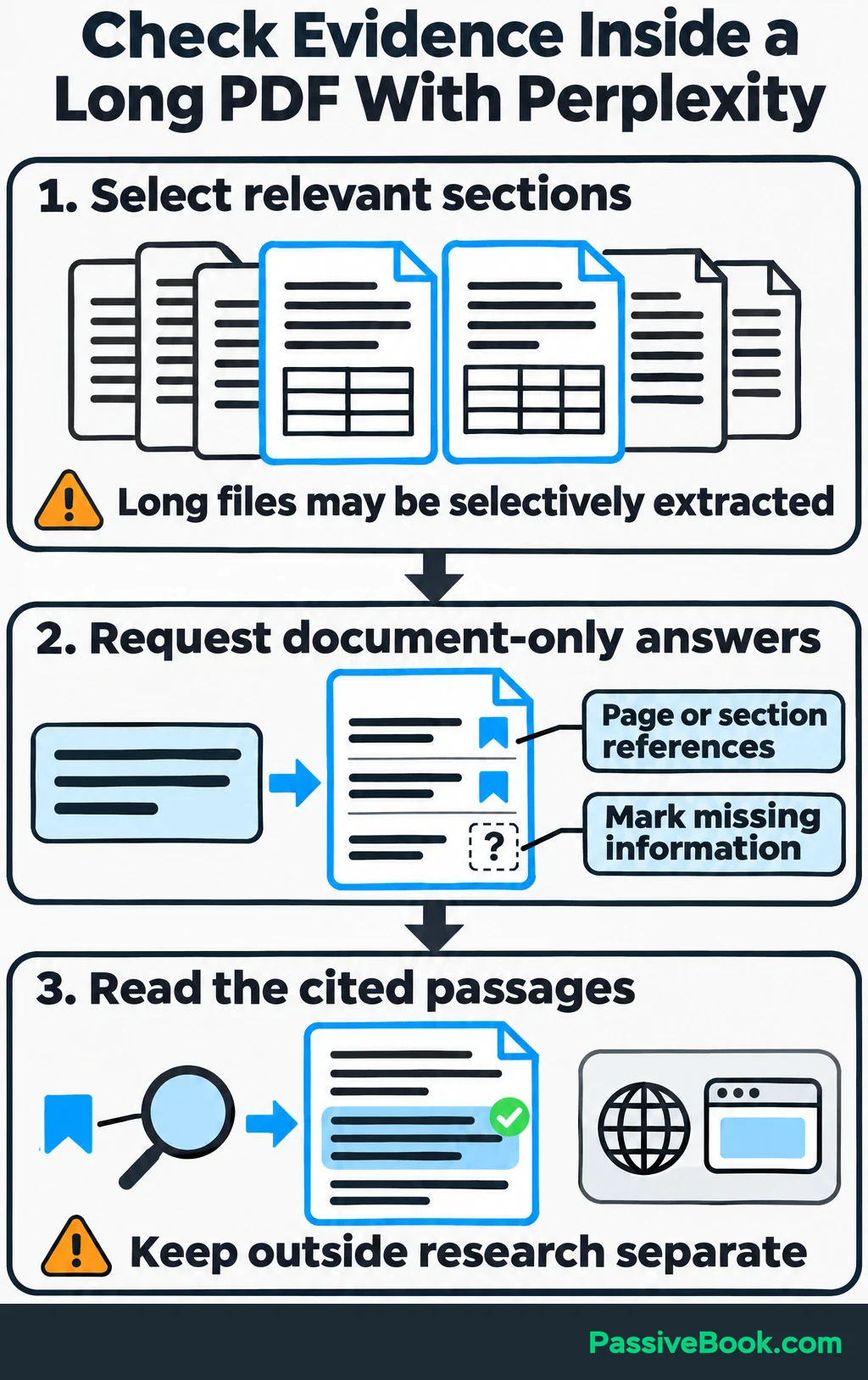
Then read the referenced passages yourself.
For a long PDF, work with the relevant sections or attach the pages you need. Perplexity says it can analyze short files in full but extracts selected material from long files, so a whole-document summary may not cover every relevant detail. Its file-analysis guidance explains that behavior.
Keep outside research separate:
Now run a web search for related or subsequent research. Clearly distinguish those sources from the uploaded paper.
That gives you two useful outputs: what this document says, and what other evidence adds.
4. Use Follow-ups to Resolve Important Gaps
Stay in the same conversation while investigating the same question. Start a new one when the objective changes substantially.
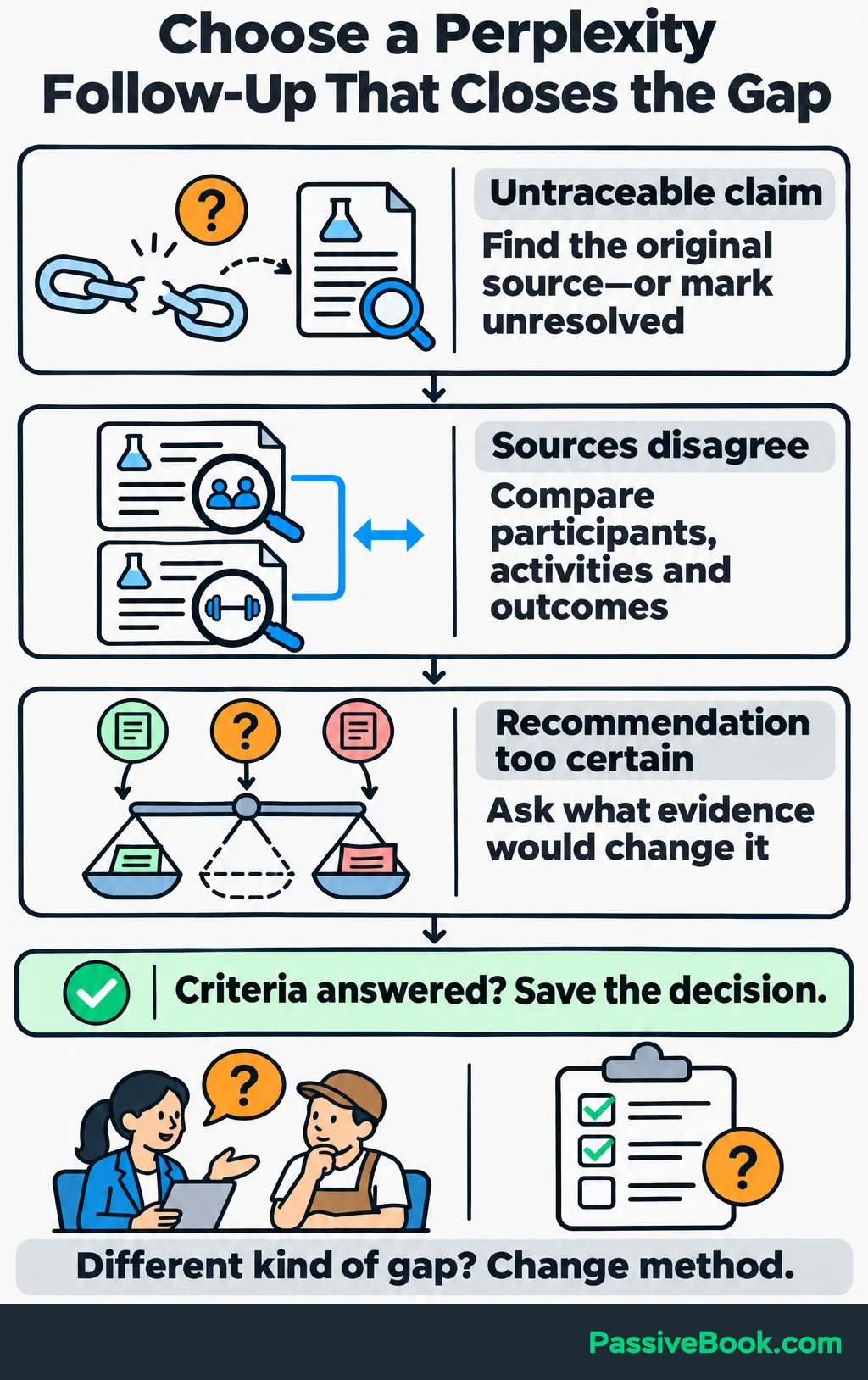
The best follow-up addresses a specific weakness. “Tell me more” usually produces more material without making the decision clearer.
Use these prompts when you need them:
| Problem in the Answer | Follow-up to Use |
|---|---|
| A claim has no traceable original source | “Find the original source behind this statement and identify the passage supporting it. If you cannot find one, mark the claim unresolved.” |
| Two sources appear to disagree | “Compare their participants, activities and measured outcomes. Which differences could explain their conclusions?” |
| A recommendation sounds too certain | “What evidence argues against this choice, and which missing fact would change your recommendation?” |
| Promotional material carries the argument | “Replace promotional claims with original research or qualified professional guidance. Identify any remaining unsupported parts.” |
For the photography guide, keep two questions separate: does research support an effect, and would owners find the proposed activity convenient?
Owner feedback might help with the second question. It cannot settle the first.
If a citation won’t open, search for the paper’s title or DOI, its permanent research identifier. Look for an accessible original or author manuscript. An access failure doesn’t make the claim false, but you still need to inspect supporting evidence before relying on it.
I would stop when the decision criteria are answered or the remaining gap needs another method. More searches won’t replace observing whether instructions are easy to follow. For a dog-specific suitability question, professional advice may be the next useful step.
The aim is to resolve a decision, not win an argument with the search box.
5. Turn Verified Findings Into a Usable Research Brief
Once you have checked the important sources, ask for a short synthesis.
Give Perplexity your verified notes rather than asking it to reconstruct everything from the conversation:
Using only the verified findings below, create a one-page research brief. Include the decision under review, supporting evidence, trade-offs, unanswered questions and next action. Separate findings from recommendations. Preserve source links and applicable conditions, and do not fill evidence gaps with assumptions.
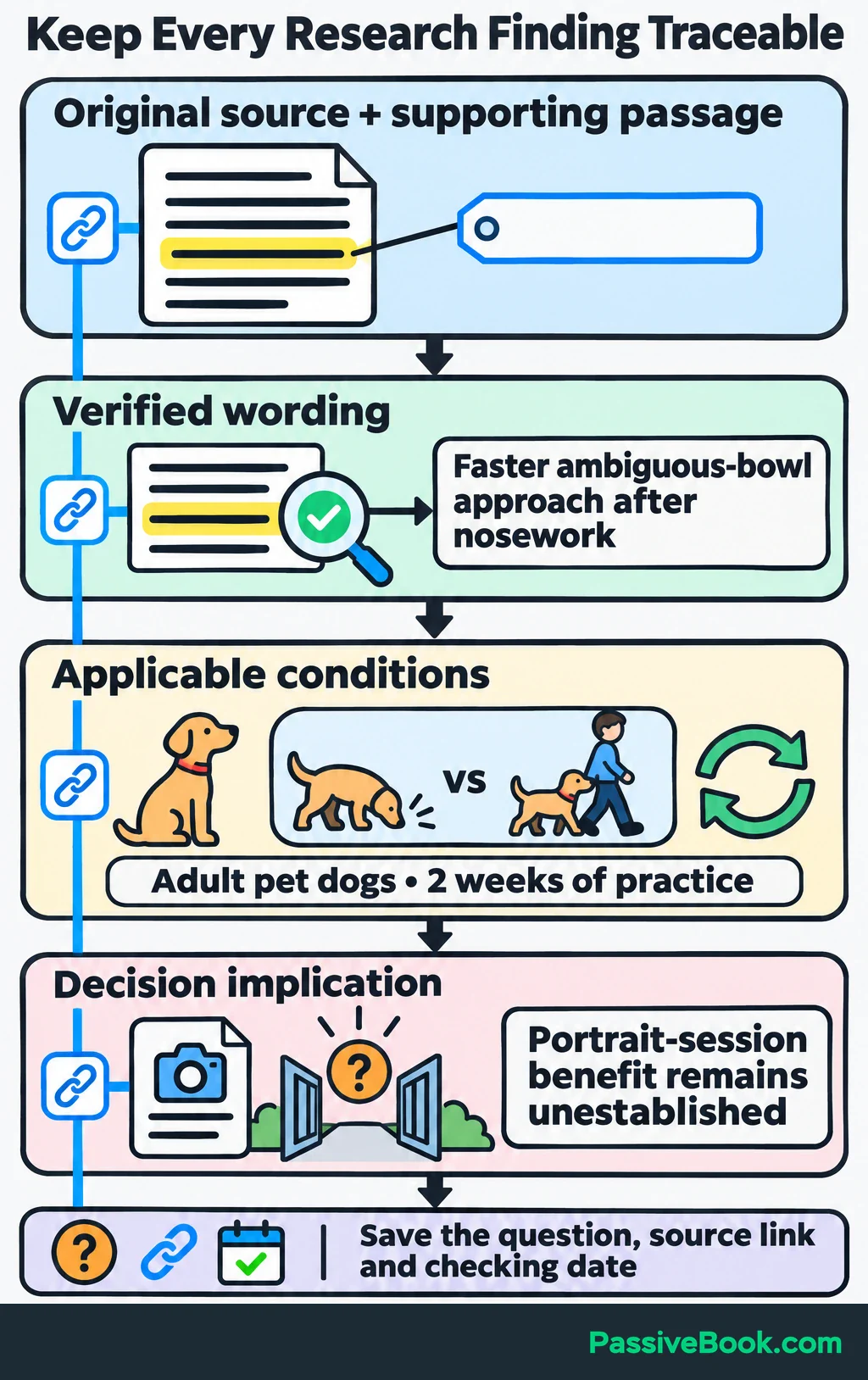
Keep an evidence table behind the brief. Use one row per finding and record the question, verified wording, source URL, supporting passage, conditions, date checked and decision implication.
Here is how the study entry could look, displayed vertically for readability:
| Field | Example Entry |
|---|---|
| Question | What evidence supports including scent-based activities in the portrait preparation guide? |
| Verified finding | The nosework group approached an ambiguous bowl faster after training. |
| Original source | Duranton and Horowitz’s paper |
| Supporting passage | Results, section 3.2.1: approach times fell significantly after nosework; the heelwork group showed no significant change. |
| Conditions | Adult pet dogs; nosework versus heelwork; two weeks of practice |
| Decision implication | This study alone does not justify a pre-session activity; review guidance specific to the proposed activity before including it. |
Record your own checking date when you inspect the paper. That helps you revisit evidence without confusing the paper’s publication year with the last time you reviewed it.
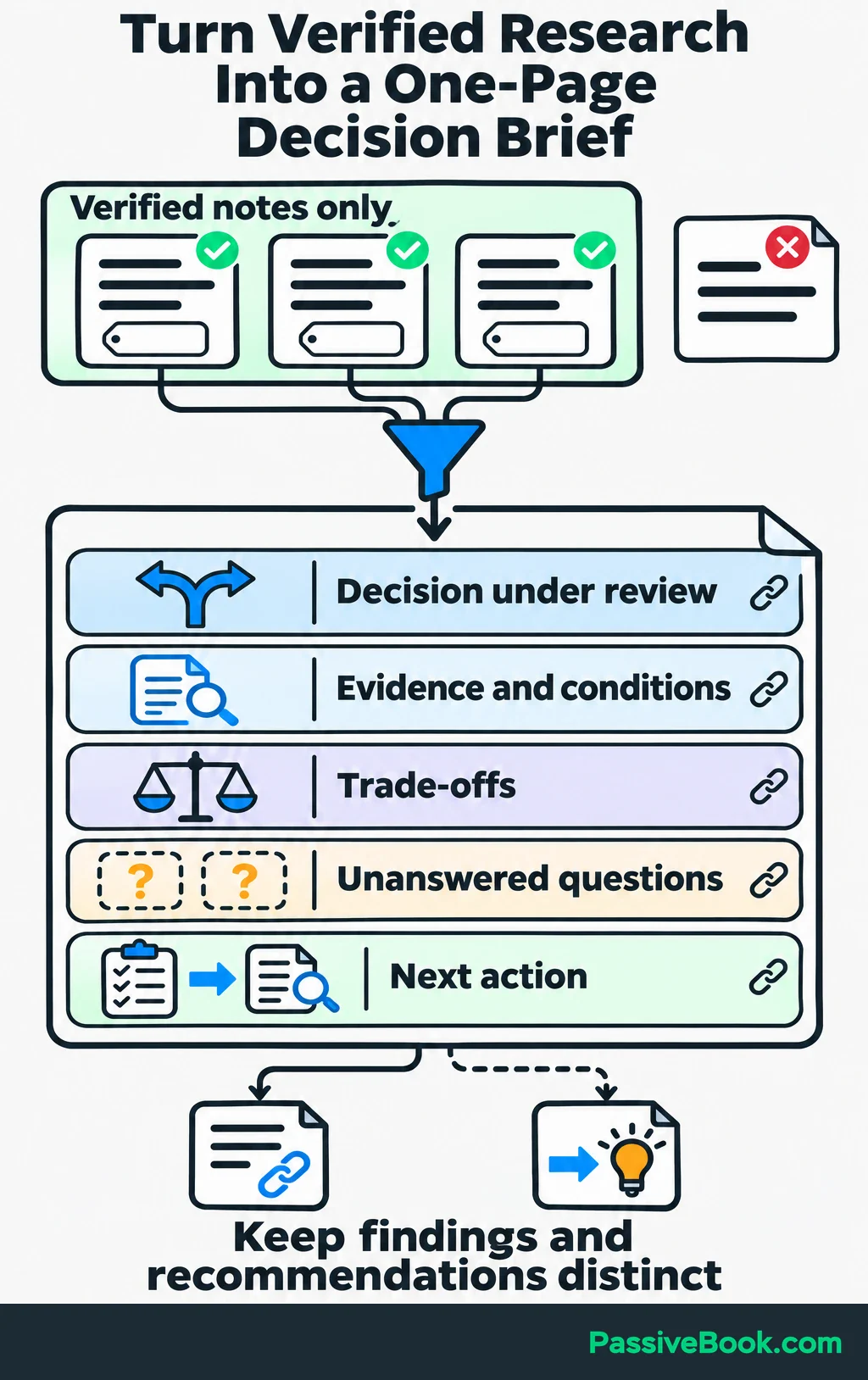
The resulting brief should make the state of the decision plain. For this example, useful entries would include:
- Decision Under Review: Whether to include a scent-based activity in the adult-dog portrait preparation guide.
- Evidence Status: One study found faster approaches to an ambiguous bowl after repeated nosework training. It did not test portrait sessions.
- Questions Still Open: Which activity is proposed? What guidance supports its suitability? Is there evidence relevant to a single portrait session?
- Next Action: Review qualified practical guidance for that activity and identify any remaining questions requiring professional advice.
Save the original question, useful prompts, sources, evidence table and brief together. A document or Notion page is enough. When you later use a finding in an article or business guide, cite the underlying source.
I would automate collecting and arranging these notes before automating recommendations. A tidy folder full of unchecked claims is still a folder full of unchecked claims.
When Is Perplexity Pro Worth Paying for?
Stay on Free until a recurring limit interrupts work you actually need to finish.
These are the practical differences:
| Plan | Published Price | Search Access | Research Allowance | File Analysis |
|---|---|---|---|---|
| Free | $0 | Practically unlimited basic searches; 3 Pro Searches per day | 1 Research query per month | Limited uploads |
| Pro | $20 monthly or $200 annually | Extended Pro Search access with weekly limits | Extended access with monthly limits | Higher upload and analysis allowances |
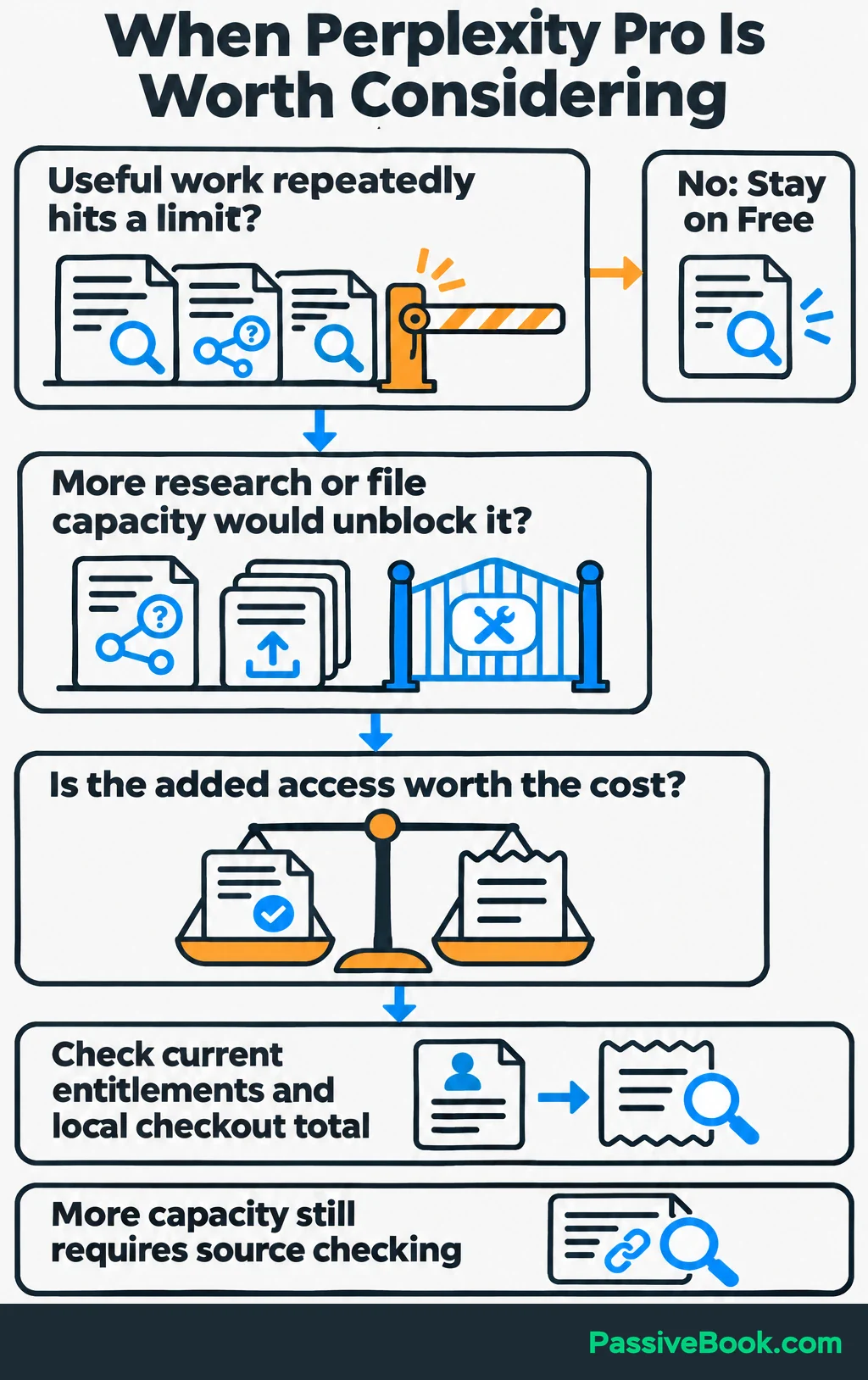
The allowances come from Perplexity’s subscription comparison, which does not publish fixed consumer Pro counts for those weekly and monthly limits. Prices come from its published pricing information. Check current entitlements and your local checkout total before purchasing.
Pro also provides advanced model selection. I wouldn’t pay for that alone while you’re still learning to frame questions and review evidence.
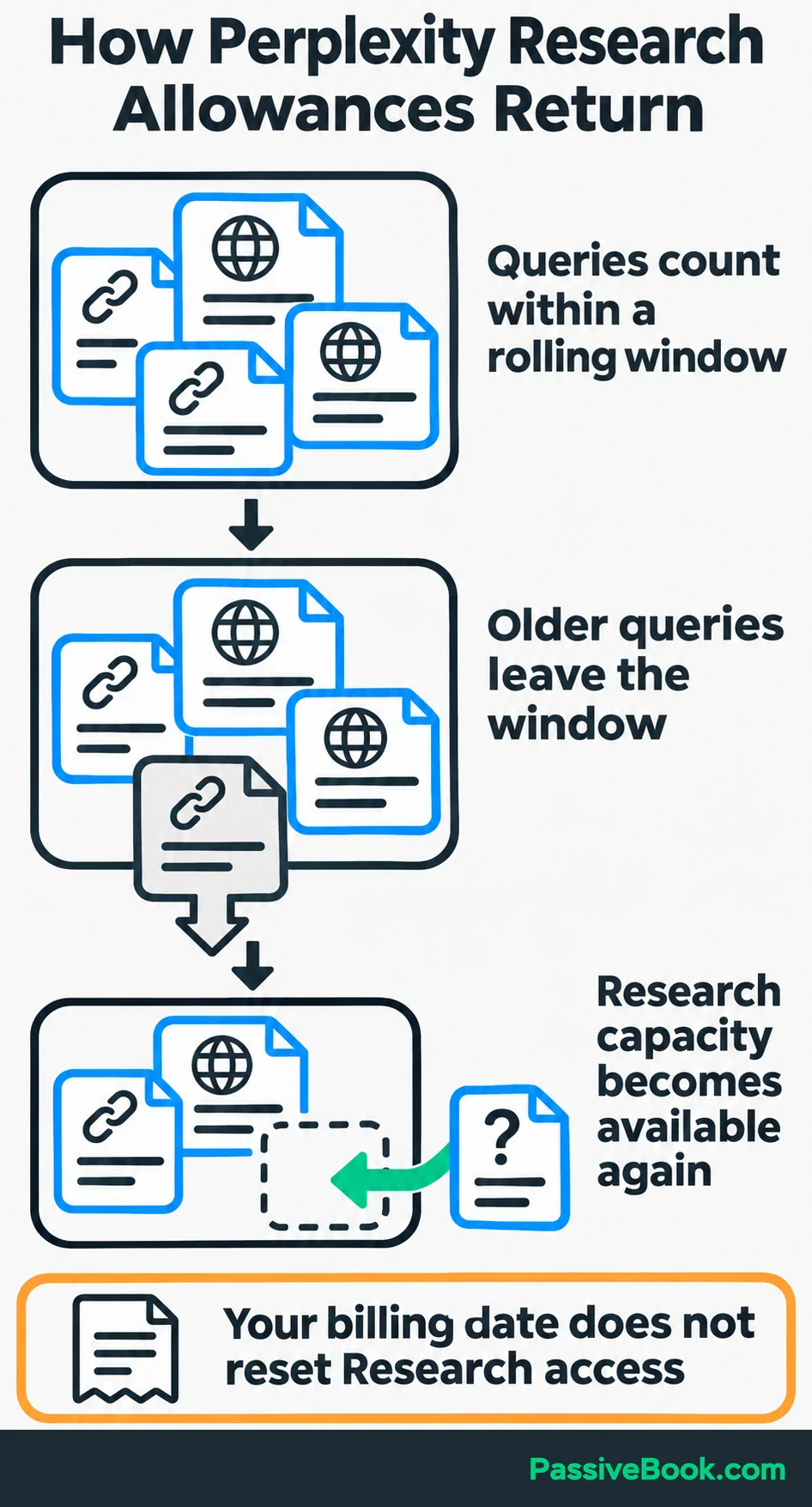
Research access returns on a rolling basis as older queries leave the usage window. Your billing date does not reset it, according to Perplexity’s Research limit rules.
I would consider Pro when:
- Research Capacity: You regularly have connected questions ready to investigate, but your allowance stops you.
- File Work: Upload limits repeatedly interrupt useful document analysis.
- Cost Justification: The additional access is worth the subscription cost for the work you complete.
For occasional dog-care research or a single business guide, try the free workflow first. Paid access gives you more capacity. It doesn’t remove the need to check sources or guarantee a better conclusion.
What Next?
Choose one question you are already trying to answer and write down the decision it needs to support. Run a focused Search, open the citation behind the most consequential claim and save one verified finding with its conditions.
Use the social buttons to share this guide if a repeatable source-checking process would make your research discussions more useful.
Which decision would you feel more confident making after checking the original evidence? Tell me in the comments, and bring any other questions about the workflow too.
Share this post with your friends & followers:

