You can think of products you would happily recommend, but turning those recommendations into income raises harder questions. Where do you publish? Which programs accept beginners? And what happens if you spend months writing without earning anything?
My first three months brought in roughly $23. I had plenty of products to promote and very little reason for anyone to trust my recommendations.
That’s a frustrating return on evenings you could spend elsewhere. This guide shows how to build a small affiliate project around useful buying advice, keep spending low, and follow the path from your articles to approved commissions.
How Affiliate Marketing Works
Affiliate marketing means recommending another business’s product through a tracked link. You earn a commission when your referral completes a purchase or another action that meets the program’s rules.
Four parties can be involved:
- The merchant sells the product and handles checkout, delivery, and customer service.
- The customer follows your recommendation and decides whether to buy.
- The affiliate is you: the person publishing the recommendation.
- An affiliate network connects publishers with merchant programs and helps manage tracking and payments. Some merchants run their own programs instead.
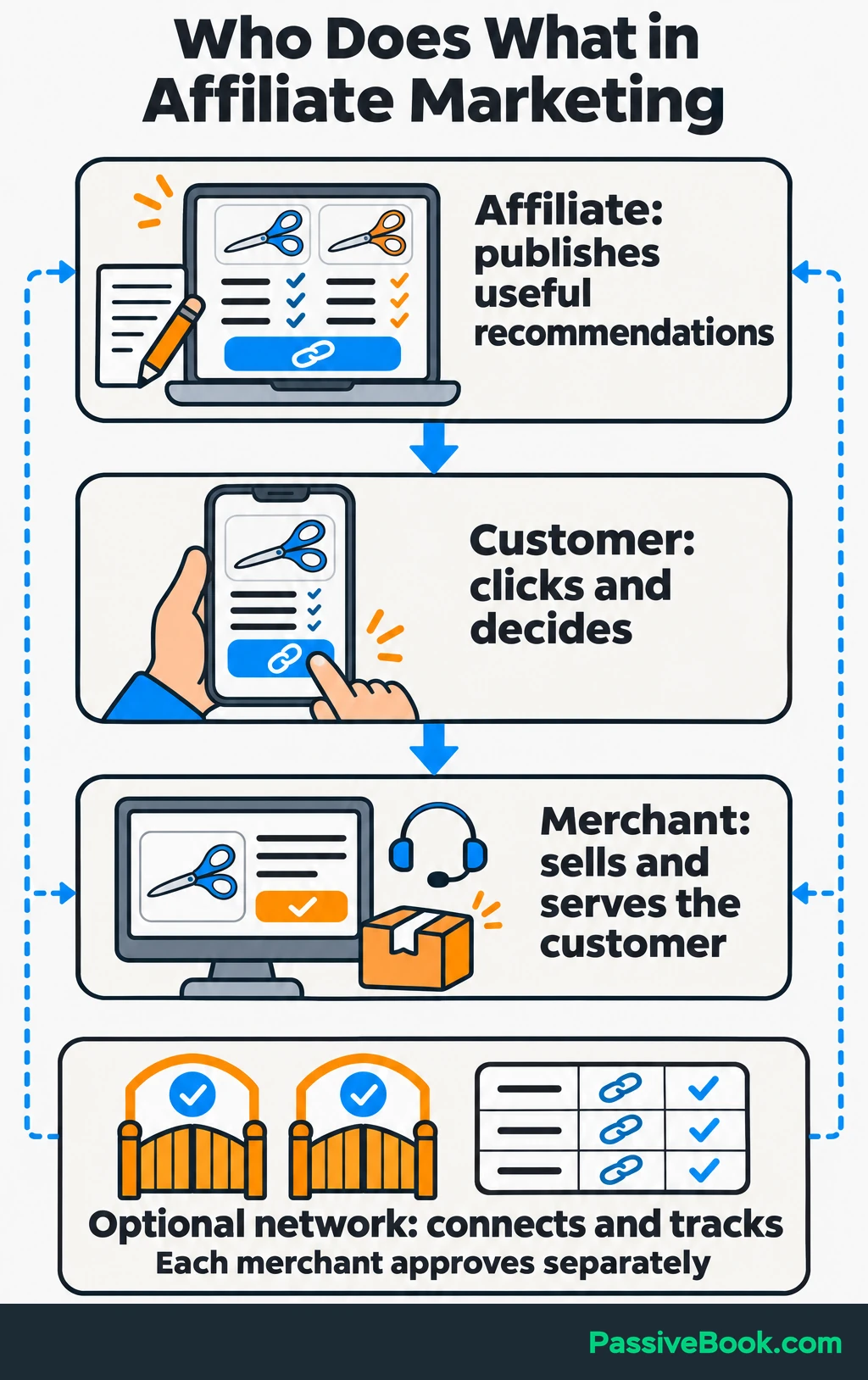
Joining a network does not automatically approve you for every merchant on it. Think of the network as the building; individual programs still have their own doors.
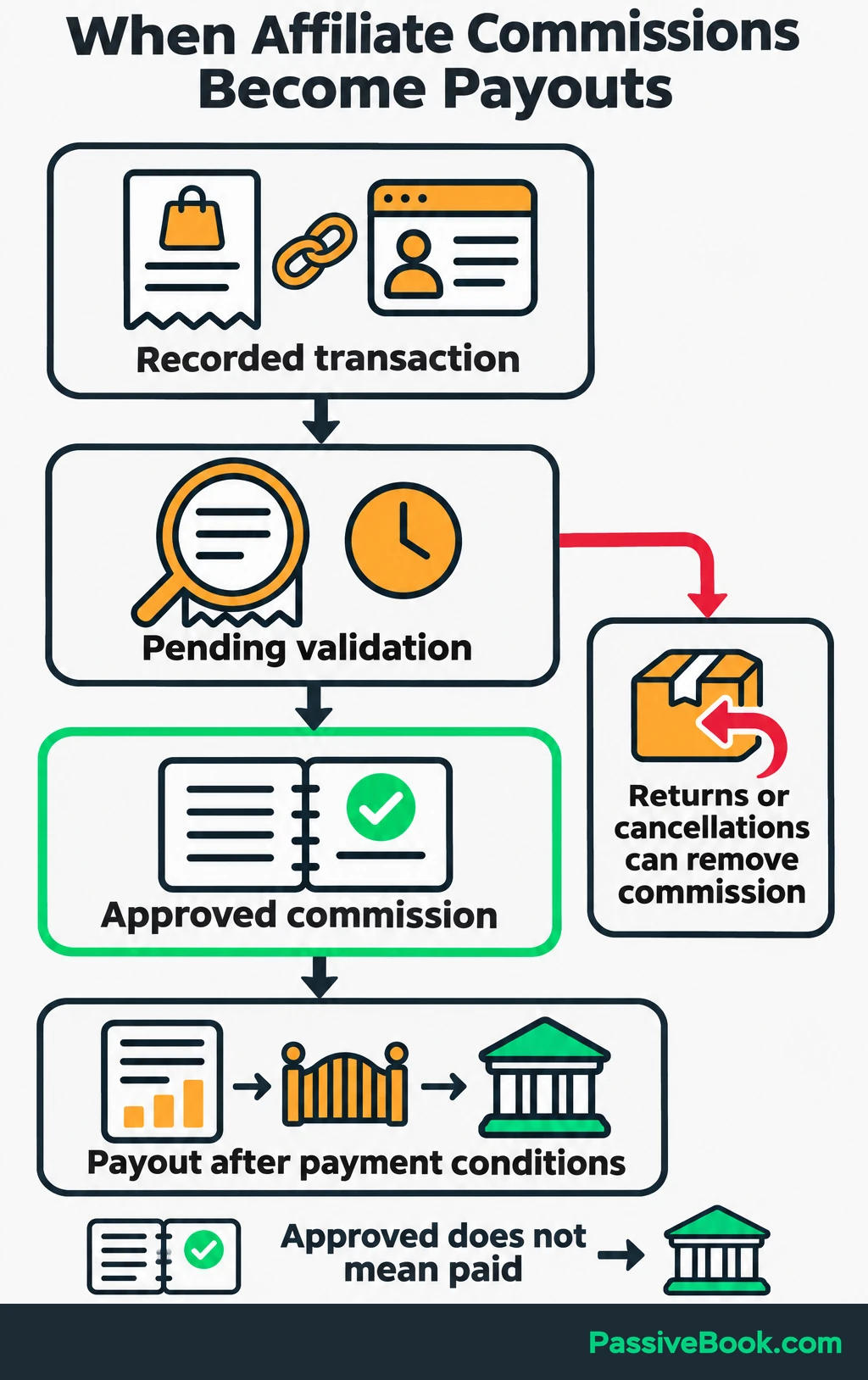
A recorded sale also isn’t money in your bank account. A commission may appear as pending while the merchant checks the transaction, become approved, and reach payout after you meet the payment conditions. Returns can remove it. For example, Amazon’s commission policies exclude orders where a cancellation, return, or refund has been initiated.
The work involves research, publishing, distribution, and updates. Older articles can keep helping readers, but they still need maintenance.
After my slow start, I switched to honest reviews of tools I actually used and reached roughly $340 per month consistently. Those were my results, not an earnings benchmark for beginners. The useful lesson was that I could explain those tools well enough to help someone choose.
How Much Do Affiliate Links Pay?
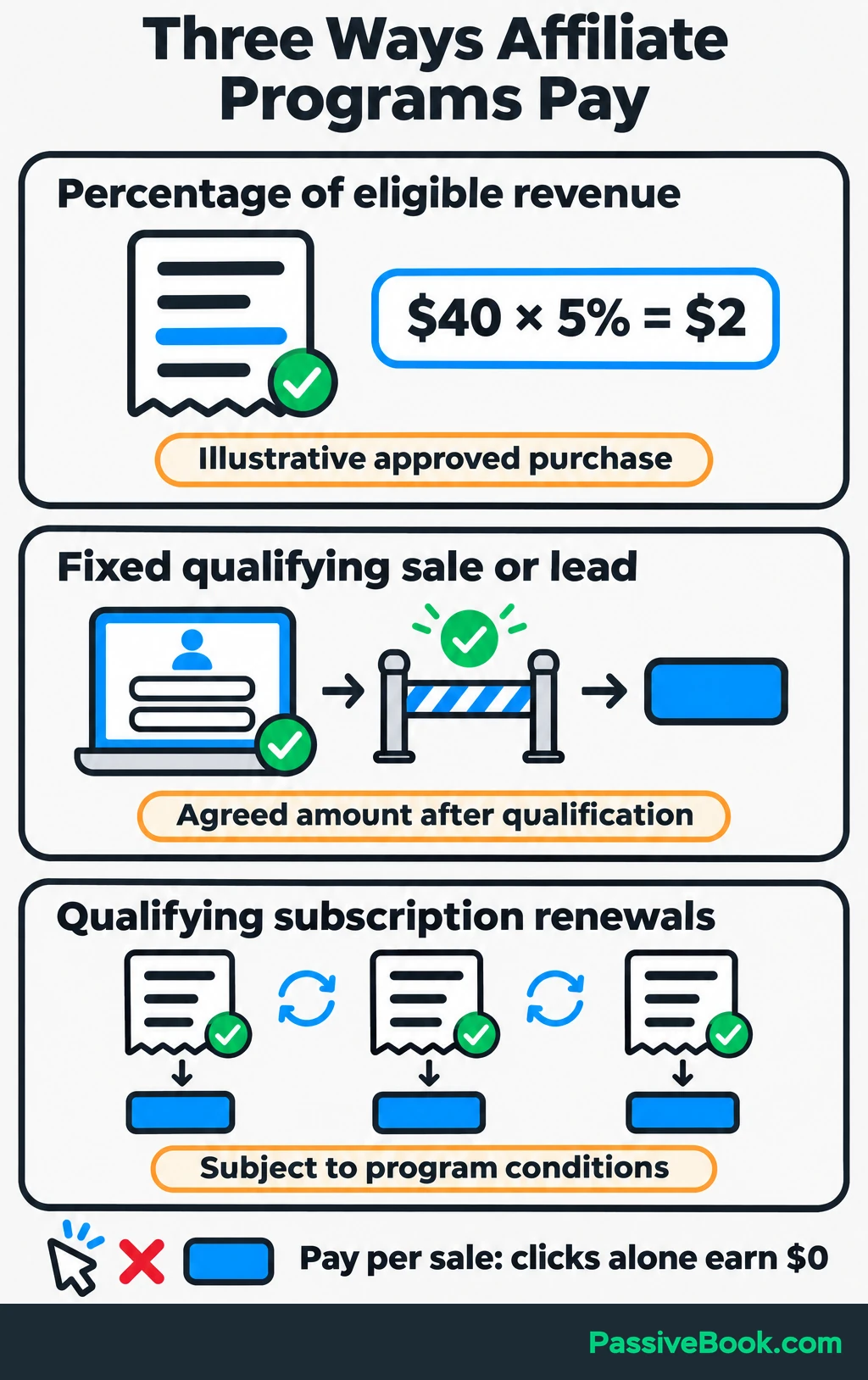
Programs commonly pay in three ways:
- A percentage of eligible purchase revenue.
- A fixed amount for a qualifying sale or lead, such as an eligible account signup.
- A commission on qualifying subscription renewals, subject to the program’s conditions.
Under a pay-per-sale agreement, a click alone earns nothing.
For the examples throughout this guide, imagine you run a blog helping people repair clothes at home. Its figures and sample copy are illustrations, not actual product tests, program rates, or earnings forecasts.
Suppose your articles send 200 affiliate clicks to fabric scissors. Those referrals produce five approved purchases, each with $40 in commissionable revenue, and the assumed commission rate is 5%.
You earn commission on those five purchases:
5 purchases × $40 × 0.05 = $10
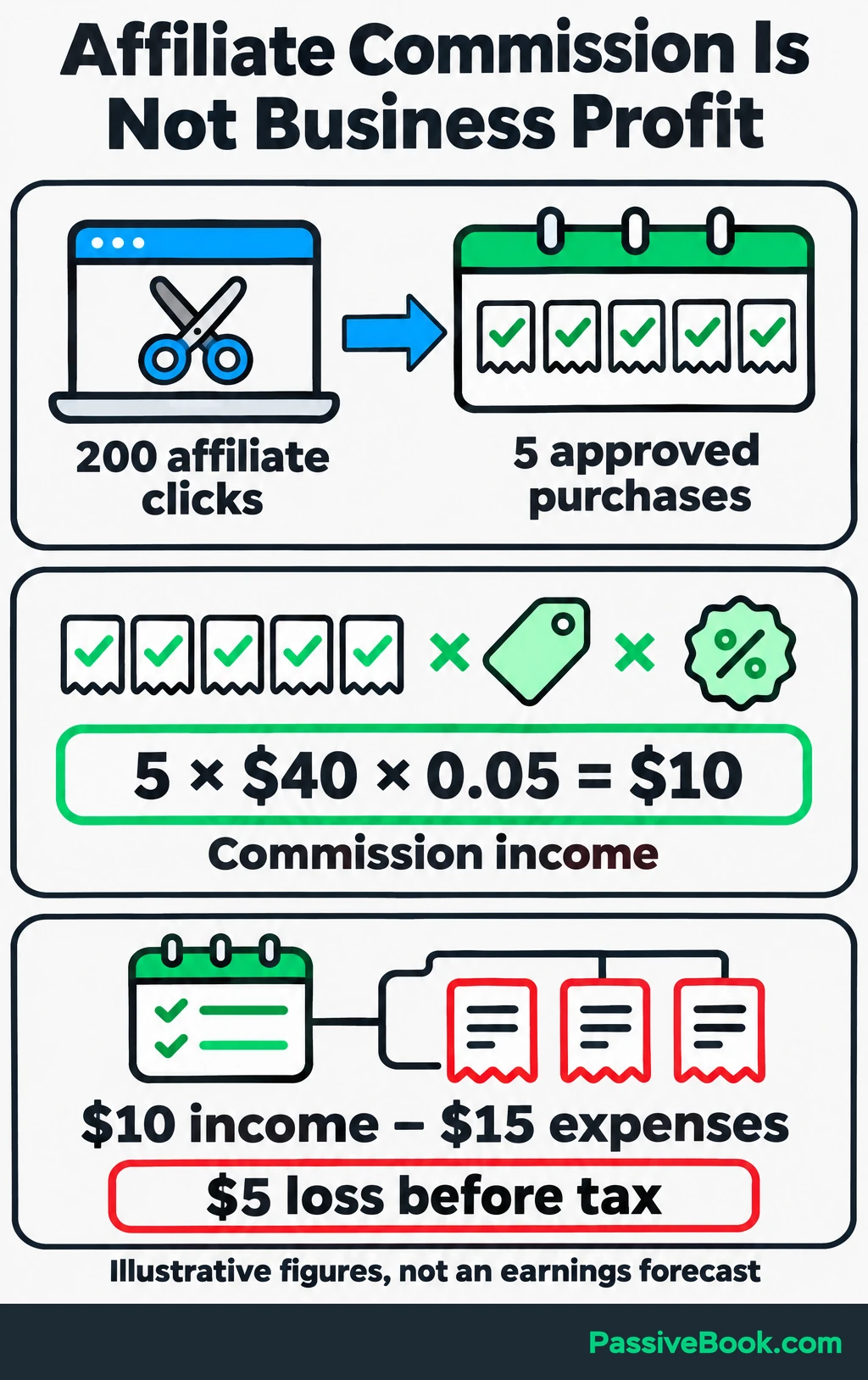
Now count the expenses attributable to earning that income. If they total $15, your result is:
$10 commission income − $15 expenses = $5 loss before tax
The commission rate is only one part of the business. You also need suitable visitors, useful recommendations, purchases that qualify, and costs you can support. Payment timing determines when the approved income reaches you.
1. Choose a Niche With Buying Decisions You Can Help Explain
Start with a subject you understand or can investigate without buying a cupboard full of equipment.
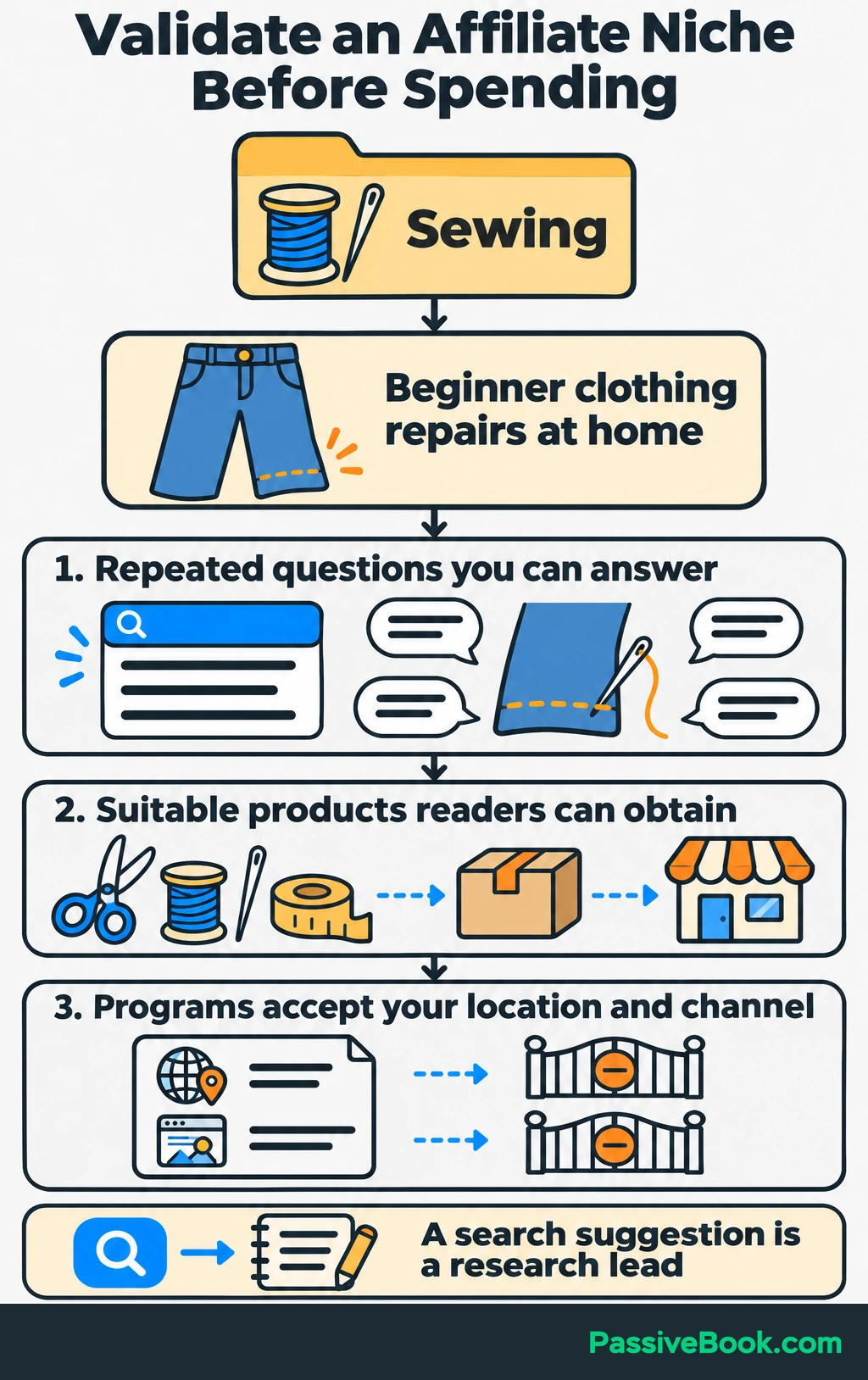
Then narrow it around a recurring problem. “Sewing” is broad. “Helping beginners repair everyday clothes at home” gives you clearer tasks and purchase decisions.
Before committing, check three things:
- People repeatedly ask questions you can answer.
- Suitable products are available to those people.
- Relevant merchants accept affiliates from your location and permit your publishing channel.
Look through search suggestions, search results, community discussions, and customer reviews. Write down the questions people ask and the details existing answers leave unclear. A search suggestion is a research lead, not proof that a topic will make money.
For the clothing-repair blog, possible questions include:
- Do I need fabric scissors for occasional repairs?
- What belongs in a basic clothing-repair kit?
- How do I shorten cotton trousers?
- Which scissor dimensions and handle design should I compare?
These are starting ideas to investigate. Your contribution might be clearer instructions, useful photographs, or a comparison built around a task that other guides barely explain.
Write a niche statement:
“I help people repairing clothes at home choose basic sewing tools for their projects.”
Then list several article ideas and a few merchants that sell the relevant products. If you can explain the products but not the problems they solve, investigate further before building the site.
I would choose a modest niche I can cover well over a lucrative-looking niche where every recommendation depends on someone else’s review. A large commission is poor compensation for having nothing useful to say.
2. Choose One Publishing Channel
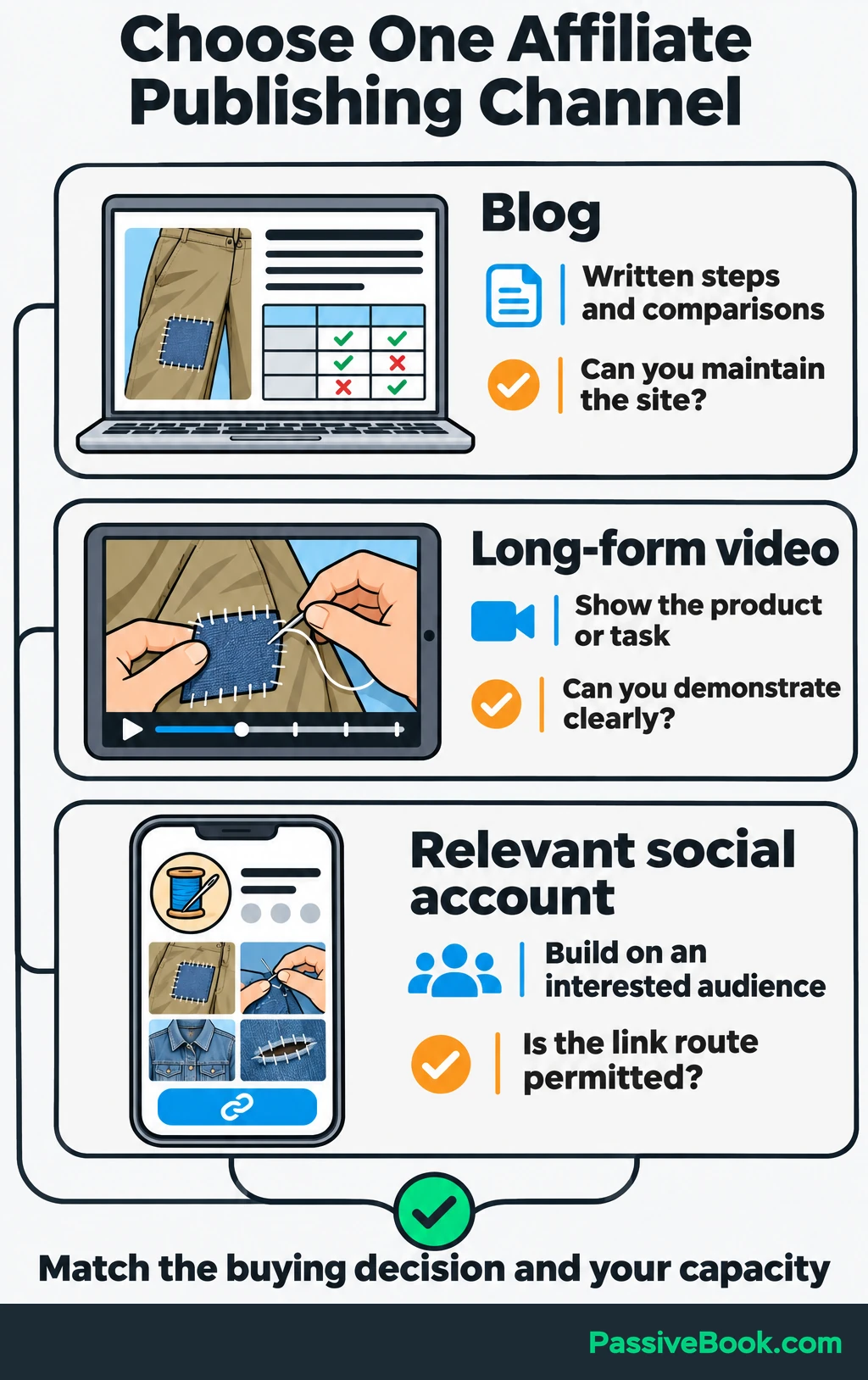
Choose the format that suits both the buying decision and the work you can sustain.
| Channel | Choose It When | Check Before Committing |
|---|---|---|
| Blog | Readers need written instructions, photographs, and comparisons they can revisit | You can maintain the site, and programs accept website promotion |
| Long-form video | Seeing the product or task makes the explanation much clearer | You can demonstrate it clearly; hands-only footage may be enough |
| Existing relevant social account | You already discuss the subject with an interested audience | The account provides a usable link route, and programs accept that channel |
Reuse a suitable site or account if you have one. Starting again adds work without necessarily improving your recommendations.
For the clothing-repair example, I would choose a blog built with WordPress.org, the software you install on a hosting service to publish and manage your pages. Written guides, photos, and comparison tables fit that format.
The basic setup is:
- Register a domain that leaves room for related clothing-repair topics.
- Choose hosting, the service that keeps your site online. Compare the initial charge, renewal price, and billing period.
- Install WordPress and select a readable theme such as GeneratePress.
- Create About and Contact pages, clear navigation, and the privacy information your setup requires.
- Check that the pages work comfortably on a phone.
If server setup is unfamiliar, choose hosting that handles the installation. Learning server administration can wait.
A free publishing account can avoid new website costs, provided it permits affiliate content and your intended programs accept it. You don’t need a paid keyword tool, premium theme, or automation system to investigate a niche.
My starting rule is simple: spend when you can name the problem the purchase solves. “I might need it later” has funded enough unused software.
3. Shortlist Affiliate Programs That Fit Your Content
Find products that solve your readers’ problems, then investigate their programs.
Search official merchant websites for an affiliate or partnership page. Networks such as Impact can also help you find programs, but the merchant’s terms still determine what you can promote and how you get paid.
For the clothing-repair blog, I would investigate Amazon Associates and specialist sewing retailers. Sewing Machines Plus lists affiliate marketing among its partnership opportunities. That makes it a candidate to check, not an automatic recommendation. Confirm that its products, shipping, and application terms fit your planned content.
Compare buyer fit before commission size. A merchant is little use if your readers cannot order from it.
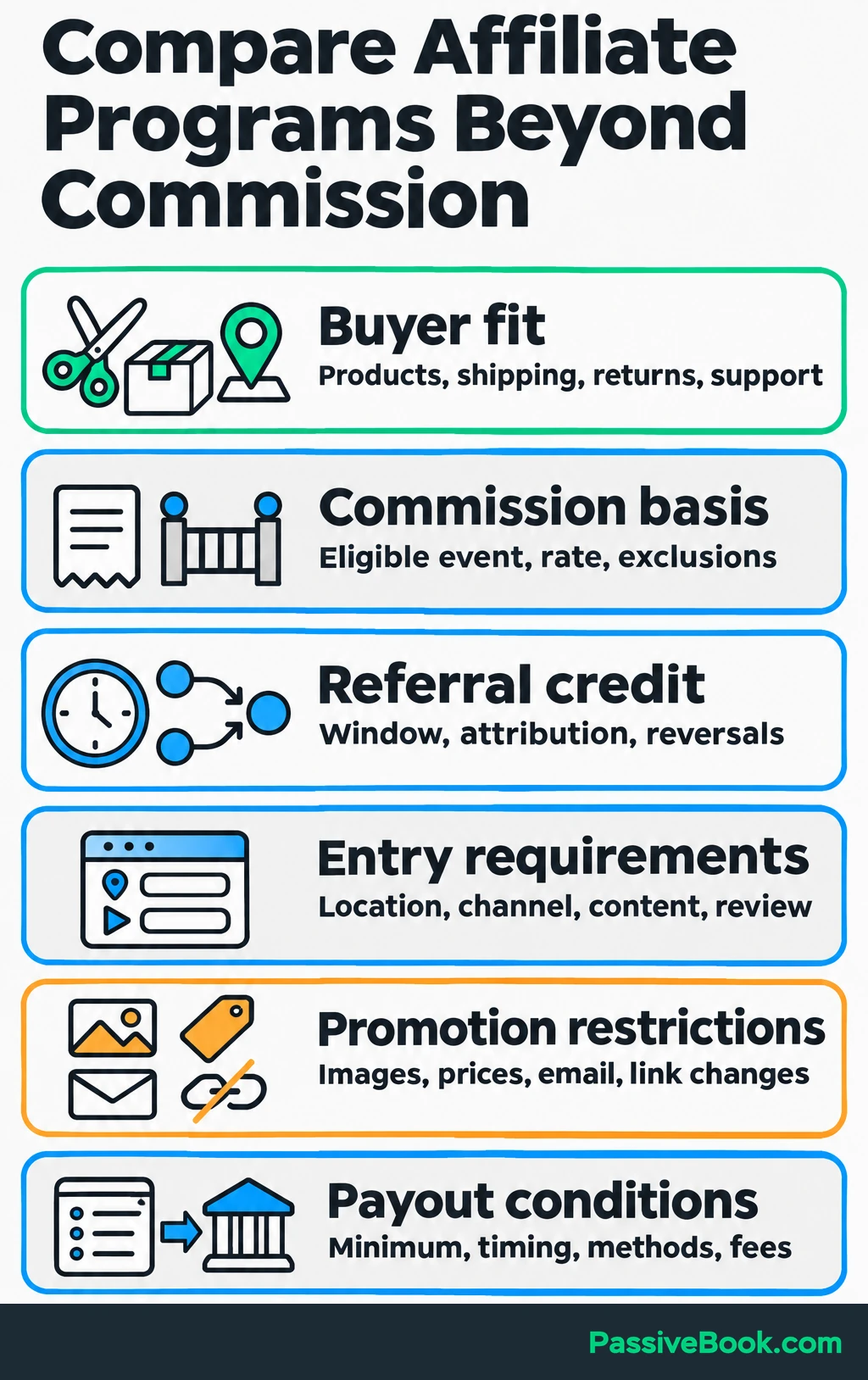
Use a simple comparison sheet:
| What to Compare | What to Record |
|---|---|
| Product and buyer fit | Relevant products, countries served, shipping, returns, and available support |
| Commission basis | Eligible sale or lead, percentage or fixed payment, and excluded items |
| Referral credit | Attribution window, rules for assigning credit, and reasons commissions can be reversed |
| Application requirements | Accepted countries, channels, content expectations, and any sales-based review |
| Promotion restrictions | Rules for images, displayed prices, email links, and link changes |
| Payout | Minimum balance, payment timing, available methods, and applicable fees |
The attribution window limits how long a referral can remain eligible. Crediting rules decide which referral gets the commission when several sources are involved. A longer window doesn’t guarantee you receive credit.
For recurring commissions, check which renewals qualify and how long payments continue. “Recurring” deserves more reading than the headline usually gets.
I would shortlist two or three suitable programs and publish useful content before applying. Check each program’s entry requirements first so you don’t start an application deadline while your site is still an empty theme.
4. Publish Content That Helps Someone Choose
Start each article with one concrete question.
Use a tutorial when the reader needs to complete a task, a review when they’re considering one product, and a comparison when they’re choosing between alternatives.
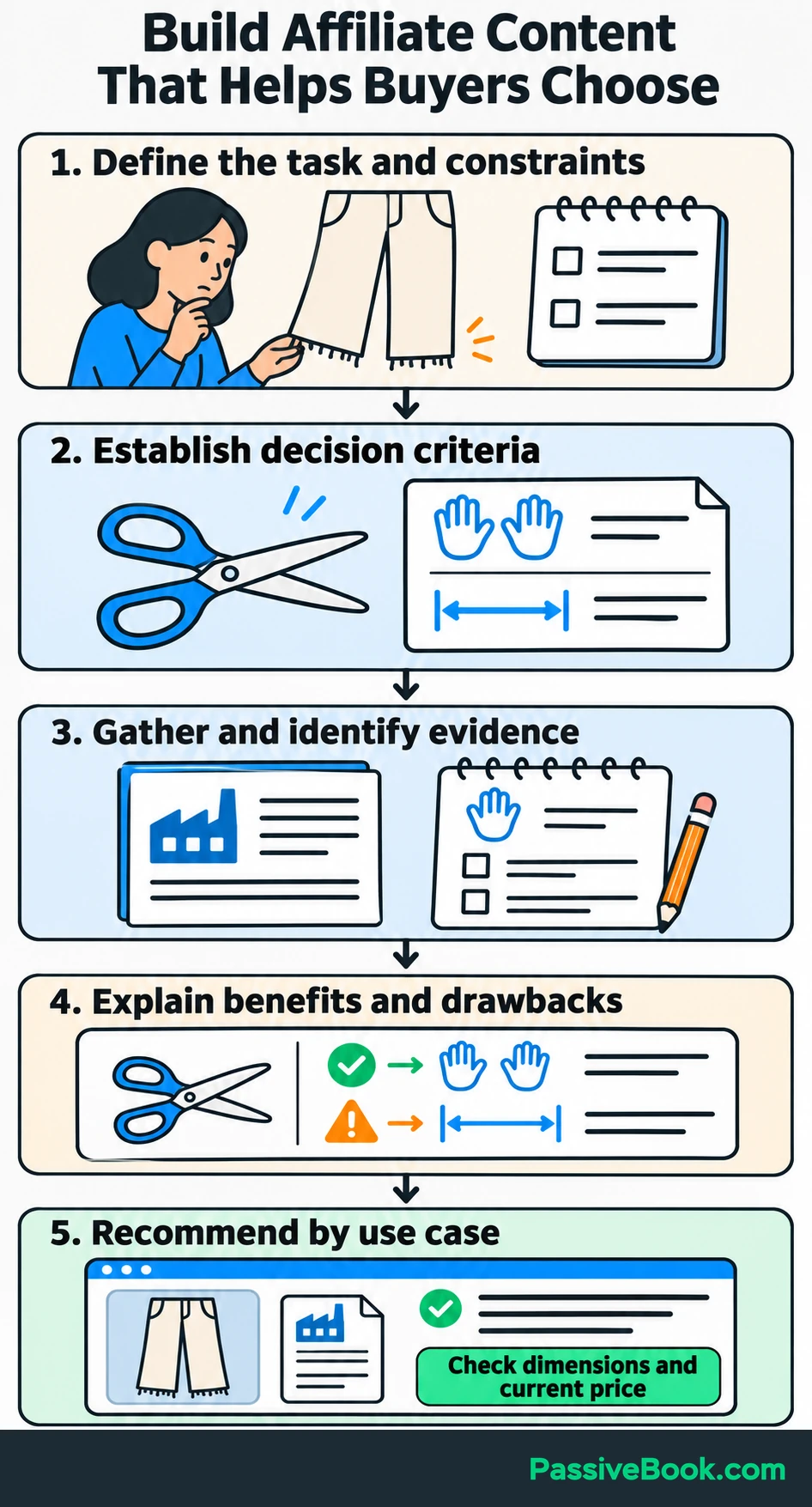
A repeatable process keeps the article useful:
- Define the reader’s task and constraints.
- Establish the criteria that affect the decision.
- Gather evidence about suitable options.
- Explain the benefits and drawbacks.
- Recommend by use case and give a clear next step.
For “How to choose fabric scissors for basic clothing repairs,” establish what the reader plans to cut before comparing products.
| Decision | Evidence for This Guide | What It Supports |
|---|---|---|
| Intended repairs | Cotton trousers in the hemming tutorial | Focus the comparison on cutting cotton for a hem |
| Cutting hand | No product selected yet; check each candidate’s stated handedness | Rule out models intended for the other hand |
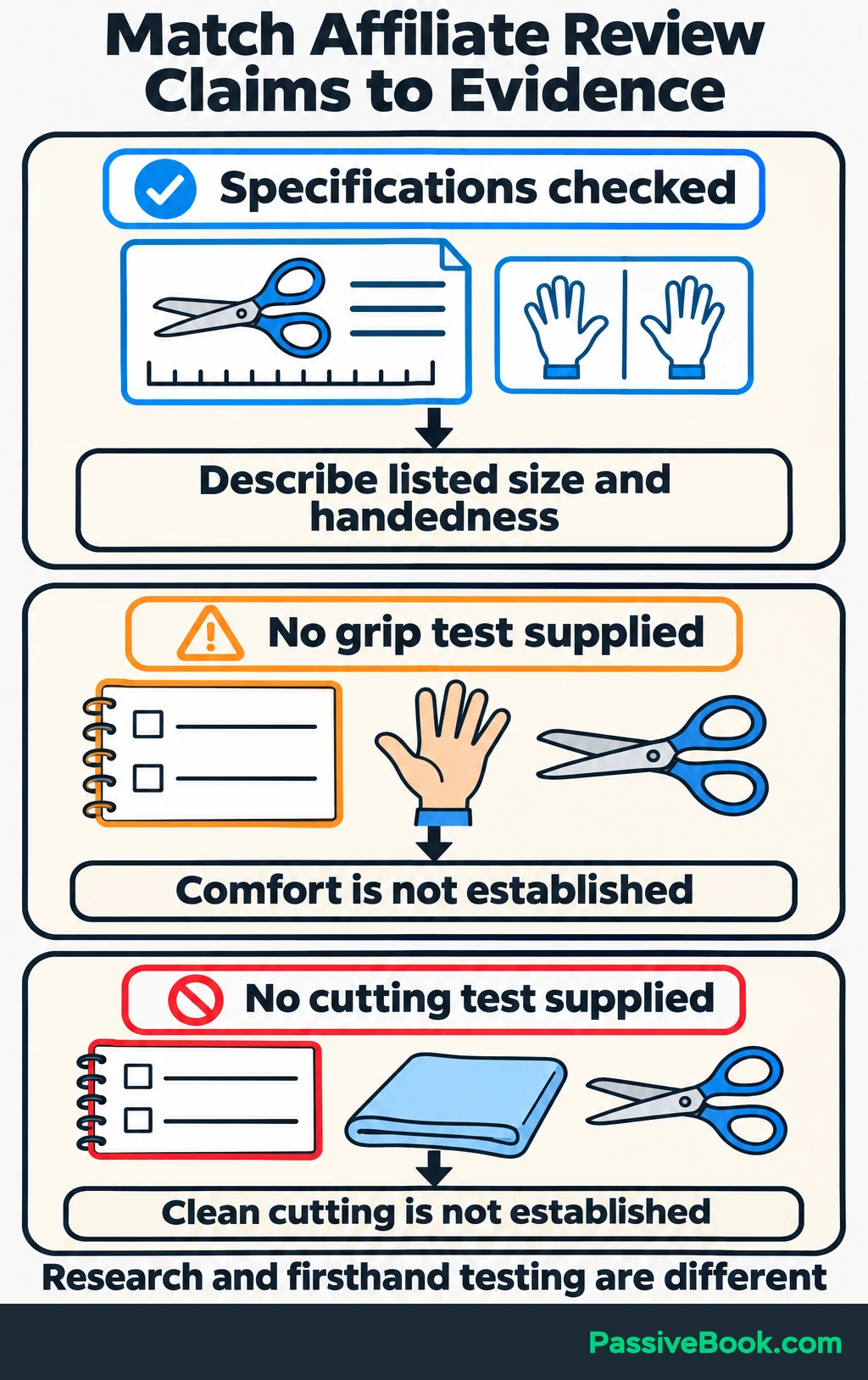
| Size and grip | No measurements or grip test supplied | Use listed dimensions to describe size; test grip before describing comfort |
| Cutting performance | No cutting test supplied | Leave out claims that a particular model cuts cleanly |
| Budget | No current price has been checked | Compare suitable options using price information the program permits |
Keep firsthand testing separate from research. If you only checked specifications, say so. Specifications can support a researched comparison, but they don’t prove that scissors felt comfortable or cut cleanly in your hands.
Google’s review guidance recommends supporting evidence, meaningful comparisons, and clear benefits and drawbacks. My application is to make every recommendation answer: “What do I know that helps this person choose?”
On one of my tool reviews, I noticed my draft praised the feature list but left out the setup work in my notes. Adding that experience gave me a reason to explain who should skip the tool. The recommendation became more useful when it had limits.
For the clothing-repair guide, a short passage might read:
“Check whether the handle is designed for your cutting hand and whether the listed dimensions suit your grip before comparing prices.”
Once you have evidence for a particular product recommendation, follow it with a specific next step:
“Check these scissors’ dimensions and current price.”
Avoid declaring something “best” because it has an affiliate program. Explain what makes it suitable, what the buyer gives up, and when their existing tool is adequate.
If you have product notes but keep getting stuck at the blank page, AI Copywriting Studio can turn them into a draft built around the buying decision. You can use firsthand experience or researched specifications without treating them as the same kind of evidence.

Free AI Copywriting Studio




Build a small group of connected articles: the scissor-selection guide, a basic repair-kit guide, and a trouser-hemming tutorial.
Those pages should help readers before you add any affiliate links. Expand the collection as needed to meet your shortlisted programs’ content requirements.
5. Join Programs and Add Affiliate Links
Apply through the official program page. Provide your exact public website or channel address and an accurate account of your content and promotion methods.
Complete identity, tax, and payment details inside the official account. Then follow that program’s onboarding sequence.
Some programs approve applicants before links can be used. Others allow links during a review period. For example, Amazon.com reviews applications after at least three qualifying sales within 180 days of signup; personal orders don’t count. It also expects substantial original content. Read its application review requirements before starting that clock.
Once authorized, generate tracked links using the program’s tools. Link to the specific product you discuss and place the link beside the recommendation.
Check the published link on desktop and mobile. Confirm the product, country storefront, and tracking identifier. Testing the destination does not require buying through your own link.
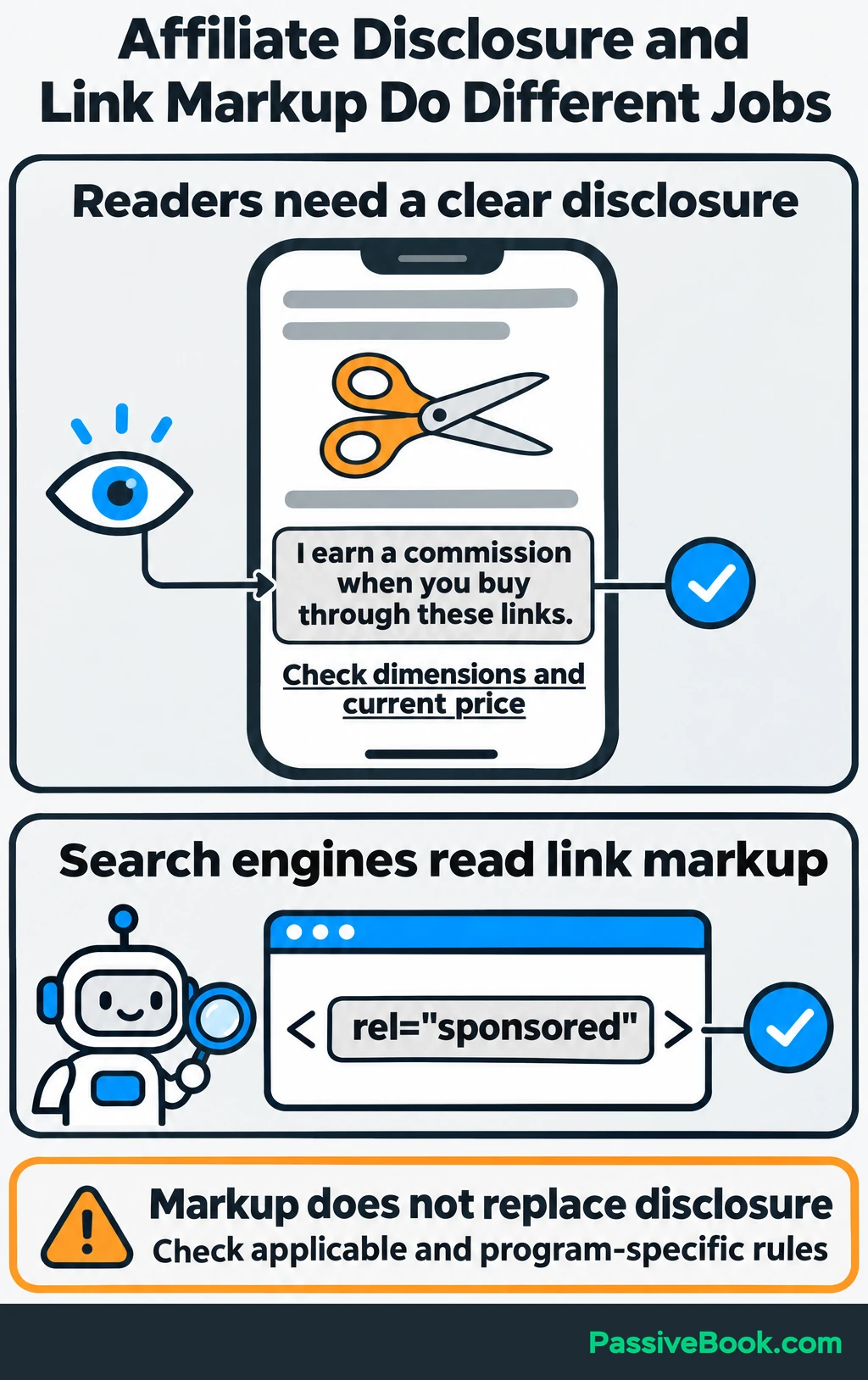
Disclose the commission relationship where readers encounter the recommendation. Under U.S. FTC guidance, that disclosure should be clear and conspicuous. Plain wording works:
“I earn a commission when you buy through these links.”
Keep it close enough that readers can connect it with the recommendation. A disclosure hidden behind a footer link is easy to miss. For video, disclose within the video and near the description links. Follow the disclosure rules that apply to your audience and location.
Amazon also requires a prominent identification statement:
“As an Amazon Associate I earn from qualifying purchases.”
That wording comes from its operating agreement.
For website links, add rel="sponsored" through your editor’s link settings or the link’s HTML. Google also accepts nofollow for paid links, though it prefers sponsored. This tells the search engine about the relationship; it doesn’t replace the disclosure readers see. See Google’s outbound-link guidance.
Before promoting the article, use Google Analytics or another analytics tool to record article views and clicks to merchants. If your affiliate program offers separate tracking tags for each article, use them to identify which pages sent referrals without identifying individual readers.
6. Attract People Looking for the Answer
Make Your Content Discoverable
You don’t need a large existing audience, but you do need a way for interested people to find your work.
Match each article to a specific question and use a title that makes the answer clear. “How to choose fabric scissors for clothing repairs” gives readers a better reason to visit than “My favorite sewing finds.”
Before publishing, examine the existing search results. Look for a useful contribution: clearer selection criteria, relevant photos, or a repair situation that other pages explain poorly.
Then make the page easy to use:
- Answer the main question near the beginning.
- Organize the details around the decision.
- Keep text and tables readable on a phone.
- Link related guides when they help with the next task.
- Check that important pages are accessible to search engines.
In the trouser-hemming tutorial, link to the scissor guide at the point where a reader may need help choosing a cutting tool. That connection gives the link a purpose.
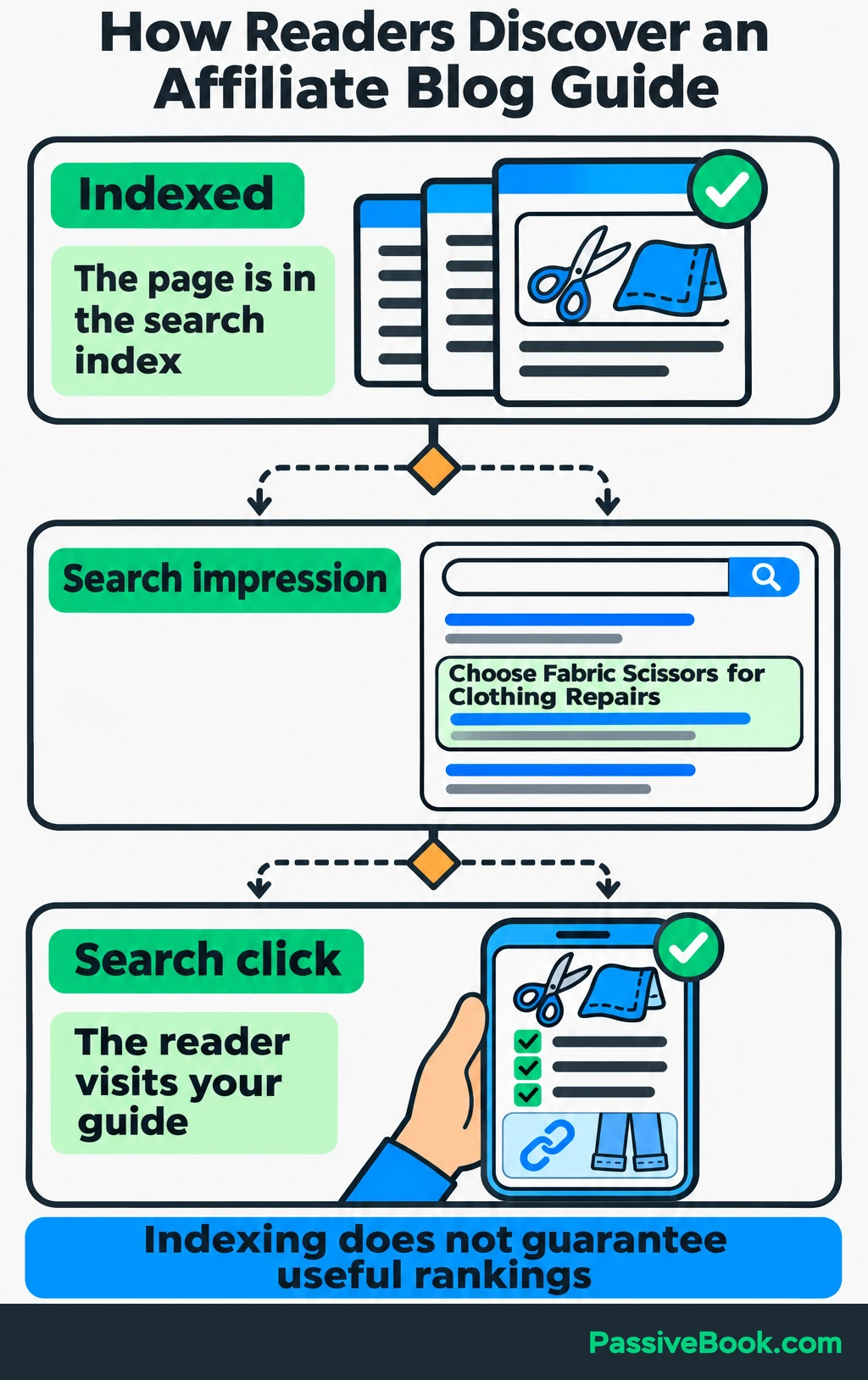
Set up Google Search Console to check whether Google has indexed your pages and to see search impressions and clicks. Indexing means a page has entered Google’s index; it doesn’t guarantee useful rankings.
Allow time to assess changes. Google says their effects can take hours to months, and some changes produce no noticeable improvement. Its SEO starter guide gives that timing context. Treat search as a channel to develop, not a payday you can schedule.
Distribute Through One Relevant Channel
Choose one additional discovery channel that suits the subject and your available time.
For the clothing-repair blog, I would try Pinterest. Create an image titled “Choosing fabric scissors for clothing repairs,” show the article’s selection checklist, and link it to the full guide.
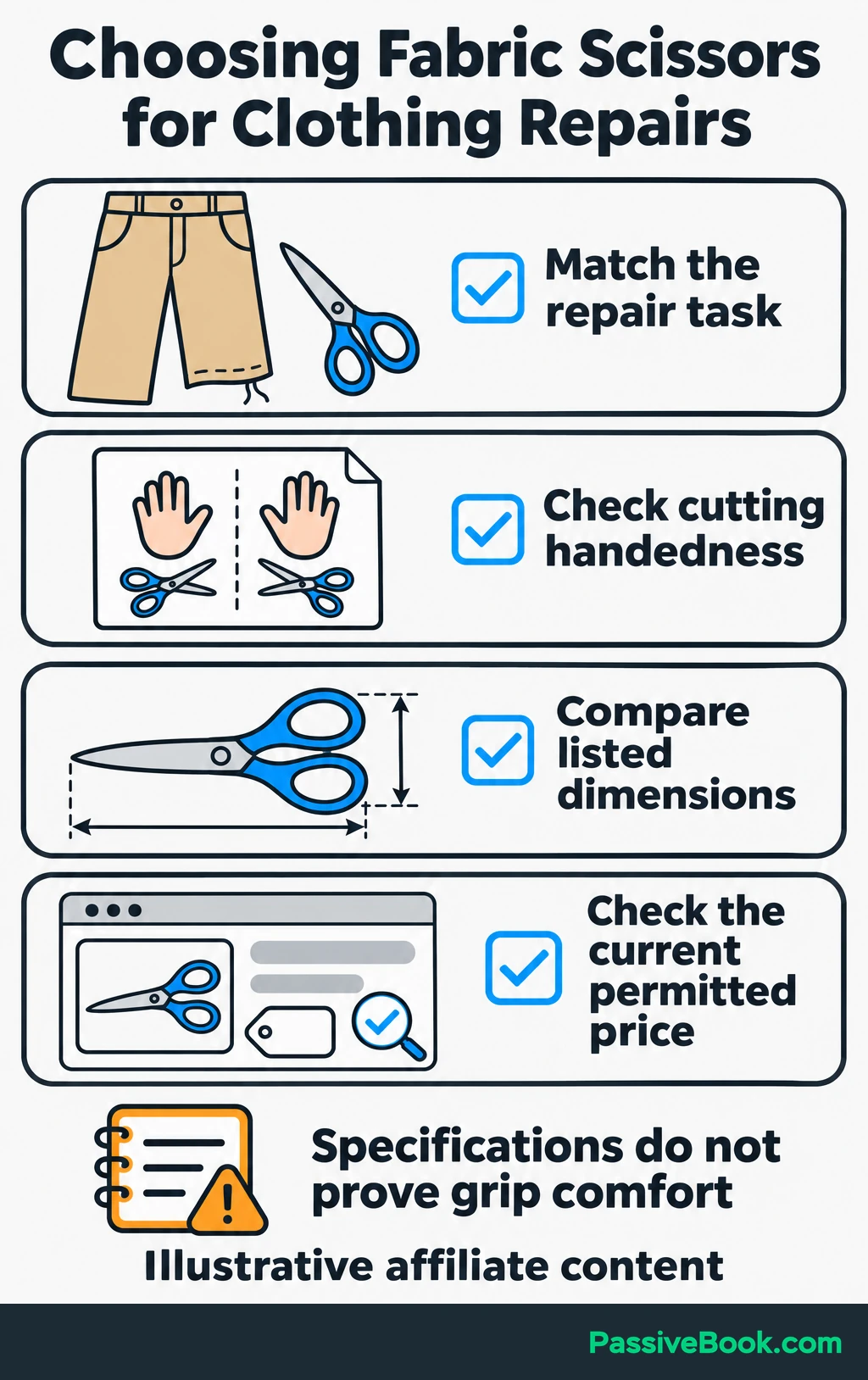
Use Canva if it helps you make the image, and start with Pinterest’s own scheduler. A separate scheduling subscription needs to earn its place.
You can also answer relevant community questions, but make the answer useful on its own and follow the community’s promotion rules. A link dropped under every question is a quick way to become the problem everyone discusses.
Keep room for distribution and maintenance in your weekly workload. If you have three short work sessions, you might use one for research, one for drafting, and one for finishing, sharing, or updating an article. Publish when the answer is ready rather than forcing a daily quota.
I would improve that process before adding another channel or paying for traffic. Sending more people to a weak recommendation makes the weakness more expensive.
7. Track Results and Improve the Weakest Stage
Read the Path From Visits to Payouts
A traffic graph cannot tell you whether the business works. Follow the whole path:
| Stage | Scissor Example | Where to Check |
|---|---|---|
| Content visits | Not supplied in this example | Website analytics |
| Affiliate clicks | 200 referral clicks | Outbound-click tracking and program reports |
| Attributed purchases | Five purchases, all approved | Merchant or network reports |
| Approved commissions | $10 | Affiliate dashboard |
| Payouts | Not supplied; approval does not confirm payment | Payment reports and bank records |
| Expenses | $15, leaving a $5 loss before tax | Your expense sheet |
A click is an event, so one visitor can produce several clicks.
To calculate purchase conversion, follow the clicks from one reporting period and count only approved purchases attributed to those clicks. Allow time for validation.
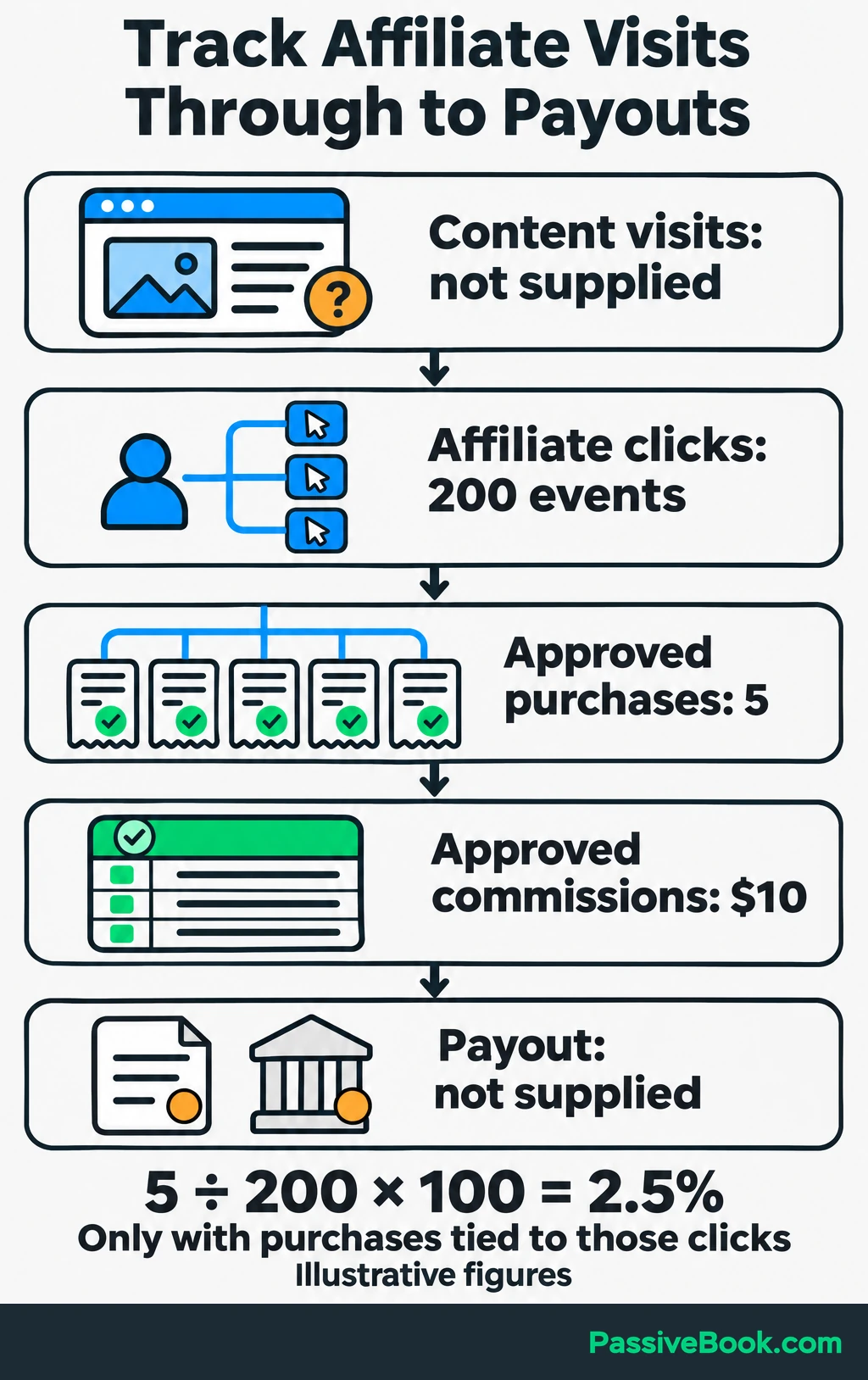
In the scissor example, 200 clicks produced five approved purchases:
5 ÷ 200 × 100 = 2.5% approved purchase conversion rate
If the dashboard cannot link purchases to the clicks that produced them, compare the period’s totals without treating them as a precise conversion rate.
Fix the Point Where Progress Stops
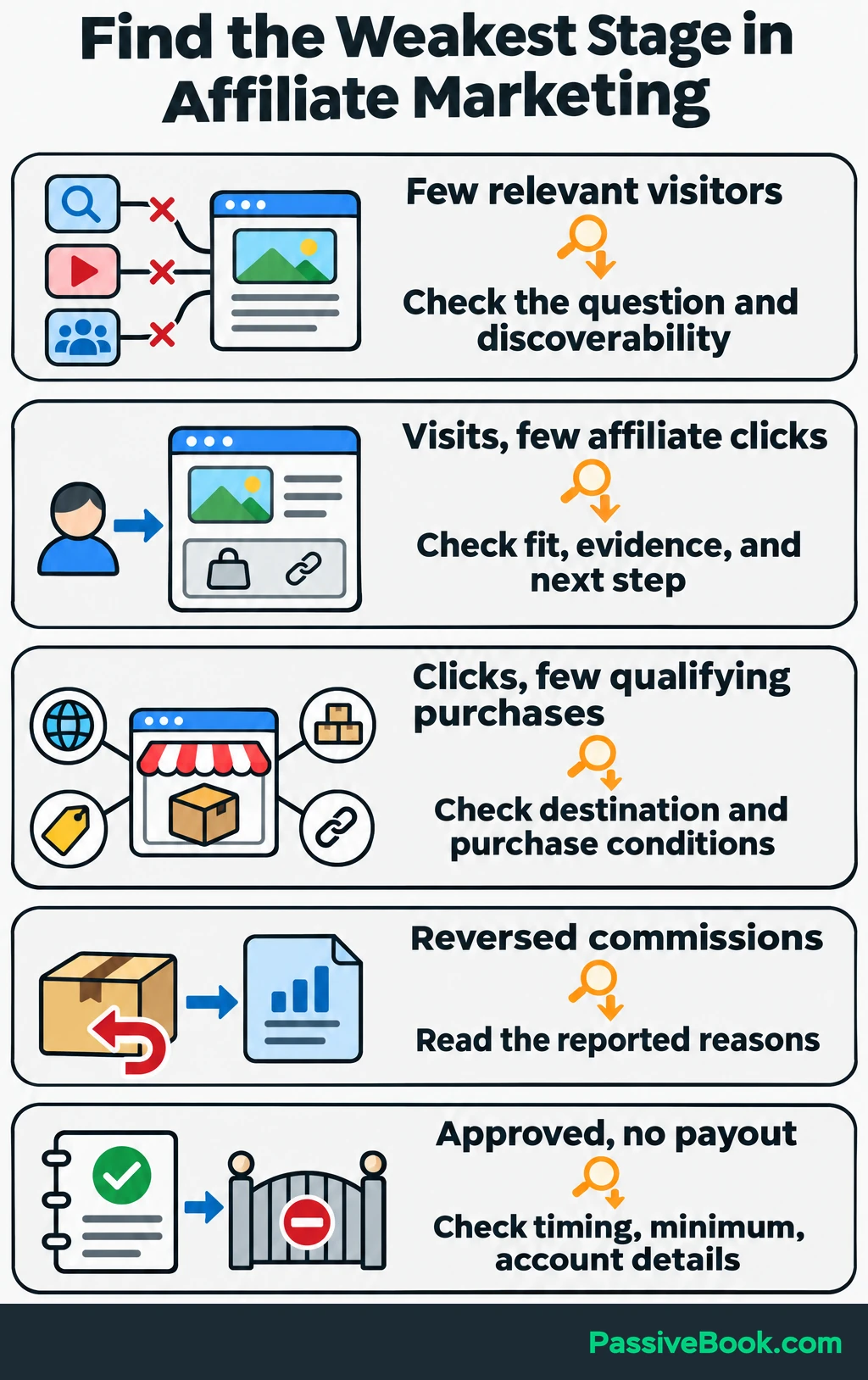
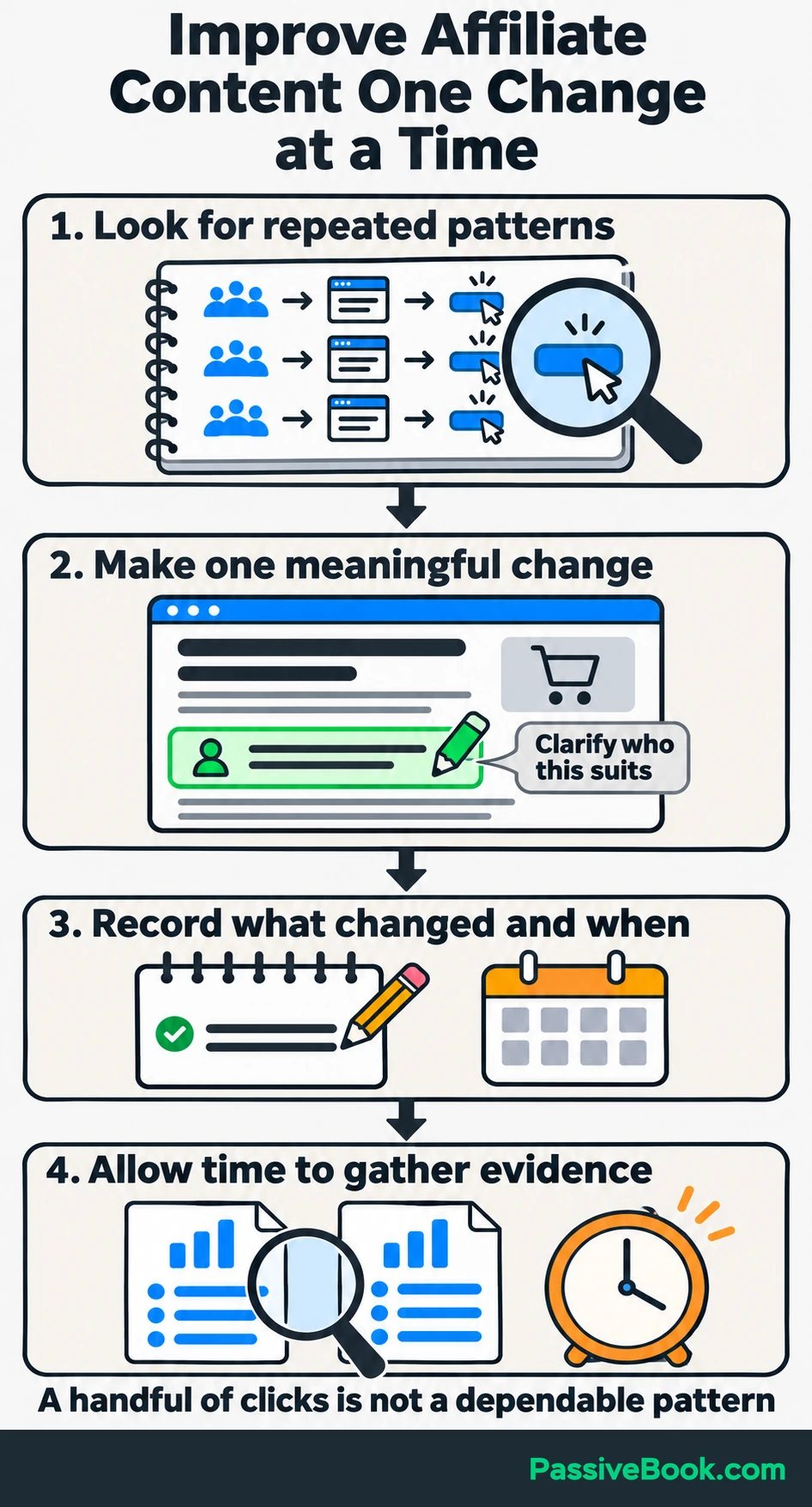
Use the reports to choose one meaningful change.
| What You See | What to Check First |
|---|---|
| Few relevant visitors | Whether the topic answers a real question, the page can be found, and distribution reaches interested people |
| Visits but few affiliate clicks | Whether the recommendation fits the task, has enough evidence, and gives a clear next step |
| Clicks but few qualifying purchases | Product destination, buyer country, availability, price, and attribution rules |
| Reversed commissions | The reported reasons, including returns or disqualified transactions |
| Approved earnings without payout | Payment timing, minimum balance, and incomplete account requirements |
A handful of clicks cannot establish a dependable conversion rate. Look for repeated patterns before rewriting every article or abandoning a program.
Record what you changed and when. If visitors to the scissor guide rarely click, you might clarify which option suits which repair task. Give that change time to gather evidence before changing the title, merchant, and layout too.
Maintain the recommendations as well. Replace broken links, remove unavailable products, correct outdated advice, and review notices about program changes.
A first approved commission shows that a referral qualified for payment. Before spending more, look for repeated referrals that remain profitable after expenses.
What Next?
Write one niche statement and list three buying questions you could answer with evidence you can gather. Check that suitable products and affiliate programs exist before spending on the setup.
Use the social buttons to share this guide if it would help turn an affiliate idea into a small, testable project.
Which buying decision could you help someone make with confidence? Leave your answer in the comments, along with any other questions about getting started.
Share this post with your friends & followers:

