You’ve watched 47 YouTube videos about profitable niches and you’re still paralyzed. Every guru promises different opportunities. Meanwhile, three months passed and you haven’t started anything because you’re terrified of picking wrong and wasting your limited time and money.
I spent three years testing online business models while working full-time. Most failed. The ones that hit $1,000+/month had one thing in common: I picked niches where people were already spending money and I could validate demand in 48 hours with less than $500. That filter killed my analysis paralysis.
I tested six of these seventeen niches myself. Three failed completely – I made less than $200 total. Two broke even after four months. One hit $1,800/month by month seven. I’ll tell you which ones, but more importantly, I’ll tell you why the failures failed so you skip my mistakes.
If you’re researching best niches to make money online with limited time and budget, you need more than generic “follow your passion” advice. You need validated profitable niches with clear monetization paths, realistic timelines, and proof that someone like you has made it work. This guide delivers exactly that: 17 niche ideas you can start this week without quitting your job or emptying your savings.

- •Which Niches Are Profitable?
- •[year] Trends Shaping Niches
- •How to Pick Your One Niche (Without Agonizing for 6 Months)
- 17 Niches You Can Start
- •1. Nonprofit Giving Pages
- •2. Landlord Tools Hub
- •3. Insurance Quote Guides
- •4. Product Photo Packs
- •5. Paid Discord Groups
- •6. AI Prompt Packs
- •7. Notion Templates
- •8. Etsy Event Printables
- •9. Pet Print on Demand Personalization
- •10. Pinterest Affiliate Guides
- •11. Gumroad SOP Bundles
- •12. Micro-SaaS Tiny Tools
- •13. Substack Niche Newsletter
- •14. Patreon Education Hub
- •15. Udemy Skills Bite-Size
- •16. Profitable YouTube Channels
- •17. Classic Affiliate Hubs
- •Hard Truths and Pitfalls
- •Frequently Asked Questions
- •What Next?
Which Niches Are Profitable?
A profitable niche isn’t just a topic you find interesting. Keyword research reveals that a profitable niche is where people like you already make money online solving specific problems. The difference between a hobby and an online business is whether strangers will pay you.
Here’s how it works in practice. You pick a specific niche with proven demand, publish valuable content consistently to attract your target audience, and layer multiple monetization methods over time.
A fitness blogger might start with affiliate links to workout equipment, add a $27 meal plan guide, then launch a $97/month coaching community. Each revenue stream reinforces the others.
Content creators who succeed treat their first 30 days like market research – they’re validating sub niches within broader categories to find their niche market. I use a three-signal validation method I developed after wasting months on dead-end niches:
Signal 1: Active Buyer Behavior – Find proof people spent money in the last 30 days. Check Gumroad’s Discover page, Etsy bestsellers, or Appsumo deals. One product with 500+ sales is stronger validation than 10,000 subreddit members discussing the topic.
Signal 2: Urgent Timelines – Target audiences with deadlines or immediate pain. A bride planning a wedding in 4 months will buy templates today. A person “interested in productivity” will browse for 6 months. Urgency creates buyers.
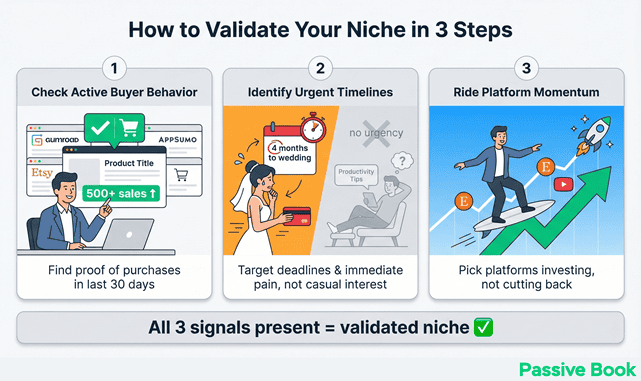
Signal 3: Platform Momentum – Pick niches where platforms are investing, not cutting back. Etsy prioritized digital downloads in 2024. YouTube promoted educational content. Ride platform momentum rather than fighting algorithm changes.
Any niche showing all three signals is viable. I’ve launched five projects with this filter. Three succeeded. Two failed because I ignored signal #2 – learned that lesson the hard way.
I spent four months building an elaborate online course about productivity systems for software engineers. Total addressable market? Maybe 300 people actually cared. I made $180. Don’t do this.
2025 Trends Shaping Niches
Platform volatility is the biggest risk you’ll face this year. US TikTok Shop GMV slumped in April 2025 due to tariff uncertainty, and volatility persists across social commerce platforms. What works today might collapse tomorrow due to algorithm changes, policy shifts, or regulatory pressure.
I had 4,000 followers on a platform that changed its algorithm overnight. My traffic dropped 73% in one week. Took me nine months to recover by diversifying. That’s why I’m militant about email marketing lists now. Diversification is your defense.
Search traffic is harder to capture than ever. Over 90% of pages (90.63% per Ahrefs research) get zero Google traffic. This doesn’t mean SEO is dead, but it does mean you can’t rely solely on organic search.
Plan non-Google channels like email marketing, Pinterest, Reddit communities, and newsletter partnerships from day one.
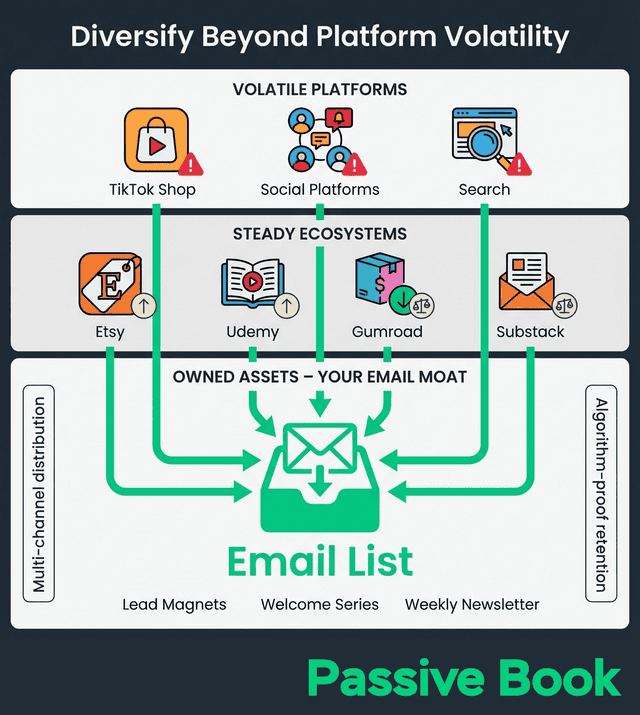
Three 2025-specific opportunities stand out. First, AI integration tools are creating new sub niches – prompt engineering, AI workflow automation, and AI content editing weren’t viable 18 months ago. Second, content creators are moving off social media to owned platforms like Substack and Ghost as algorithm anxiety peaks. Third, micro-courses under 90 minutes are outperforming comprehensive 8-hour programs because buyers want faster time-to-value. If you’re starting today, build around these shifts.
Despite platform chaos, some ecosystems remain stable. Etsy’s Q3 2024 results show profitability holding steady, proving platform demand for handmade and digital products hasn’t disappeared. Marketplaces with established buyer habits tend to weather storms better than new social platforms chasing viral growth.
Build on platforms where your target audience already has their credit card out. Udemy for skill learners. Gumroad for content creators. Patreon for fans. Substack for readers. These platforms host active content creators who understand affiliate marketing fundamentals and expect multiple affiliate programs in their monetization stack. These platforms have built trust over years, so your conversion rates will be higher than trying to convince cold traffic to buy from a brand new website.
How to Pick Your One Niche (Without Agonizing for 6 Months)
You don’t need the perfect niche. You need a viable one you’ll actually execute on. Use this three-question filter:
1. Can you create content without deep expertise? If you need five years of experience before you can write helpful content, skip it. Beginners succeed by learning publicly, not pretending to be experts.
2. Can you validate demand in 48 hours? Search the niche on Reddit, Facebook groups, and Etsy. If you find 20+ people actively discussing problems and 10+ existing paid products, demand is validated. No guessing required.
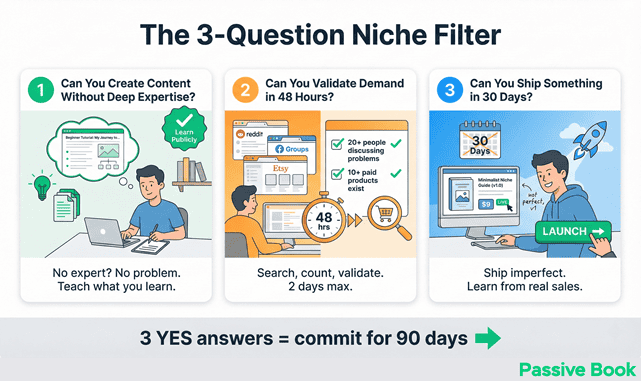
3. Can you ship something sellable in 30 days? Your first product will be mediocre. Launch it anyway. A $9 template with 5 sales teaches you more than 90 days of planning the perfect offer.
Pick whichever niche passes all three filters and matches your time availability. Commit for 90 days. Evaluate then, not before.
17 Niches You Can Start
Before diving into specific opportunities, understand that successful blog owners and content creators combine these niche ideas with strong keyword research, proven affiliate programs, and documented case studies. Your online business needs market research showing people like you have extracted passive income from these profitable niches, not just theoretical possibilities.
These niches passed a strict filter: less than $500 to start, manageable in under 10 hours per week, existing buyer traffic, and clear monetization paths. Each one includes proof points showing real people have built income streams, not just theoretical opportunities. Pick one that matches your skills and commit to it for at least 90 days before judging results.
1. Nonprofit Giving Pages
Nonprofits need simple donation pages but lack technical staff to build them. You can create custom fundraising pages using platforms like Givebutter, which offers free tools for campaign creation, donor management, and recurring giving setups. Your clients get professional pages without hiring developers.
Charge nonprofits a one-time setup fee of $300-500 to create their branded donation page, configure payment processing, and integrate with their email marketing. Then offer monthly retainer packages at $100-150 for updates, campaign optimization, and donor reporting. Small nonprofits will pay this gladly because it’s cheaper than hiring staff.
Startup costs are minimal. You need a laptop, internet, and a professional website showcasing 2-3 sample donation pages you’ve built. Create mock campaigns for fictional causes to demonstrate your skills. Target local nonprofits first through LinkedIn outreach and community bulletin boards.
The recurring revenue potential comes from campaign management. Many nonprofits run 4-6 fundraising campaigns per year. Position yourself as their go-to person for setting up each campaign, optimizing donation forms, and analyzing results. One client running six campaigns at $200 each brings $1,200 annually.
Most nonprofit directors I’ve talked to can barely open Excel, let alone code a donation form. That’s your opportunity.
2. Landlord Tools Hub
Landlords are searching for tenant screening services, lease templates, and property management software. Build an affiliate site reviewing real estate tools and monetizing through programs like Avail’s affiliate program, which also offers a referral program where landlords can earn rewards.
Create in-depth comparison guides for common landlord pain points. “Best tenant screening services for small landlords” or “Free lease agreement templates by state” attract high-intent traffic.
Landlords searching these terms are ready to sign up for tools immediately, not just researching casually. Landlords are obsessive searchers. They’ll read 47 blog posts before choosing software. Give them comparison content and they’ll click everything.
Focus your content on practical how-to guides. Walk through the exact process of screening a tenant, handling security deposits, or filing an eviction notice in specific states. Embed your affiliate links to relevant tools within these step-by-step tutorials. A landlord following your eviction guide will click through to document templates.
Affiliate programs in insurance convert well because your target audience of homeowners and drivers need immediate solutions, not content marketing entertainment. Revenue comes from software affiliates paying $30-100 per signup, plus display ads as your traffic grows. Five landlord tool signups per week at $50 average commission equals $1,000 monthly. Scale by targeting multiple property management software platforms and creating state-specific legal guides.
3. Insurance Quote Guides
Each insurance lead pays $15-40 because companies know lifetime value is high. Cost per lead rates range from $10 to $100 depending on insurance type, as shown in OfferVault’s listings. Auto insurance, home insurance, and life insurance are the big three (health insurance is a regulatory nightmare – skip it).
Create state-specific guides. “Average car insurance rates in Texas” or “Cheapest home insurance in Florida” rank well because insurance regulations vary by state. Each guide embeds comparison forms that pay you $15-40 when someone requests quotes. Ten qualified leads daily equals $4,500-12,000 monthly.
The video below will take you through the entire process from start to finish:
You must disclose commissions clearly. Follow FTC affiliate disclosure guidelines stating that you earn commissions when visitors request quotes. Place disclosures at the top of articles and near quote forms. Transparency builds trust and keeps you compliant.
Startup investment covers a WordPress site ($100 first year), SEO-optimized content ($200-300 for initial articles), and basic email marketing setup. Target long-tail keywords like “insurance for teenage drivers in California” where competition is lower. Your conversion rate will be higher because you’re addressing specific audience needs.
4. Product Photo Packs
How much do ecommerce sellers pay for professional product photos? Usually $500 per shoot. You can offer standardized photo packages shot at home with a basic camera setup and earn consistent income. A Fiverr seller shared their journey scaling from basic equipment to investing more in gear as revenue grew.
Offer a starter package with 10 edited photos delivered in three days for $149. An upsell package with 25 photos, lifestyle shots, and social media sizes goes for $349. Target Etsy sellers, Shopify store owners, and Amazon FBA sellers through Facebook groups and Reddit communities.
Equipment costs under $500: decent camera or smartphone with portrait mode, white backdrop, basic lighting from Amazon, and photo editing software like Lightroom. Practice shooting common product categories like jewelry, cosmetics, or small electronics until your results look professional.
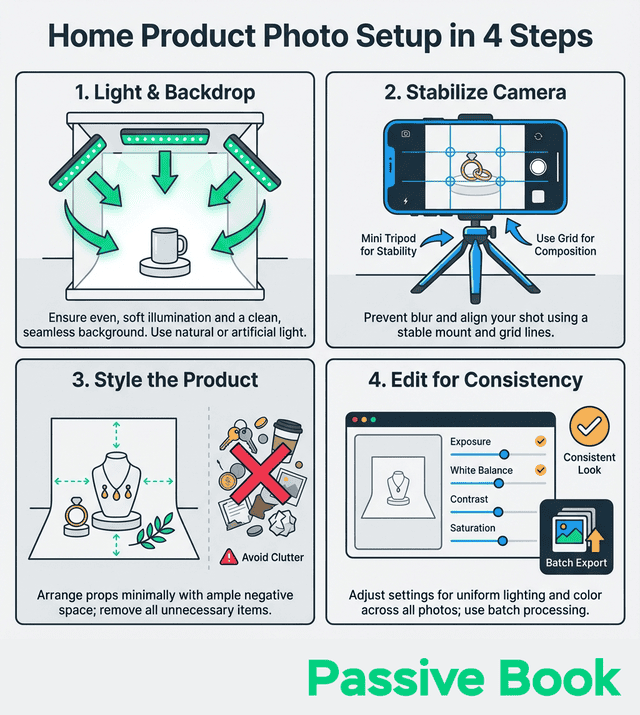
I tested this myself with jewelry photos. My iPhone 13 with a $40 light box produced shots sellers happily paid $149 for. They didn’t care about camera specs.
Speed beats quality here. Generic photographers shoot everything. You focus on one product category and develop a signature style. “Minimalist jewelry photography” or “Bold cosmetics shots” positions you as the expert for that specific niche market, justifying premium pricing.
5. Paid Discord Groups
Discord communities now support native monetization through Server Subscriptions, letting you charge monthly fees without third-party payment tools. Setup takes minutes following the LaunchPass complete guide, and you keep member fees minus platform cuts.
Discord monetization is newer, which means less competition. For now.
Successful paid Discord groups offer exclusive value you can’t get free elsewhere. A stock trading community might provide daily market analysis, real-time trade alerts, and voice chat office hours.
A game strategy group offers advanced tactics, custom coaching, and direct access to top players. The content must justify the monthly fee.
Price in tiers. A basic tier at $9/month gives access to channels and weekly content. A premium tier at $29/month adds one-on-one consulting hours and exclusive resources. Start with 30 members at $9 average, and you’re generating $270 monthly before adding premium upgrades.
Active engagement is critical. Dead communities die fast. Commit to posting valuable content daily, responding to member questions within 24 hours, and hosting weekly live sessions. Members will stay subscribed if they see consistent value and feel part of an active community building something together.
6. AI Prompt Packs
Selling AI prompts generates passive income – PromptBase pays sellers 80% of each sale, with prompts selling from $2 to $9 typically. Niche prompts outperform generic ones because buyers want specific solutions, not “write me a blog post” templates.
2025 context: ChatGPT and Claude released major updates in late 2024, creating demand for updated prompt libraries.
Win by solving specific workflow problems through case studies showing how content creators save hours. “ChatGPT prompts for real estate listing descriptions” or “Midjourney prompts for minimalist logo designs” target professionals who will pay $5-9 for tested prompts that save hours of trial and error. Twenty sales at $7 each nets you $112 after platform cuts.
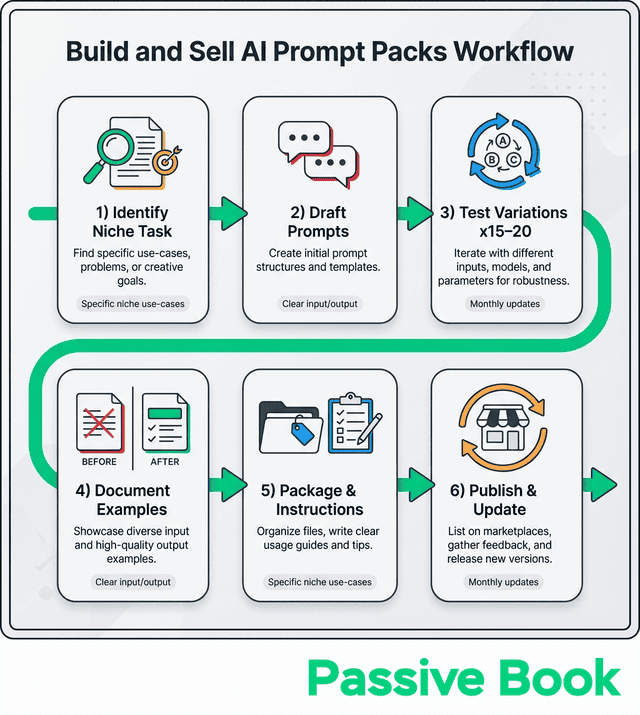
Create your prompt packs by identifying repetitive tasks in your target niche. Test 15-20 variations of each prompt to find what produces the best outputs. Package five related prompts together with clear instructions and example outputs. Your product listing should show before-and-after examples proving the prompts work.
Scale by publishing across multiple marketplaces. List on PromptBase, Gumroad, and your own website. Create free sample prompts to share on Twitter and Reddit to drive traffic. As AI tools evolve, update your prompts monthly to maintain accuracy and value for buyers.
7. Notion Templates
Notion templates are proven moneymakers. Thomas Frank generated over $1 million annually selling templates, and Easlo earned approximately $779,000 building a template business. These case studies show the market appetite for well-designed productivity tools.
Frank’s story is aspirational, but unrealistic for beginners. Start with one $9 template. Get ten sales. Then expand.
I sold my first Notion template for $12 on Gumroad after seeing Thomas Frank’s success. Made $144 the first month with zero marketing beyond one tweet. The template was mediocre. Buyers just needed something that worked immediately. That taught me speed beats perfection.
Start by cloning standard operating procedures into reusable digital products. Take a client onboarding process, expense tracking system, or content calendar and turn it into a customizable Notion template. Pre-sell to your network before building to validate demand.
Price in tiers to capture different buyer segments. A starter template at $9 includes basic structure and instructions. A pro version at $29 adds automation, advanced databases, and video tutorials. Bundle three related templates for $49 to increase average order value and provide more comprehensive solutions.
Marketing happens in Notion communities. Share free lite versions on Reddit‘s Notion subreddit and Twitter to demonstrate quality. Collect email addresses in exchange for free templates, then promote paid upgrades through email marketing. One sale per day at $19 average brings $570 monthly before any scaling efforts.
8. Etsy Event Printables
Event printables are digital products that sell consistently on Etsy. Research from EverBee shows listings earning over $1,000 monthly in categories like wedding invitations, baby shower decorations, and party planning templates. These products have no inventory costs and unlimited scaling potential.
Start by finding three keywords showing 1,000+ monthly searches and moderate competition. Use Etsy‘s search bar to identify what buyers actually type. “Rustic wedding invitation template” or “Boho baby shower games printable” reveal specific demand you can target with custom designs.
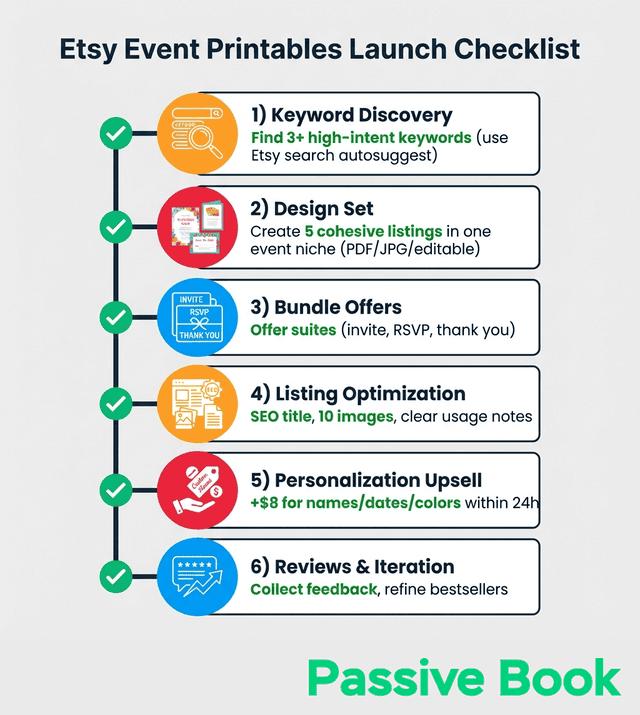
Launch with five listings in one event category to test what resonates. Each listing should include multiple file formats like PDF, JPG, and editable templates. Bundle related items together: a wedding suite with invitation, RSVP card, and thank you note sells for $19 while individual items might only fetch $6.
Wedding people spend money like the ceremony proves something. Baby shower hosts just want Pinterest-worthy photos. Both buyer types convert well.
Offer to add buyer names, dates, and color changes within 24 hours for an extra $8. Many sellers ignore custom requests, but personalization commands premium pricing and reduces refund rates because buyers get exactly what they need for their events.
9. Pet Print on Demand Personalization
Pet product personalization works because pet owners spend freely on their animals. The “Dog Ross” case study on Printify shows how one seller built a successful Etsy business using print-on-demand for custom pet products.
Pet owners are emotional buyers – show them a canvas print of their dog and logic disappears.
Create original artwork from pet photos submitted by customers. Canvas prints, mugs, and phone cases featuring customers’ actual pets convert well. Use Printify partners who offer fast shipping to maintain high customer satisfaction and positive reviews.
The model is pure margin. A custom pet canvas that sells for $39.99 costs you $15 in Printify production and shipping. You keep $24.99 per sale, and Printify handles all fulfillment. Ten sales weekly equals nearly $1,000 monthly profit without touching inventory or shipping logistics.
Write product descriptions focusing on preserving memories and showing love. Share customer photos with permission to build social proof. Five-star reviews drive most sales on Etsy.
10. Pinterest Affiliate Guides
Pinterest officially allows affiliate links in pins according to their affiliate marketing policy, making it a legitimate platform for monetization. The visual nature of Pinterest drives high engagement for product reviews, home decor ideas, and lifestyle content.
Post three “Idea Pins” weekly plus five standard Pins promoting your best affiliate content. Idea Pins build authority and followers without direct promotion. Standard Pins link to your blog posts with embedded affiliate links. Use tools like Canva for design and Tailwind for scheduling.
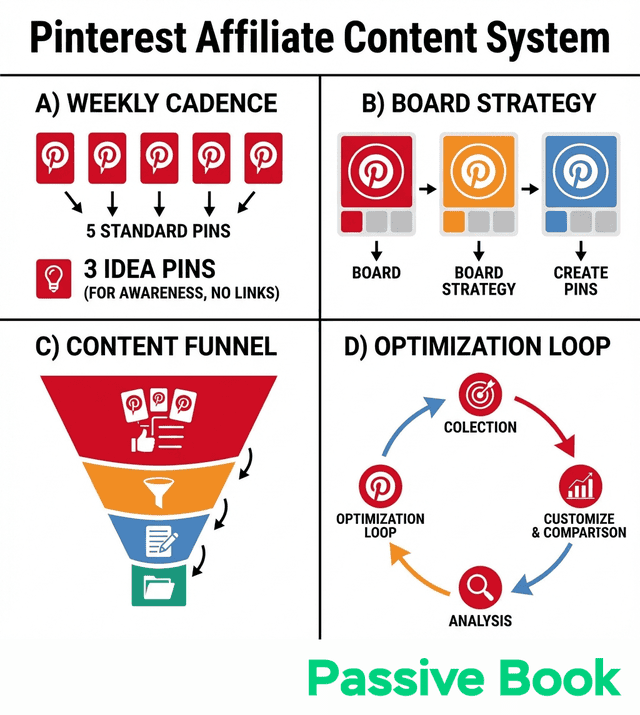
Niche selection matters enormously. Home improvement, home decor, beauty products, recipes, and travel convert well because Pinterest users browse with buying intent. Create boards around specific sub niches like “Apartment kitchen organization” or “Budget weekend trips Pacific Northwest” to attract engaged audiences actively looking for solutions.
Keyword research tools reveal which sub niches have commercial intent versus casual browsers, helping you focus on profitable youtube and blog content that converts.
Traffic growth compounds over time. Pins stay discoverable for months unlike Instagram posts that die in days. A Pin created today might drive traffic 18 months from now. Publish regularly for 90 days before evaluating results, as Pinterest rewards accounts that demonstrate commitment to adding valuable content.
11. Gumroad SOP Bundles
Standard operating procedure bundles sell well on Gumroad to freelancers and agencies. One creator shared making $2 million selling digital products on the platform, proving the market for productized knowledge.
You’ve already built systems for your work. Just write them down and sell them. That’s it.
Target freelancers and small agencies who need proven systems but lack time to build them from scratch. “Complete client onboarding SOP for web designers” or “Email marketing campaign checklist for coaches” solve real problems. Share free snippets on Twitter and LinkedIn to demonstrate value before asking for sales.
Open 20 pre-orders at $19 each before creating the final product. This validates demand and funds initial development time. Tweet about what you’re building, share your process, and ask your network what they struggle with most. Real feedback beats guessing what people want.
The beauty of SOP bundles is they’re finished digital products. Unlike online courses requiring ongoing support, an SOP document delivers complete value immediately. Buyers implement your system and move on. You can sell the same bundle to 500 customers without any incremental work after initial content creation.
12. Micro-SaaS Tiny Tools
Micro-SaaS tools solve single workflow problems for niche audiences. An Indie Hackers case study shows a developer reaching $4,000 monthly recurring revenue within 12 months building tiny tools alongside a full-time job.
2025 context: No-code tools like Bubble v4 and Webflow’s new features make MVPs launchable in days, not months.
Build a tool that automates one repetitive task your target audience hates. A CSV to JSON converter for developers. An Instagram bio link manager for creators. A receipt organizer for freelancers. Price at $10-29 monthly and your first 10 customers come from direct outreach in relevant Reddit communities and Indie Hackers discussions.
No-code tools have gotten absurdly good. You can build functional products without touching code. No-code tools like Bubble, Webflow, and Zapier let you build functional MVPs without traditional programming. Launch with core functionality only. Competitors are bloated products charging $99/month. You win by being simple, fast, and affordable for solopreneurs.
Customer development drives everything. Your first 20 users should receive direct access to you via email or Discord. Ask what features they need most. Ship updates weekly based on feedback. This tight feedback loop helps you build exactly what people will pay for rather than what you assume they want.
13. Substack Niche Newsletter
Substack hosts over 5 million paid subscriptions across its platform. Industry data suggests that with 1,000 subscribers, a typical 3% conversion rate yields approximately 30 paid subscribers at $7 monthly according to Substack statistics. That’s $210 monthly from a modest email list.
Most newsletters fail because they’re boring. Write like you’d explain things to a friend at a bar.
Deliver value no one else provides in your niche. A construction project manager sharing detailed cost breakdowns and vendor negotiations. A parent blogger revealing actual expenses of raising twins. The differentiation isn’t topic, it’s depth and honesty nobody else dares to publish.
Growth happens through consistent quality and strategic guest posts. Publish weekly without fail for six months. Write guest posts for larger newsletters in adjacent niches linking back to yours. When someone subscribes, deliver immediate value in the welcome email so they remember why they signed up.
Layer multiple streams. Paid subscriptions form the base. Add affiliate recommendations for tools you actually use. Offer one-time paid guides as upsells. Premium subscribers might get monthly group coaching calls. A 500-subscriber newsletter with mixed monetization can generate more than a 5,000-subscriber list relying solely on paid subscriptions.
14. Patreon Education Hub
Patreon creator earnings vary widely based on tier structure and audience engagement. According to Uscreen’s analysis and Patreon’s official guidance, successful creators structure multiple membership tiers to capture different value segments. Educational content performs especially well when it teaches practical skills.
Teach one specific skill through structured lessons. Adobe Illustrator for beginners. Copywriting fundamentals for freelancers. Sourdough bread baking. Post 2-3 video lessons weekly for paying members only. Free previews on YouTube drive discovery, but the full curriculum lives behind the paywall.
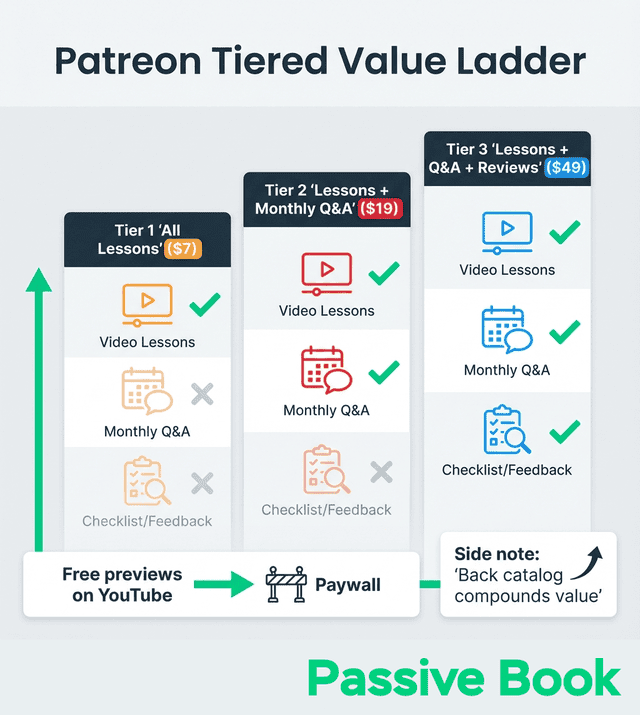
Price strategically. A $7 tier gives access to all lessons. A $19 tier adds monthly Q&A calls. A $49 tier includes portfolio reviews or direct feedback. With 50 patrons averaging $13 across tiers, you generate $650 monthly. Growth compounds as your lesson library expands because back catalog becomes more valuable.
Structure progression carefully. Members join to learn a complete skill, not just consume random content. Map out a 12-week curriculum before launching. Students who complete your program and see results become your best marketers, sharing wins in communities where your target audience gathers.
15. Udemy Skills Bite-Size
Udemy instructor earnings depend heavily on course quality and niche selection. A 2024 earnings study reveals wide variation, but well-rated online courses in business skills perform consistently. Target Udemy for Business, where companies license content for employee training, providing steadier revenue than consumer sales alone.
Udemy‘s UI looks outdated, but buyers trust it. That trust is worth more than a modern design.
Create 60-90 minute courses teaching one specific outcome. “Write compelling product descriptions in 60 minutes” or “Master Excel pivot tables for data analysis.” Keep production simple with screen recordings and clear audio. A $15 microphone and free OBS software is enough. Polish matters less than clear instruction and practical examples.
Reach 4.6+ star ratings quickly. Launch at a discounted price to your email list and LinkedIn network to generate initial reviews. Ten positive reviews signal quality to new students browsing Udemy. Respond to every question in the course discussion board within 24 hours to maintain engagement.
Revenue comes from both direct sales and Udemy Business licensing. Udemy keeps 50% on organic sales, 75% on paid traffic, but Business subscriptions often pay better long-term. One course earning $300 monthly beats a full-time job in some countries, and you can publish multiple courses compounding income.
16. Profitable YouTube Channels
Profitable youtube channels can generate substantial income through ad revenue, sponsorships, and affiliate marketing. Forbes detailed a 2025 case study showing how content creators build channels without appearing on camera. The workflow uses stock footage, AI voiceovers, and strategic editing to create engaging videos.
2025 context: YouTube’s algorithm now rewards watch time over subscriber count, making faceless educational content more competitive.
I resisted faceless content for years, thinking it felt fake. Then I watched my screen recording tutorials outperform my talking-head videos 3:1.
Follow a repeatable system. Write scripts addressing specific viewer questions or problems. Source b-roll footage from Pexels, Pixabay, or paid stock libraries. Use AI voice tools like ElevenLabs or Descript for narration. Edit in DaVinci Resolve or CapCut. The entire process takes 4-6 hours per video once you develop speed.
Profitable youtube channels succeed when content creators understand that keyword research drives views more than production quality. Layer multiple income streams beyond Adsense. Embed affiliate links in video descriptions for products you mention. Reach out to relevant sponsors once you hit 5,000 subscribers. Create digital products that solve problems your audience asks about repeatedly. A channel earning $500 monthly from ads might generate $2,000 total with smart monetization.
Pick educational content like finance tutorials, productivity systems, software walkthroughs, or gaming tutorials. Educational content performs well because viewers search with intent to learn. Entertainment content like video game commentary requires higher production value and viral luck. Stick to topics where you can deliver value without fancy equipment or expensive editing.
17. Classic Affiliate Hubs
Affiliate marketing remains viable despite increased competition, as confirmed in the [VIDEO] https://www.youtube.com/watch?v=3s7LWTJLlE4 [/VIDEO]. Multiple affiliate programs stack better than single partnerships – successful affiliate marketing combines high quality content with diverse revenue streams and case studies proving conversion. The strategy has evolved from pure SEO plays to multi-channel distribution. Share content on Reddit, in newsletters, and through social media rather than waiting for Google traffic alone.
Include detailed comparison tables, firsthand testing when possible, and clear affiliate disclosures. A review comparing five email marketing platforms should show pricing, features, and limitations in scannable format. Readers want quick answers, not 3,000-word essays burying the actual recommendations at the bottom.
Build your site around a tight niche with commercial intent. “Best CRM for real estate agents” targets buyers ready to purchase. “Productivity tips” attracts browsers with no wallet out. Your traffic might be lower with commercial keywords, but conversion rates will be 5-10x higher because visitors are researching purchases.
Extend beyond organic search. Post helpful answers on relevant subreddits with links to your detailed guides. Mention your reviews in newsletter sponsorships.
Share insights on LinkedIn. Google sends traffic when it wants. Multi-channel distribution gives you control over discovery regardless of algorithm changes.
Hard Truths and Pitfalls
My traffic tanked 60% overnight in 2019 when Google rolled out an update. Eight months of work gone. I had no email list, no alternative traffic sources, and no backup plan. That failure taught me more about online business than any success. Here’s what I should have done differently, and what you need to do from day one.
Platform dependence is your biggest risk, whether that’s Google rankings, Instagram reach, or Etsy search placement. The platforms own the distribution channels, and they change rules without warning.
Diversify across multiple channels. Capture email addresses from day one so you own the relationship with your audience. Build on Pinterest and Reddit alongside whatever primary platform you choose. When one channel tanks, others keep generating leads. Email marketing remains your strongest defense because you own the list. Content creators who skip list-building end up rebuilding from zero when platforms change algorithms. Email marketing becomes your insurance policy against platform chaos nobody can take away.
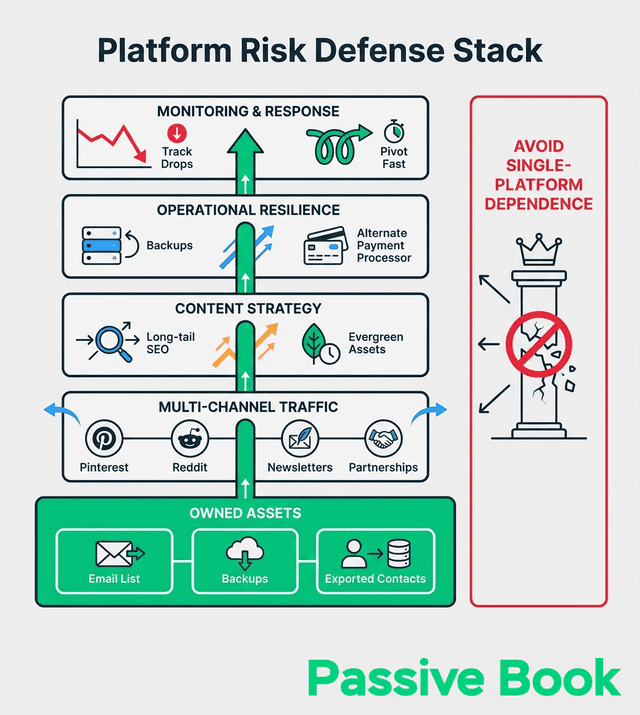
SEO uncertainty has never been higher. With over 90% of pages getting zero traffic, you can’t build an online business assuming Google will send visitors. Attack long-tail keywords where competition is minimal. Add social and referral traffic sources. Most importantly, capture every visitor’s email so you can bring them back without depending on search algorithms.
Platform bans and payment holds happen to legitimate businesses, not just rule breakers. Back up all your content and creative assets weekly to external storage. Export your customer email list monthly so you have it if your account gets suspended. Keep a backup payment processor approved so you can switch if one freezes your funds during a review.
Most online businesses fail within the first two years. Survival requires adapting to changes quickly, maintaining multiple revenue streams, and keeping overhead brutally low. As a solopreneur, you’re faster than larger competitors. You can pivot in a week while larger competitors need months to change direction.
Frequently Asked Questions
What Is the Highest Paying Affiliate Niche?
Financial services and insurance lead generation typically pay the highest commissions, with some affiliate programs offering $50-200 per qualified lead. Software and SaaS affiliates also pay well, often 20-40% recurring commissions. Focus on niches where customer lifetime value is high, as companies can afford to pay more for each new customer you send their way through affiliate marketing.
How Long Until I Make My First $500?
Realistic timeline: 90-120 days if you work 8-10 hours weekly. Digital products on u003ca href=’https://passivebook.com/go/etsy/’u003eEtsyu003c/au003e or Gumroad hit first sales fastest – typically 3-4 weeks after listing 5 products. Affiliate content takes 8-12 weeks for initial commissions as traffic builds. Micro-SaaS and paid communities need 4-6 months to find first 10 paying customers. Anyone promising u0022make $10K in 30 daysu0022 is lying. My first $500 online took 11 weeks. Second $500 took 3 weeks. Momentum compounds, but month one will be slow.
What If I Pick the Wrong Niche and Waste 3 Months?
You won’t waste it if you set validation checkpoints. After 30 days, you should have shipped something sellable and gotten at least 5 pieces of feedback – sales, comments, or email replies. If zero response after 30 days, your audience targeting is wrong, not necessarily the niche. Pivot your positioning before abandoning the niche entirely. Study case studies from content creators who entered u0022saturatedu0022 markets with fresh angles – keyword research reveals hundreds of sub niches within any broad category. I’ve u0022wastedu0022 time on 4 niches. Each failure taught me what to look for in validation signals. The knowledge transferred.
Can I Start With Less Than $500?
Yes. Gumroad, u003ca href=’https://passivebook.com/go/substack/’u003eSubstacku003c/au003e, and Medium require $0 to start. u003ca href=’https://passivebook.com/go/etsy/’u003eEtsyu003c/au003e charges $0.20 per listing plus 6.5% transaction fees – test with $20. WordPress hosting costs $5/month through Hostinger. YouTube is free. The $500 budget in this guide gives you optionality for paid tools and initial content creation, but you can start for under $100 in 14 of these 17 niches. You’ll grow slower without paid tools, but you’ll learn whether you’ll stick with it before investing more.
What Next?
You now have 17 validated profitable niches with clear monetization paths, realistic startup costs, and proof that real people have built income in each one. The research phase is over. Pick one niche that matches your available time, existing skills, and budget constraints, then commit to it for at least 90 days before evaluating results.
Building a profitable online business is challenging. You’ll probably quit in month two when you’re getting zero sales. Most attempts fail because people quit too early or spread themselves across too many opportunities. But the barrier to entry has never been lower, and the potential for someone willing to show up regularly has never been higher. You don’t need to be the best. You need to be reliable and useful.
Use the social share buttons below this article if you found it valuable. Sharing helps other time-strapped solopreneurs discover these opportunities when they’re researching their options. Drop a comment sharing which niche you’re most excited about exploring. What’s the one thing holding you back from starting this week? Let’s discuss it.
Share this post with your friends & followers: