I spent eight months and 127 blog posts building content in the “productivity apps” niche before I realized I’d made a fatal mistake. The search volume looked great at 50,000 monthly searches. The problem? Zero clicks actually made it to my site because Google’s AI Overview answered everything directly in the search results.
Eight months of waking up at 5 AM to write before my day job. Gone. That’s 240+ hours I’ll never get back. The truth is that most niche selection advice skips the harsh realities you’ll face in 2025, like zero-click search dominating Google or AI Overviews cutting your traffic in half before you even start. This guide shows you 13 specific mistakes to avoid that will sink your online business before it launches, so you can avoid the trap I fell into.
- •What Are Niche Mistakes?
- 13 Mistakes to Avoid
- •1. Big TAM, Tiny SOM
- •2. Volume ≠ Clicks
- •3. AI-Overviews Risk
- •4. Affiliate-Only Plan
- •5. Product, Not Problems
- •6. Skipping Interviews
- •7. No Offer Ladder
- •8. Ignoring Repeat Buys
- •9. Ignoring Moats
- •10. Micro-Niche Too Narrow
- •11. Platform Dependence
- •12. Misreading Seasonality
- •13. Buying Sites, No Checks
- •Frequently Asked Questions
- •What Next?
What Are Niche Mistakes?
Niche mistakes are wrong choices you make when picking your focus area for an online business. They happen when you select a niche based on incomplete criteria like search volume or personal passion without understanding buyer behavior or market structure.
Here’s a concrete example. The “kitchen gadgets” niche shows 40,000 monthly searches. Looks promising until you check the search results.
Every query triggers AI Overviews with product roundups. Big-box retailers like Amazon and Walmart dominate the first page. Zero clicks go to small content sites because searchers get their answers instantly or buy directly from retail giants.
Define your buyers first, their specific pains second, and their willingness to pay third. SparkToro’s 2024 study warns that 58.5% of Google searches now end without clicking to an external site.
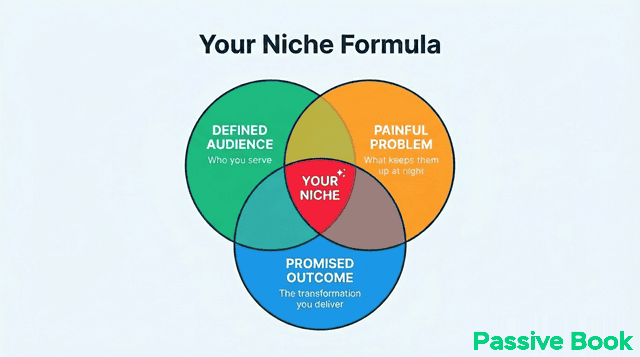
This means you can’t rely on search volume alone to validate demand. These aren’t vague myths about following your passion or chasing trends. Niche mistakes are specific, measurable errors in your selection process.
They include ignoring serviceable obtainable market size, mistaking search volume for actual traffic, or building your entire business model around low-commission affiliate programs that require impossible sales volumes.
13 Mistakes to Avoid
Each mistake below represents a specific pattern that kills niches before they gain traction. Some stem from outdated advice that worked in 2018 but fails today. Others are structural problems that math alone can reveal. I’ll show you the warning signs for each and the alternative validation path that actually works for time-strapped solopreneurs.
1. Big TAM, Tiny SOM
Total addressable market looks impressive in spreadsheets. Serviceable obtainable market determines whether you’ll earn a dollar in your first year. The difference matters more than any other metric when you’re bootstrapping with 10 hours per week.
TAM, SAM, and SOM are strategic planning concepts from venture capital.
TAM measures everyone who could theoretically buy. SAM measures everyone you could reach with your business model. SOM measures customers you can realistically acquire and convert within 12 months given your constraints.
Here’s the brutal math for solopreneurs. Your 12-month SOM should translate to roughly 5,000 to 10,000 website visits and 100 to 300 paying buyers.
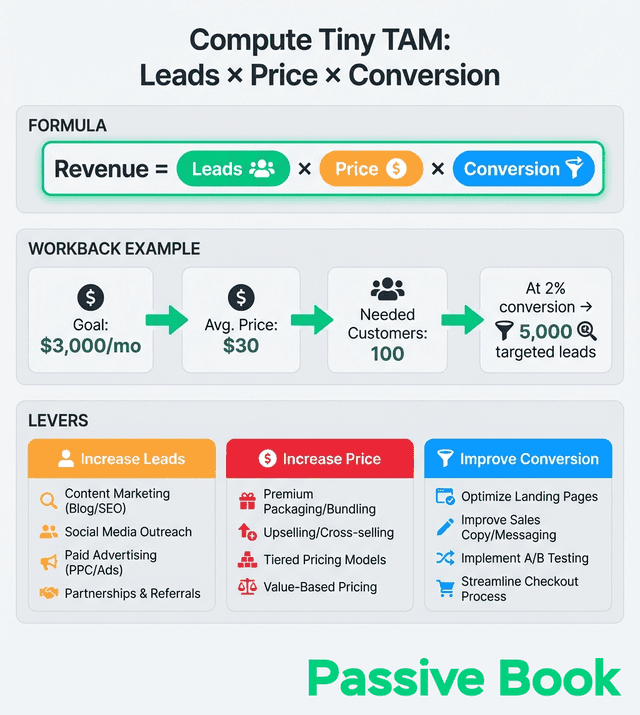
If your target audience is “all small business owners in the US,” your TAM is 33 million but your SOM might be 50 people you can actually reach through organic content and a small email list.
Work backward from distribution instead. How many blog posts can you publish in 12 months? How many email subscribers can you realistically build without paid ads? How many purchases will that audience generate at your price point? Size your niche to match those answers, not the fantasy TAM number.
2. Volume ≠ Clicks
A keyword with 10,000 monthly searches feels safer than one with 500. That logic is backwards in 2025. The SparkToro zero-click data proves this.
High-volume keywords often have high zero-click rates because search engines satisfy the intent directly.
“How much protein should I eat” gets 14,000 searches per month. Nearly all of them see a featured snippet with a calculator and recommended ranges. Your blog post ranking #3 gets almost zero traffic despite the impressive volume.
Differentiate your niche by channel instead of search volume. Check Reddit activity in your niche subreddits, TikTok view counts on relevant hashtags, or Facebook group engagement rates. If you can get 50 email signups from a community post or a single viral TikTok, that’s more valuable than ranking for a zero-click keyword.
Here’s a simple validation test. Search your core keywords in incognito mode. If AI Overviews, featured snippets, or knowledge panels answer the query completely, that volume is worthless. Look for keywords where the search engine results page (SERP) shows blue links to content sites, not instant answers.
3. AI-Overviews Risk
AI Overviews represent the biggest structural shift in organic traffic since mobile-first indexing. SISTRIX’s analysis shows that queries with AI Overviews lose roughly half their clicks to traditional organic results. Generic information gets summarized at the top of the page, leaving scraps for everyone else.
Certain content types resist AI summarization. Expertise-driven advice that requires professional judgment can’t be condensed into a paragraph. Interactive tools like calculators or comparison charts require clicking through. Community-curated recommendations carry social proof that an AI summary lacks.
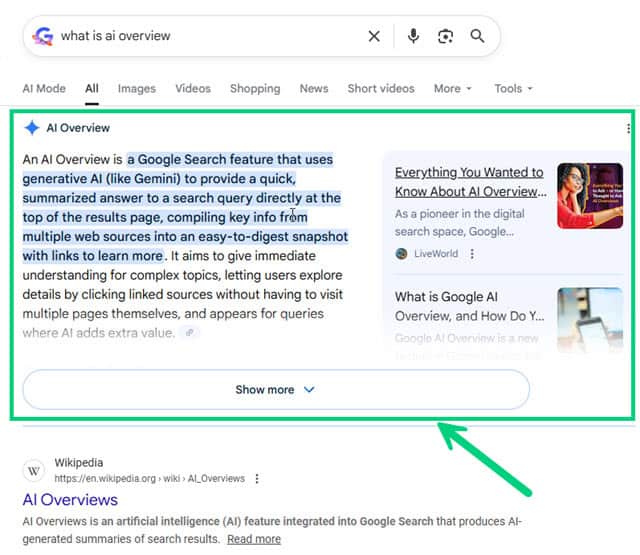
Look for niches where your content naturally falls into AI Overview-resistant categories. Instead of “best running shoes,” focus on “custom running shoe fitting for flat feet” with a diagnostic tool. Instead of “how to meal prep,” create content for “meal prep for shift workers” with a planning calendar. The specificity and interactivity make your content un-summarizable.
Check whether your core topics already trigger AI Overviews. Search your primary keywords and look for the purple “AI Overview” label at the top. If it’s present on more than 30% of your core topics, pivot to more specific, tool-based, or community-driven angles that don’t appear in the AI summaries.
4. Affiliate-Only Plan
Everyone who starts an online business wants to make money, but affiliate-only strategies rarely work for beginners. Affiliate marketing looks like the easiest path to making money online. No product creation, no inventory, no customer service. Just write content and add affiliate links. The math reveals why this rarely works as a standalone strategy.
Amazon’s affiliate commission rates range from 1% to 4% depending on product category. Most categories pay 3% to 4%. If you’re promoting kitchen products at 4% commission, a $50 blender earns you $2.
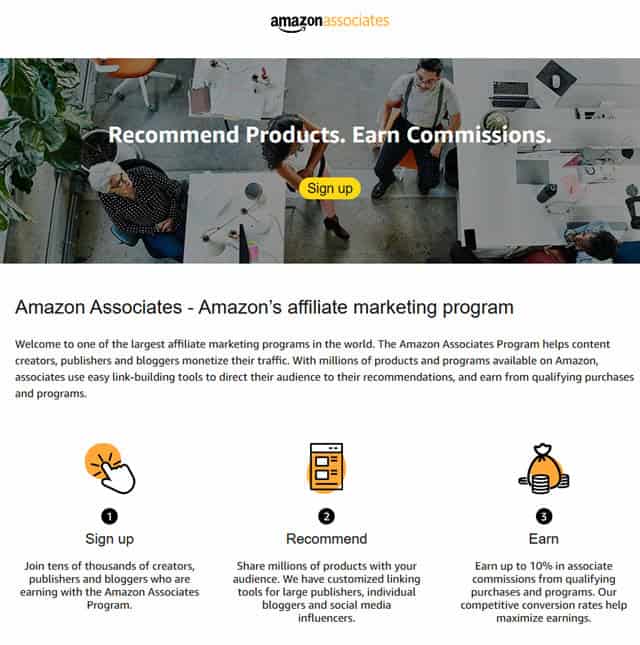
To generate $1,000 per month, you need to drive $25,000 in referred sales, which typically requires 50,000 to 100,000 monthly visitors depending on conversion rates.
The brutal reality for affiliate marketers working 10 hours per week is that traffic growth is slow.
Reaching 50,000 monthly visits through organic content alone takes 18 to 36 months for most solopreneurs. That’s too long to wait for meaningful earning potential without other income streams.
Add your own offers to fix this structural problem. A $29 digital guide on the same topic generates 7 to 14 times more revenue per sale than a $50 affiliate commission.
You need 87 affiliate sales at $2 commission to match 6 sales of your own $29 product. The traffic requirement drops from 50,000 visitors to under 5,000 when you control pricing and margins.
5. Product, Not Problems
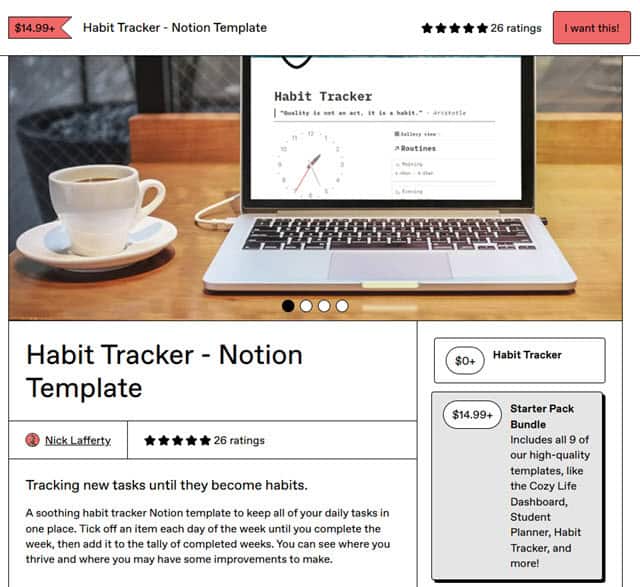
You’re building a Notion template for content calendars because you like Notion, not because you interviewed 20 content creators who complained about their current workflow. I’ve built two products nobody wanted because I fell in love with the idea before talking to a single customer. Don’t be me.
The jobs-to-be-done framework flips this approach. Start with the painful jobs your specific audience needs done. Defining your specific audience’s pain points comes before product features. What tasks frustrate them weekly? What workflows eat their time? What outcomes do they struggle to achieve despite trying multiple solutions?
Indie Hackers founder stories are full of pivots that happened after problem interviews. A developer builds a CRM for freelancers, interviews 30 freelancers, learns they don’t want a CRM at all, and pivots to an automated invoicing tool that solves their actual pain point. The product changed completely but the niche stayed the same.
The validation sequence matters. Spend two weeks interviewing before you spend two months building. Ask about recent purchases in adjacent categories. Ask what they’ve tried and why it failed. Ask them to show you their current workflow. Their demonstrated behavior reveals problems worth solving, while hypothetical questions about your product idea produce misleading encouragement.
6. Skipping Interviews
You’re probably skipping customer interviews because you assume your own experience represents the market. You struggled with X, so you assume everyone struggles with X. You don’t know what you don’t know. This projection creates products that solve your past problem but don’t match current market needs.
Effective interviews follow specific techniques from design thinking methodology.
Ask about recent purchases in the last 30 days, not hypothetical future needs. Ask them to walk through their workflow step-by-step. Ask what they’ve tried before and why they stopped using it. Avoid leading questions about your product concept.
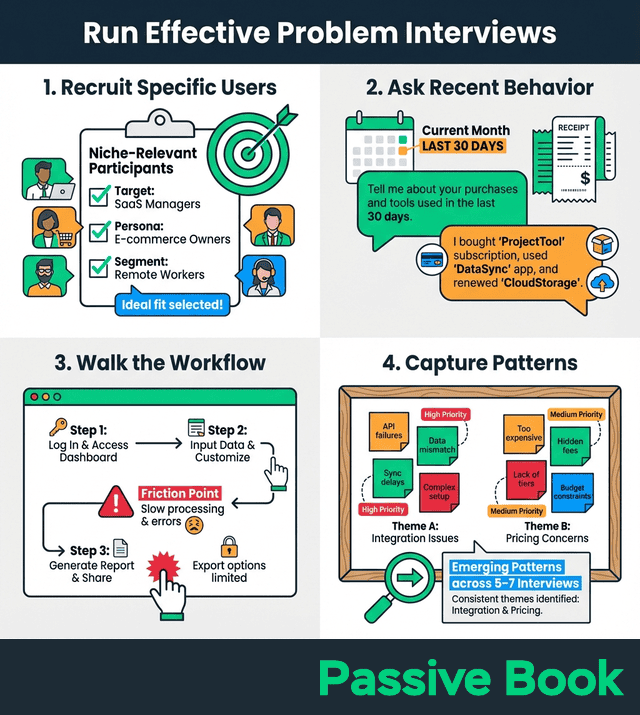
The pattern across Indie Hackers’ successful pivots is consistent. Solo founders spend 10 to 20 hours interviewing before launch. They discover their assumptions were wrong. They adjust the offer, the positioning, or the entire product based on what customers actually said they needed. The interview investment saves months of building the wrong thing.
Don’t make the mistake of skipping interviews just because you think you already know the answers. Set a minimum of 15 interviews before committing to your niche. Structure them as 20-minute conversations focused on past behavior, not opinions about your idea. Record them if permitted, or take detailed notes immediately after. Look for patterns across 5 to 7 interviews that reveal common pain points worth solving.
7. No Offer Ladder
Single-product niches cap your revenue at the price point of that one offer. A $49 course can’t grow beyond the number of students you enroll at $49. Customer lifetime value stays locked at $49 unless you build an offer ladder that moves buyers up to higher-priced solutions.
Solopreneur offer ladders typically follow this sequence: $29 to $99 starter digital product, $199 to $299 template or toolkit bundle, $499 to $999 cohort-based course or workshop, $99 to $199 per year membership for ongoing access. Each step serves buyers at different commitment levels.
Justin Welsh’s LinkedIn strategy demonstrates this ladder in action. He started with a $150 course on LinkedIn growth. Added a $200 per year membership for updated templates. Launched a $1,800 cohort program for hands-on feedback. Built a $400 bundle combining multiple products. Each offer captures different buyer segments without requiring separate niches.
A real example shows the compounding effect. A Notion creator on YouTube built an audience around productivity templates.
The video shows $250,000 annual revenue from 800 customers, not 5,000, because the offer ladder increased average customer value.
Started with a $39 template pack. Added a $150 bundle of premium templates. Launched a $99 per year membership for monthly template releases and community access. Grew to consulting clients at $2,000 per project.
8. Ignoring Repeat Buys
One-time purchase niches force you to constantly find new customers. If you’re going to build a one-time purchase business, you’re committing to endless customer acquisition. You sell a $79 productivity course. The buyer gets value and never needs to buy again. Your only path to growth is acquiring more first-time buyers every month, which requires escalating traffic or ad spend.
Favor niches with natural upgrade paths, subscription potential, or replenishment cycles. Software tools charge monthly. Membership communities renew annually. Consumable products require reorders. Services create ongoing client relationships. Each business model compounds customer lifetime value instead of resetting to zero after the first sale.
The math difference is dramatic. A $79 course with a 1% conversion rate needs 10,000 visitors per sale. To earn $1,000 monthly, you need 127 sales or 1.27 million visits annually.
A $79 per year membership with the same 1% conversion needs the same traffic in year one, but in year two you keep 70% of existing members and only need 38 new sales or 380,000 new visits. The traffic requirement drops 70% while revenue holds steady.
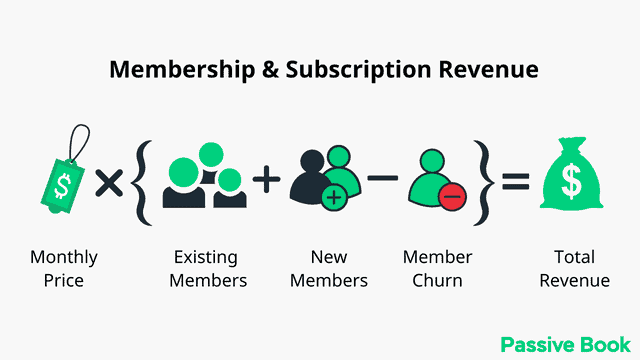
Add repeat purchase layers to existing niches. The creator who built the $39 Notion template business added a $9 per month updates membership for buyers who wanted monthly template releases. Added quarterly seasonal bundles at $59 for buyers who preferred one-time purchases.
9. Ignoring Moats
New solopreneurs pick niches where the top 10 search results are dominated by sites with 500,000 referring domains and 15-year publishing histories. Trying to outrank a site with 500,000 backlinks when you have zero? That’s not ambition. That’s math denial. Your brand-new blog with zero backlinks can’t compete for rankings or attention in that environment. No matter how good your content is.
Audit the competitive landscape before committing. Check the domain authority of sites ranking in the top 5 for your core keywords. If they’re all above DA 60, you’re facing entrenched authorities that will block your organic growth for years. Look for niches where the top results include DA 30 to 40 sites, newer content, or Reddit threads, which signals opportunity for fresh voices.
Referring domains drive rankings more than any other factor according to Ahrefs’ analysis of ranking factors. A site with 1,000 referring domains will almost always outrank a site with 50 referring domains, assuming decent content quality. You can’t build 1,000 backlinks in your first year as a solopreneur working 10 hours per week.
Choose niches with structural moats you can actually build. Proprietary data from your own surveys creates unique content. A tight community on Discord or a private Facebook group creates network effects. Original research or case studies from your consulting work produces link-worthy assets. These moats take time but don’t require competing with decade-old authority sites.
10. Micro-Niche Too Narrow
Overly specific niches create immediate content problems. You pick “ergonomic standing desks for remote software engineers with back pain.” Sounds focused. You run out of content ideas after 12 blog posts. Your traffic plateaus at 800 monthly visits because the audience is too small to sustain growth.
Ensure you can generate 50 to 100 unique content ideas across 3 to 5 topic clusters before committing. Use AlsoAsked to map question branches for your core keywords. If you can’t spend 30 minutes brainstorming and hit 50 distinct topics, the niche you’re considering is too narrow to support a sustainable content operation.
Use ChatGPT as shown in the below video to brainstorm keyword ideas:
The test is clustering. “Standing desks” splits into ergonomics, productivity benefits, setup guides, brand comparisons, and accessories. That’s 5 clusters with 20+ pieces each. “Ergonomic standing desks for remote software engineers” collapses into 2 clusters with 10 pieces total. The narrow version runs dry fast.
Zoom out one level if you hit this constraint. “Standing desks for remote workers” opens clusters around home office setup, productivity tools, health optimization, and remote work best practices. You can publish for 18 months without repeating topics. Zooming out one level doesn’t mean diluting your expertise. It provides breathing room for content sustainability.
11. Platform Dependence
Building your entire online business on a single platform hands control to an algorithm you don’t own. YouTube changes its recommendation system and your views drop 60% overnight. Pinterest adjusts its distribution and your traffic disappears. You’re creating content for a landlord who can evict you without notice.
Hedge platform risk by building an email list from day one. Use ConvertKit or similar tools to capture subscribers from every traffic source. Your email list is the only audience asset you truly own. Platforms can’t change the algorithm for your inbox.
Multi-channel presence acts as insurance. Publish your core content on your blog. Repurpose it for YouTube, TikTok, and social media platforms like LinkedIn. Post in relevant subreddits and Facebook groups. Each channel feeds the others, but none is critical to survival. If one disappears, you still have distribution for your offers.

A real case shows the value of this approach. Lauren Kay built her productivity coaching business across Instagram, YouTube, and email.
When Instagram changed its algorithm in 2023, her reach dropped by half. Her email list kept growing because she’d been driving signups from multiple sources.
The ConvertKit case study shows she grew from 500 to 25,000 email subscribers over three years, then monetized through services and a $500 course that didn’t depend on any single platform’s traffic.
12. Misreading Seasonality
Seasonal niches create feast-or-famine revenue cycles that wreck solopreneur cash flow. You launch a tax preparation niche in March, generate strong traffic through April 15, then watch visits drop 80% in May. You spent four months building content for two months of revenue.
Check multi-year patterns using Pinterest Trends or Google Trends before committing. Look for niches with year-round baseline interest and seasonal peaks you can capitalize on. “Home organization” maintains steady search volume with a January spike. “Christmas decorations” dies completely from February to September.

Plan your content and offer calendar around seasonal patterns. Fitness content sees predictable surges. Placer.ai’s 2025 analysis shows gym visits increased 21.2% in January 2025 versus December 2024, matching the New Year’s resolution cycle. Smart fitness creators ride this wave every January without fail, publishing goal-setting content in December, workout plans in January, and progress tracking tools in February.
Build off-season offers to smooth revenue. The niche you’re building needs year-round revenue, not just seasonal spikes. The tax preparation expert creates bookkeeping courses for small business owners during the summer. The Christmas decoration blogger runs a summer course on preparing your home for holiday hosting. Seasonal peaks drive traffic and list growth. Evergreen offers sustain revenue when traffic drops.
13. Buying Sites, No Checks
Buying an existing site in your niche looks like a shortcut past the 12-month growth grind. You pay $30,000 for a blog generating $1,000 monthly. The traffic is real in Google Analytics. Three months later, revenue drops to $300 and you discover the seller used toxic backlinks and fake social signals.
The cautionary tale is documented. An entrepreneur paid $52,500 for an established site through a marketplace. Post-purchase, he discovered toxic backlinks, manipulated metrics, and hidden traffic sources that violated platform terms. The full failure story details how the site lost 90% of its value within six months because the foundation was fraudulent.
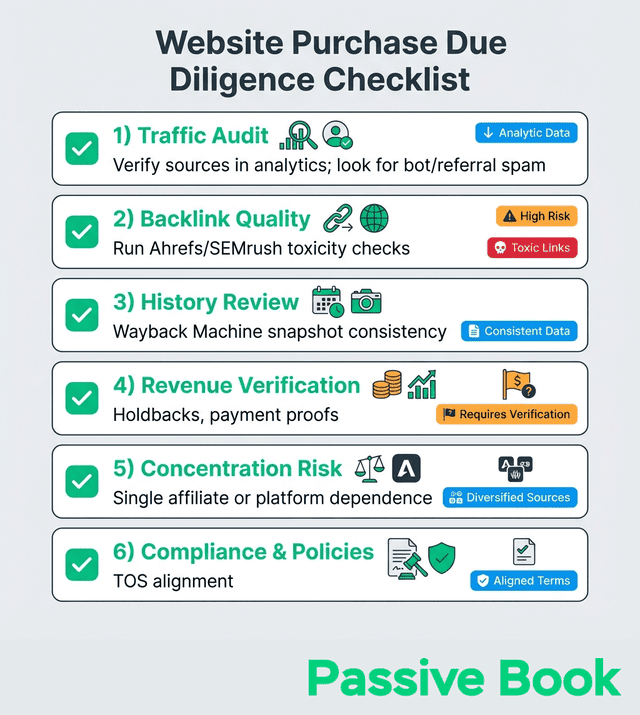
Verify every claim before buying. Audit traffic sources in Google Analytics for bot patterns and referral spam. Run the domain through Ahrefs or SEMRush to check backlink quality. Use Wayback Machine to review the site’s history and confirm it matches the seller’s story. Request 30 to 60 day payment holdbacks to verify revenue claims post-transfer.
Check monetization sustainability. If the site relies entirely on affiliate income from one program, you’re vulnerable to commission cuts or program termination. If traffic comes from a single platform, you’re exposed to algorithm changes. Diversified revenue and traffic sources justify higher multiples. Single-source sites are high-risk acquisitions no matter how attractive the metrics appear.
Frequently Asked Questions
What Are Some Niche Problems?
Thin repeat purchase cycles lower customer lifetime value and kill long-term profitability for solopreneurs. A $79 one-time course forces you to constantly find new buyers, requiring escalating traffic that’s impossible to sustain at 10 hours per week. Subscription models or consumable products compound value over time. Add a membership tier or replenishment offer to extend the relationship beyond a single transaction. Platform dependence compounds this problem when your earning potential relies entirely on algorithm changes you can’t control.
What Are the Problems With Niche Marketing?
Algorithm changes and zero-click searches compress organic traffic unpredictably, making platform-dependent niches extremely fragile. 58.5% of searches end without clicking to an external site, which means relying solely on SEO traffic is now a high-risk strategy. Build an email list and diversify across YouTube, social media platforms, and community forums to hedge against single-source collapse. The niche you’re targeting needs multiple traffic channels to survive algorithm updates and AI Overview expansion.
What Are the Challenges of Choosing a Niche?
Fast validation of real demand and defensibility under AI Overview risk is the core challenge in 2025. You need to confirm people will pay before investing months in content, but traditional validation methods like search volume no longer predict traffic. Queries with AI Overviews lose half their clicks, making old metrics obsolete. Validate through community signups, pre-sales, or direct interviews instead of relying on search data alone. Run a pre-sale by posting your offer in 5 relevant communities and aim for 10 sign-ups before building anything.
What Next?
You now have 13 specific warning signs that reveal whether your niche will sustain a real online business or waste your next six months. Each of these common mistakes to avoid represents patterns I’ve seen kill countless solopreneur ventures, including some of my own early attempts.
The validation path forward is clear. Calculate your 12-month SOM, not your TAM fantasy. Audit zero-click risk for your core keywords. Interview 15 people before building anything. Plan your offer ladder before publishing your first blog post. Pick the right niche using these criteria. These steps feel slow when you want to launch immediately, but they’re exponentially faster than rebuilding after picking the wrong niche.
If this article saved you from even one of these 13 traps, share it with another solopreneur who’s choosing their niche right now. Use the social share buttons below to send it to your network. Drop a comment telling me which mistake you narrowly avoided or which one you’re still wrestling with. I read every response and your experience might become the warning that helps the next reader.
Share this post with your friends & followers: