I spent my first year online chasing the same oversaturated niches everyone else was fighting over. Fitness blogs, productivity hacks, make-money-online content. The algorithm didn’t care about my effort. Then I realized something that changed everything: the magic wasn’t in finding an empty niche, but in creating one by combining two existing interests in a way no one else had. That one shift took me from invisible to profitable.
This guide shows you how to merge two niches into a unique market position without confusing your audience or wasting your limited hours. You’ll get a proven validation framework, real examples you can model, and honest warnings about where this strategy fails so you can avoid those traps from day one.

What Is Niche Combining?
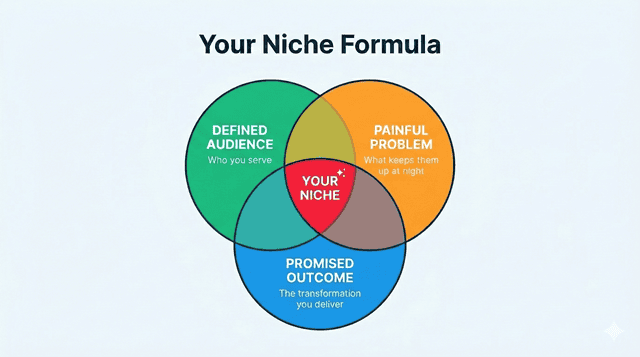
Niche combining merges two distinct interests into a single, clear outcome that people understand immediately. You’re not creating confusion by talking about unrelated topics. You’re delivering one unified promise that resonates with audiences from both parent niches because it solves a problem they share.
I learned this the hard way after six months of publishing “fitness tips for busy professionals” that nobody cared about. The shift happened when I narrowed to “fitness for remote workers who hate gyms” – suddenly my inbox filled with questions.
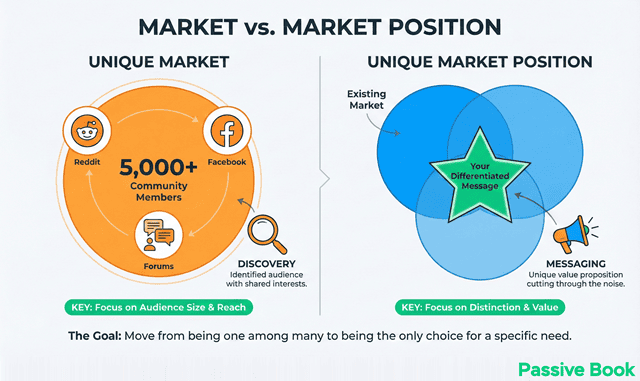
Market vs. Market Position
Before you commit, understand the distinction.
Market: A “unique market” means discovering an underserved audience large enough to sustain your business – think 5,000+ active community members across Reddit, Facebook groups, or niche forums.
Market Position: A “unique market position” means standing out in an existing market through differentiated messaging.
This guide focuses on positioning, but you’ll validate market size in the 7-day sprint by testing engagement in at least two communities with 1,000+ members each. If you can’t find that baseline audience, your combo is a position without a market.
The reason this matters now is simple: standing out in a single niche has become nearly impossible for solopreneurs. According to WordStream’s 2025 data, roughly 97% of pages get zero organic search traffic. Generic fitness content or standard budgeting advice won’t break through that wall.
Differentiation happens when you present one outcome across multiple relevant contexts. A “frugal fitness” creator isn’t jumping between random topics. They’re showing busy parents how to get healthy without expensive gym memberships or complicated meal plans. That’s one outcome served to an underserved intersection.
The key is making sure both niches support the same goal. When someone discovers your content through either entry point, they immediately see how it applies to their specific situation. No explanation needed.
When to Combine Niches (and When to Avoid It)
Use niche combining when your single-niche messaging is drowning in competition and you need differentiation fast. This isn’t about building separate brands from scratch. It’s about finding one unified outcome that naturally pulls from two audiences who already want what you’re offering.
This strategy works best for solopreneurs who need to validate an idea quickly before committing months of content creation. You test the overlap in days, not quarters. Keep your initial scope tight. Launch with one core offer or content angle, then expand only after you’ve proven the concept with real signups or sales.
The discipline matters more than the idea. Kickstarter’s 2024 data confirms that tightly scoped projects perform consistently well, with games achieving a 78% success rate when they raise over $100,000. Tightly scoped niche combinations follow the same pattern. The solopreneurs who win are the ones who ship a minimum viable combo, learn from real feedback, and iterate based on what converts.
Don’t use this approach if you’re not ready to commit to the intersection. Half-hearted content in two niches performs worse than focused effort in one. Test fast, but once you see traction, go all in on that combined positioning.
3 Proven Models: Persona, Demographic, or Product-Led
Three proven models help you structure your niche combination. Pick the one that matches your natural strengths and the assets you already have. Forcing the wrong model rarely makes sense and burns your limited hours faster than starting over with the right structure.
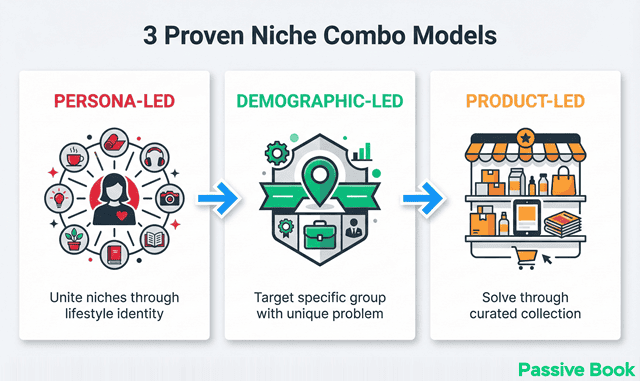
Persona-led combos unite two different niches through a specific lifestyle or identity. Frugal Fit Mom blends frugal living with fitness routines designed for busy parents. Your persona should be instantly clear – the outcome obvious, and both audiences see themselves in the content. This model works when you can authentically embody the intersection.
Demographic-led combos target a specific group facing a unique problem. BluePipes serves travel nurses who need packing strategies and scheduling advice that regular nurses don’t. This works because the demographic itself defines your positioning. Use this model when your audience has distinct constraints or workflows that differ from the mainstream.
Product-led combos solve a problem through a curated collection or service. Garage Grown Gear focuses exclusively on ultralight minimalist hiking gear from small brands. Here, your product category IS the niche. This model makes sense when you can source, create, or recommend items that serve both interests simultaneously.
Forcing the wrong model will kill your momentum before you start. If you’re not a parent, don’t force a parenting persona. If your audience isn’t tied to a specific profession, demographic-led won’t resonate. Match your model to your reality, not to what seems trendy.
Filter To Eliminate Bad Niche Combos
Before you commit hours to building, run your combo through this filter. It takes 20 minutes and eliminates most bad ideas.
Skills box: List three things you can teach in a 30-minute call without preparation. Not skills you could learn later. Skills you possess right now. If you can’t explain it clearly and quickly, it’s not ready for a niche combo.
Passions box: List three activities you’d happily do every week for a year, even without an audience. This isn’t about what you think will make money. It’s about sustainability. You’ll create content weekly. Make sure the topics energize you instead of draining you.
Demand box: Find three active communities for each niche. Look for subreddits, Facebook groups, or Instagram hashtags. Screenshot five recent posts with at least 10 comments each. Real questions, real frustrations, real engagement. If you can’t find active discussion, there’s no audience to serve.

Next, take one item from each box and merge them into a one-line promise: “For X who want Y without Z.” Example: “For remote workers who want fitness results without gym commutes.” This line becomes your landing page headline, your social media bios, and your elevator pitch. Harvard Business Review emphasizes that clarity in segmentation drives success. Your one-liner is that clarity.
Test the line on five people from your target audience. If they need explanation, revise it. The promise should be instantly clear.
7-day Validation Sprint
I’ve run this exact sprint six times across different niche combos. Three failed completely, two validated enough demand to pursue for 90 days, and one became my primary income stream within eight months. The numbers below are thresholds that separated winners from time-wasters in my tests.
This sprint proves your combo works before you waste months building content nobody wants. The goal is paying customers or engaged subscribers in one week. Total upfront cost: $0-15 if you use free tool tiers.
Days 1-2: Build a minimal landing page using Carrd, Notion, or WordPress. One headline with your promise, three bullet points explaining the outcome, and one call-to-action. Set up email collection through Beehiiv or Mailchimp. Both offer free tiers perfect for solopreneurs starting their first email marketing campaigns. Set up a basic privacy policy using a free generator like Termly if you’re collecting emails – most platforms require one before you can send campaigns, and skipping it can get your account suspended.
Days 3-4: Create a 30-minute consultation offer priced at $29-49. Use Calendly for scheduling and Stripe for payment. Cap it at five slots to create urgency and keep the workload manageable. Share the offer in two relevant communities where your target audience already gathers. Don’t spam. Answer a question helpfully, then mention your offer in your profile or a genuine follow-up.
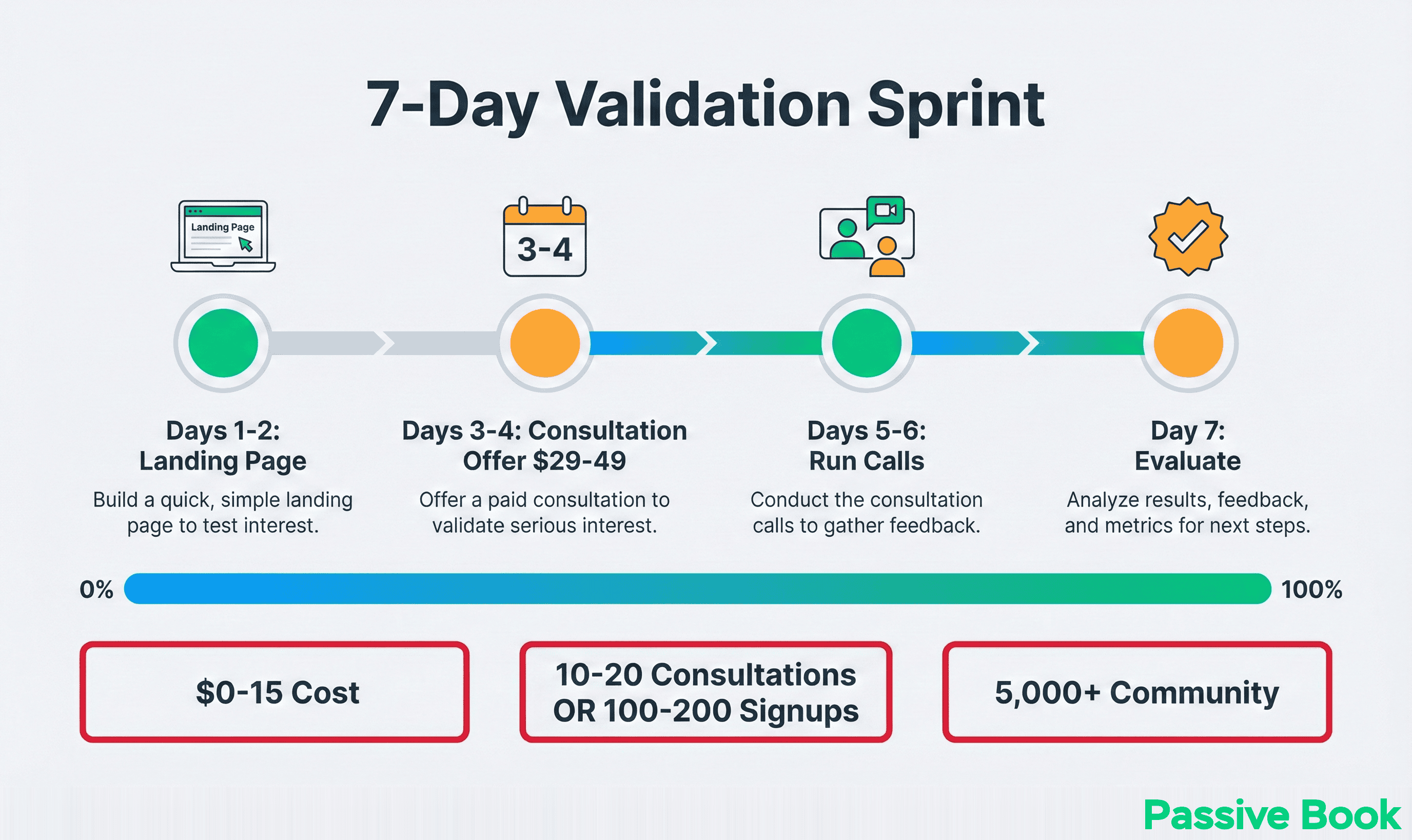
Days 5-6: Run the calls with a simple script: “What’s your biggest challenge with [niche A]?” and “Have you tried combining it with [niche B]?” Record the calls with permission. These recordings become testimonial material and content ideas. Share the payment link during the call. Screenshot every successful checkout.
Day 7: Evaluate the results. Kickstarter’s 2024 data confirms that tight-audience preorders validate demand faster than broad campaigns. Your threshold: 10-20 paid consultations or 100-200 email signups. Also confirm your target communities have at least 5,000 combined members. If engagement is high but audience size is tiny, you’ve validated interest but not market viability.
Hit those numbers and you’ve validated the combo. Miss them and you either picked the wrong intersection or your messaging needs work. If you fail, don’t pivot to a completely different combo. Adjust one variable. Change the demographic, tweak the promise, or test a different platform. Most failures come from weak positioning, not bad ideas.
3 Real Niche Combos You Can Model Today
Real examples make this concrete. Study these, then adapt the pattern to your combo.
ADHD productivity × budgeting: This combo targets people who struggle with both focus and money management. A creator shared a video that breaks down budgeting into small, ADHD-friendly steps. The outcome is clear: manage money without overwhelming systems. Both audiences win.
Fitness × gaming: Zombies, Run! turned running into a narrative game. Gamers get story progression, fitness seekers get cardio motivation. The app proved that combining entertainment with exercise works when the outcome is engaging enough to stick with.
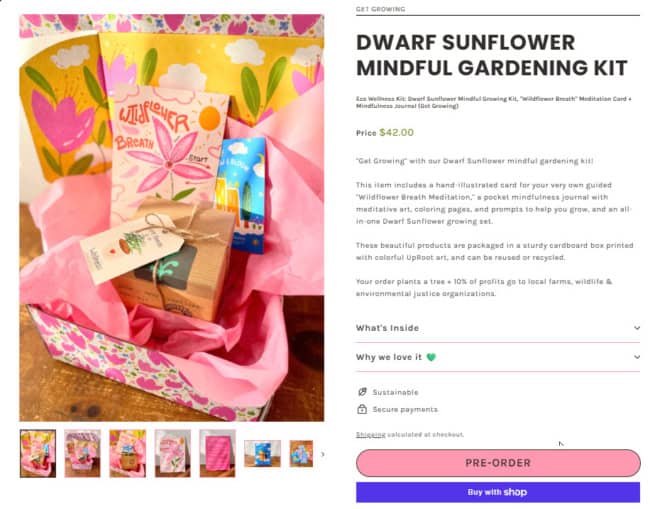
Gardening × mindfulness: A creator designed a mindful growing kit that includes seeds, meditation prompts, and a journal. Gardening enthusiasts get a new project, mindfulness practitioners get a tangible ritual. The physical product simplifies the combo into one purchase.
Each example follows the same structure: identify two audiences, find the shared outcome, deliver it in a format that serves both. Your job is to replicate this structure with your specific skills and passions from the three-box filter.
Failure Modes and Fixes
Every strategy has failure modes. Here’s where niche combining breaks down and how to prevent it.
Over-niching risk: You can segment too tightly and end up with an audience of 50 people. Harvard Business Review research shows that successful segments are dissatisfied and underserved, not just specific. Target people who are actively frustrated with current solutions, not people who simply fit a demographic. A “left-handed vegan CrossFitters” niche is specific but likely too small to sustain a business.
Channel risk: Platform algorithms and policies shift constantly. Marketplace Pulse notes that TikTok Shop subsidies fluctuate, which means betting everything on one platform is dangerous. Diversify from day one. Build your email list, maintain a presence on two social media platforms, and test organic search with a simple blog. When one channel changes, you won’t start from zero.
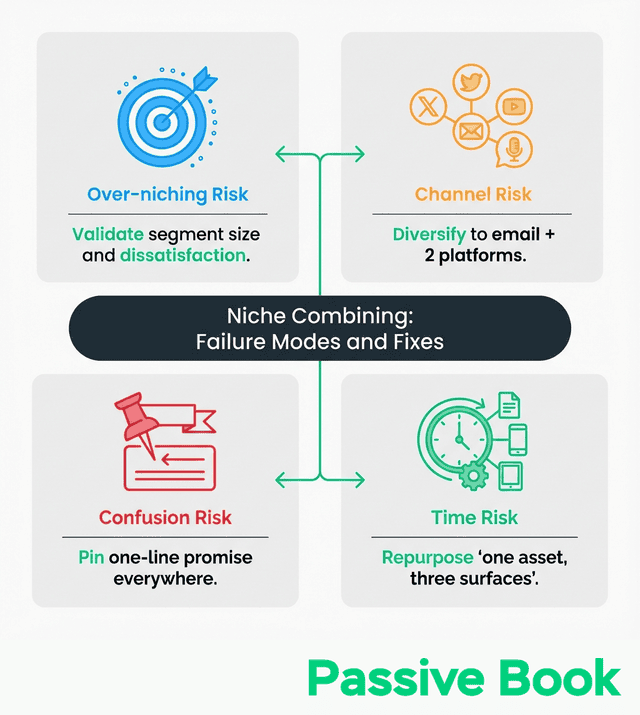
Confusion risk: Audiences get confused when your promise isn’t pinned everywhere. Add your one-line promise to your Instagram bio, your YouTube channel description, and your email welcome sequence. Create a “Start Here” highlight on Instagram or a playlist on YouTube that explains the combo in under two minutes. New visitors should understand your angle within 10 seconds of landing on your profile.
Time risk: You’re already stretched thin. Combat this with “one asset, three surfaces” repurposing. Film one 3-minute explanation, then edit it into a YouTube Short, a TikTok, and an Instagram Reel. This approach cut my content creation time from 8 hours weekly to 3 hours while maintaining the same reach across platforms. Test it for one month and track which format drives the most profile visits. Write one 500-word email, then break it into three carousel posts. The content strategy isn’t about creating more. It’s about distributing smarter.
Track which failure mode hits you first. Most solopreneurs encounter confusion or time constraints before they over-niche. Build your fixes into your workflow from the start, not after problems appear.
Frequently Asked Questions
Can You Have Multiple Niches on Social Media?
Yes, but only if they serve one unified promise. Pursuing multiple niches without a unifying promise confuses your audience and dilutes your message. A finance and fitness account works when the promise is build wealth and health for busy professionals. Random posts about budgeting and random posts about workouts without a connecting thread will cause unfollows. Pin one post to your profile that explicitly states your combo promise. Reference it in your first three content pieces so new followers immediately understand the connection. If someone discovers you through a fitness post, they should see how finance fits within 10 seconds of visiting your profile.
How Do You Dominate a Niche Market?
Domination comes from solving neglected problems in tightly defined segments. Harvard Business Reviewu emphasizes targeting dissatisfied groups who feel underserved by mainstream solutions. Find the pain points bigger competitors ignore because the audience seems too small. For example, Kickstarter’s 2024 data shows that hyper-specific games projects consistently dominate their categories, with Brandon Sanderson’s Cosmere RPG raising over $15.1M by targeting fantasy fans seeking tabletop mechanics. Apply the same principle: own the smallest viable intersection before expanding.
What Is a Unique Market Niche?
A unique niche exists at the intersection of a clear audience and an unmet outcome. It’s not about inventing a problem nobody has. It’s about serving an existing problem in a way current solutions don’t address. HBR research highlights that underserved segments are your best opportunity. Look for groups who say nothing out there is really for me. That gap is your unique niche. If you’re still not sure whether your combo is unique enough, ask yourself: Would someone describe this to a friend as “Oh, that’s the person who does X for Y?” If yes, you’re there.
How to Market to a Specific Niche?
Go where your niche already gathers. Don’t guess at platforms. Identify where your demographic is most active, then validate by lurking in their communities for one week. Note the questions they ask repeatedly and the language they use. Mirror that language in your content and show up consistently on the top two platforms they prefer. Test your positioning with one organic post before investing in internet marketing tools or paid ads. Run your validation sprint there before spreading to additional channels.
What Next?
You now have a framework to combine two niches into one unique market position. The three-box filter helps you pick the right intersection. The 7-day validation sprint proves demand before you commit months of effort. And the failure modes prepare you for the obstacles most solopreneurs hit.
This approach isn’t easy, but it’s honest. You’ll face confusion from people who don’t immediately get your combo. You’ll question whether you’ve gone too narrow. That discomfort means you’re doing something different, which is exactly what breaks through the noise in 2025.
Share this guide using the buttons below if it helped clarify your niche strategy. Drop a comment with your combo idea. What two interests are you merging, and what’s the one outcome you’re promising? I read every response and often your question becomes my next article.
Share this post with your friends & followers: